Imagine standing in a massive line at the bank, desperately waiting to withdraw cash in a country crippled by hyperinflation. Suddenly, the floor starts rolling violently beneath your feet. People scream. Car alarms trigger outside. But instead of running for safety, half the crowd freezes. Why? Because they don't want to lose their spot in line to get their money.
That's exactly what happened on August 21, 2018, when a massive magnitude 7.3 earthquake struck Venezuela's northeastern coast.
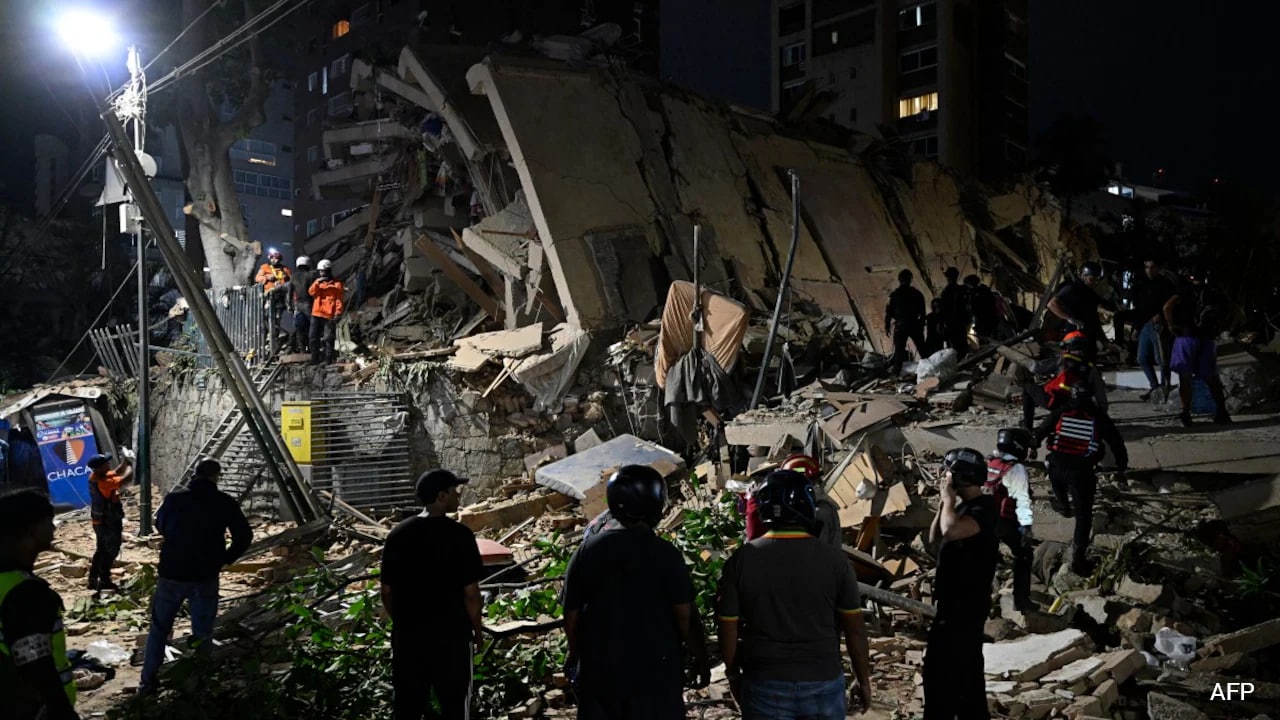
It was the largest seismic event the country had seen in over a century, felt from the epicentre near Yaguaraparo all the way to Bogota, Colombia. In Caracas, hundreds of miles away, the shaking was terrifying. Residents recounted how the stairs of their apartment buildings literally detached from the structure, and entire walls cracked open right in front of them. Yet, the panic of the earthquake collided head-on with a population already numb to daily survival crises.
When the Earth Shakes an Already Broken System
The quake hit at 5:31 PM local time. For people living in the high-rises of Caracas, it felt like the world was ending. The problem wasn't just the movement of the Caribbean and South American plates grinding against each other. It was the fact that Venezuela's infrastructure was already decaying from years of economic collapse.
Take the infamous Tower of David, a 45-story unfinished skyscraper in the heart of the capital. The earthquake caused the top five floors to tilt dangerously, dropping chunks of concrete onto the pavement below.
In residential areas, the stories were harrowing. Tenants described the terrifying sound of shifting concrete as structural staircases pulled away from apartment walls. People didn't even know how long the shaking lasted because time stretches out when you're trapped on the tenth floor of a building that hasn't been properly maintained in a decade.
The Surreal Split Between Government Rhetoric and Reality
While citizens scrambled down cracked stairwells, the country's political elite were busy. Diosdado Cabello, a powerful socialist leader, was giving a live televised speech at a pro-government rally when the tremor hit.
"Quake!" people in the crowd shouted, visibly panicked.
Cabello looked around with a bizarre mix of amusement and confusion before shouting into the microphone, "It's the Bolivarian revolution speaking to the world!"
That stark divide defined the event. While the U.S. Geological Survey (USGS) immediately clocked the quake at a massive 7.3 magnitude, Venezuela's state-run seismological agency, Funvisis, initially claimed it was only a 6.3. Insiders later leaked that more than half of the country's seismic monitoring stations were completely broken or stripped of parts. They literally lacked the technology to measure the disaster accurately.
Humour as a Survival Strategy
Venezuelans did what they always do when hit with another catastrophe: they turned to dark comedy. The day of the earthquake coincided with the release of a heavily devalued new currency meant to curb hyperinflation.
Social media exploded with memes. One viral tweet joked that inflation was so bad that a 7.3 magnitude earthquake instantly inflated into a 78,093.3 magnitude quake. Another user asked if the tremor was just the new currency crashing into the ground. When your daily life involves food shortages, power outages, and medical scarcity, a major natural disaster feels like just another Tuesday.
What to Do if You Live in a Seismically Vulnerable Zone
If this disaster proved anything, it's that you can't rely on failing public systems when things go wrong. You have to take personal responsibility for your safety.
- Audit your building: Look for structural gaps where stairwells meet main walls. Report deep, diagonal wall cracks to engineers immediately.
- Ditch the elevator habit: During the 2018 event, several people were trapped in lifts because the power grid instantly failed. Always use the stairs, even if they look scary.
- Stop freezing for material things: No spot in a bank line or grocery store is worth your life. If the ground rolls, drop, cover, and hold on, then evacuate immediately once the shaking stops.