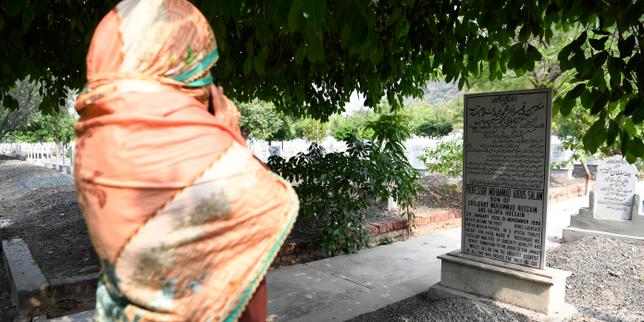
Imagine living in a country where your very identity is a crime. You can't call your house of worship a mosque. You can't use the standard greeting of peace. If you write a verse of scripture on your wall, you can go to prison. For the Ahmadi community in Pakistan, this isn't some dystopian fiction. It's a daily, brutal reality that has only worsened as state institutions look the other way—or actively participate in the persecution.
The global spotlight rarely lingers long enough on Pakistan's institutionalized religious apartheid. Mainstream media often frames the violence as sporadic clashes driven by rogue religious fanatics. That's a mistake. The truth is much more chilling. The oppression of Ahmadis is baked directly into the Pakistani constitution, creating a environment where extremist mobs and police forces work hand in hand to strip millions of people of their fundamental human rights. Don't miss our previous coverage on this related article.
The heavy cost of an identity
Belonging to the Ahmadiyya faith in Pakistan means living with a target on your back. The core theological dispute centers on the status of Mirza Ghulam Ahmad, who founded the movement in British India in the late 19th century. Ahmadis consider him a promised messiah, while orthodox Muslim groups view this belief as a direct violation of the finality of the Prophet Muhammad.
In a secular country, a theological disagreement stays in the realm of theology. In Pakistan, the state stepped in to settle the debate with handcuffs and gavels. If you want more about the background here, The New York Times offers an in-depth summary.
The systemic isolation affects every part of life. You can't vote without either renouncing your faith or registering on a separate, segregated electoral roll that explicitly labels you a non-Muslim. If you apply for a passport, you must sign a declaration denouncing the founder of the Ahmadiyya faith. Children face severe bullying and expulsion in schools. The National Commission for Human Rights issued a detailed report showing that even among educated classes and elite school teachers, tolerance toward Ahmadis is shockingly low. It's a top-down socialization of hatred that starts in the classroom and ends with violence on the streets.
State machinery turning against its own people
You can't understand the current crisis without looking at the legal framework that enables it. The persecution isn't a recent glitch. It's a feature of the state system that has been refined over decades.
The turning point came in 1974. Under Prime Minister Zulfikar Ali Bhutto, the Pakistani parliament passed the Second Amendment to the Constitution. This amendment explicitly declared Ahmadis to be non-Muslims for the purposes of the constitution and law.
A decade later, military dictator Muhammad Zia-ul-Haq took things a step further. He introduced Ordinance XX in 1984. This law added Sections 298-B and 298-C to the Pakistan Penal Code. These laws made it a criminal offense, punishable by up to three years in prison and a fine, for an Ahmadi to "pose" as a Muslim.
- They cannot call the call to prayer (Azan).
- They cannot refer to their places of worship as "masajid" or mosques.
- They cannot preach or propagate their faith.
- They cannot use Islamic terminology or greetings in public.
These laws effectively criminalized the simple act of existing as an Ahmadi. They gave religious extremists a legal weapon. Anyone who dislikes an Ahmadi neighbor can file a police report claiming that the individual used an Islamic greeting or had a Quranic verse displayed in their living room. The police are legally obligated to arrest them.
When a religious holiday becomes a period of terror
The danger reaches a fever pitch during major religious holidays. During the recent celebrations of Eid al-Adha, the holiday became a period of intense anxiety and state-sanctioned harassment.
Local administrative and law enforcement agencies across the country launched a coordinated campaign to stop Ahmadis from participating in the traditional ritual of animal sacrifice. The state stepped right into private homes.
In Karachi, police forces actively confiscated sacrificial goats from Ahmadi homes. Think about that. Law enforcement officers entered private residences to seize livestock because a minority group intended to perform a religious ritual. Representatives from the community, including spokesman Amir Mehmood, confirmed that individuals were summoned to police stations across Punjab and Sindh. They were forced to sign surety bonds and affidavits undertaking that they would not offer Eid prayers, sacrifice animals, or organize any gatherings.
This suppression wasn't just driven by mobs. It was directed by the state. District Commissioners in cities like Lahore, Rawalpindi, and Sargodha issued official directives ordering police to take preemptive action against Ahmadis. In Sialkot, authorities used the Maintenance of Public Order Ordinance to issue preventive detention orders against community members.
Local bar associations and extremist groups like Khatam-e-Nabuwwat openly wrote to law enforcement demanding strict action against what they called "unlawful religious activity." Mosque loudspeakers, which are legally supposed to be regulated, were used to call on the general public to spy on their neighbors and report any Ahmadi animal sacrifices to the authorities.
Blood on the streets of Rabwah
When the state legitimizes hatred, violent actors feel completely invincible. We saw the tragic results of this environment in Rabwah, also known as Chenab Nagar, located in Pakistan’s Punjab province. Rabwah is the administrative headquarters of the Ahmadiyya community in Pakistan, a town built by the community where they make up the majority of the population. Yet even there, they aren't safe.
An unidentified gunman on a motorcycle arrived at the Baitul Aqsa mosque. The attacker's face was completely concealed. He opened fire on a vehicle stationed outside the mosque, targeting the community's security volunteers who were standing guard.
Three young men were severely injured in the attack. Waqas Ahmad, 23, was struck by four bullets. Abdul Jabbar, 39, was shot in the abdomen. Bilal Ahmad, 30, took a bullet to the chest that caused severe internal bleeding. This wasn't an isolated incident for this specific house of worship. The very same mosque was targeted in a shooting that left six people injured.
The most disturbing part of these attacks is the total lack of accountability. Extremist organizations operate with absolute impunity throughout Pakistan. They publish flyers, hold rallies, and run online campaigns explicitly calling for the boycott and murder of Ahmadis. The Pakistani authorities consistently fail to prosecute those who incite this violence. When a shooter attacks an Ahmadi mosque, they know there's a very good chance they'll never face justice. The legal system tells them that their victims are lesser citizens.
Breaking the cycle of systemic oppression
The situation looks bleak, but silence is not an option. Expecting the Pakistani government to suddenly change its constitution out of goodwill is unrealistic. The political pressure from far-right religious parties like Tehreek-e-Labbaik Pakistan is too intense for local politicians to risk defending a marginalized minority. Change will only happen through sustained, strategic external pressure and global accountability.
If you want to help change the trajectory for millions of Ahmadis in Pakistan, here are the concrete steps that international observers and human rights advocates must take.
Condition international financial assistance
Pakistan relies heavily on international financial bailouts from institutions like the International Monetary Fund and trade preferences like the European Union's GSP+ status. The international community must tie these economic benefits directly to human rights benchmarks. If the Pakistani government continues to allow local police to raid Ahmadi homes and seize property, they must face clear financial consequences on the global stage.
Document and report local perpetrators
International rights organizations like Amnesty International and Christian Solidarity Worldwide need continued funding and local data to document specific state actors involved in abuse. When a District Commissioner or a local police chief signs an affidavit forcing Ahmadis to give up their religious rights, their names should be documented. Sanctions and travel bans should target the specific bureaucratic and police officials who enforce these discriminatory laws.
Support refugee resettlement programs
For many Ahmadis, staying in Pakistan is a death sentence. The international community must streamline asylum and refugee pathways for persecuted religious minorities fleeing Pakistan. Countries offering refuge need to recognize that the legal framework in Pakistan makes it impossible for an Ahmadi to live a safe, normal life, meaning their asylum claims require urgent prioritization.
The world cannot continue to look away while an entire community is systematically erased from public life. It's time to call out Pakistan's institutionalized persecution for exactly what it is. It's an ongoing human rights catastrophe. We must demand real accountability before more blood is spilled on the streets of Rabwah.