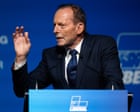
The coronation is over and the real work begins. Andy Burnham is officially the new leader of the Labour Party. On Monday, he walks into Buckingham Palace, kisses hands with King Charles III, and becomes the prime minister of the United Kingdom. If you have been watching British politics lately, you know this is not just a standard change of guard. It is an extraordinary political resurrection.
Most people outside the United Kingdom only know the country's politics as a blur of revolving doors at Number 10 Downing Street. Seven prime ministers since 2016. That is a dizzying number. It signals a system running on fumes. Keir Starmer won a historic landslide victory in 2024, yet less than two years later, his own party forced him out after disastrous local election results and a deep sense of national stagnation. Enter the former Mayor of Greater Manchester.
When Andy Burnham stood at the Trades Union Congress headquarters in London on Friday to accept the leadership, he did not pull his punches. He told the audience that this is Labour's last chance to get things right. He is right. The British electorate is furious, exhausted, and increasingly turning toward populist alternatives on the right. If Burnham fails to deliver meaningful change, the entire center-left project in Britain could collapse.
The Coronation of the King of the North
Let's look at the numbers because they tell a fascinating story about power inside the Labour party. Burnham did not just win a contest. He cleared the field completely. He secured nominations from 379 out of 403 Labour Members of Parliament. No one else even dared to run against him. He had the backing of all eleven major affiliated trade unions and all socialist societies.
For a man who left Westminster politics years ago to run a regional city-region, this is a spectacular comeback. His path back to parliament was swift. He won a snap by-election in the Greater Manchester constituency of Makerfield, easily beating back a challenge from the anti-immigration Reform UK party. Once he set foot back in the House of Commons, Starmer's fate was sealed.
The speed of this transition has left some people nervous. Conservative critics are already complaining that Burnham was crowned while parliament was not sitting, meaning he avoids facing direct scrutiny in the Commons for the rest of the summer. They have a point about the lack of an immediate parliamentary debate. But inside Labour, the sheer relief of having a leader who can actually give a great speech is palpable. Starmer was a former prosecutor, methodical but dry. Burnham is a political animal who runs on raw emotion and public connection.
Why Keir Starmer Fell and What it Means
To understand why Burnham is promising an era of hope, you have to understand why the previous administration crashed so spectacularly. Starmer's government was plagued by factional fighting and constant policy shifts. Voters felt that while the government was technically doing the right things, nobody was explaining the vision. There was no narrative.
The catastrophic local elections in May 2026 were the final straw. Labour voters simply stayed home, or worse, switched to Reform UK, which has been gaining ground rapidly by capitalizing on anxieties around immigration and failing public services. The party realized that sticking with a low-key, defensive strategy would guarantee a wipeout at the next general election.
Burnham represents a complete break from that cautious approach. In his speech, he explicitly promised to overhaul the culture within government and end the factional infighting that has drained the party's energy. He wants a single, united team. That sounds great on stage, but the reality of managing a massive parliamentary majority with deeply divided ideological wings is an entirely different beast.
Moving From Vibes to Actual Policy
Right now, Burnham is operating mostly on vibes. His speech was filled with sweeping rhetoric about bringing hope back to every heart and growth to every postcode. He talked about a return of the Labour that people once knew. But if you look closely at what he actually said, the specific policy details are still quite thin.
We do know the broad areas where he wants to take the country. His philosophy is heavily shaped by his time as Mayor of Greater Manchester, where he successfully brought the region's bus network back under public control. He wants to do something similar on a national scale. He openly argues that Britain took a series of wrong turns back in the 1980s under Margaret Thatcher by centralizing political power in London and privatizing essential national infrastructure.
His immediate target is public utilities. He wants greater state control over water companies, specifically mentioning the deeply troubled Thames Water, which has been drowning in debt and scandal. This marks a significant shift to the left compared to Starmer's more business-friendly, cautious economic stance.
Yet, at the same time, Burnham is trying to reassure the City of London. He insisted that he would be a pro-business leader, just as he claimed to be a pro-business mayor. Balancing state ownership of utilities with a pro-corporate agenda is a classic political tightrope walk. It is easy to promise both when you are giving a victory speech. It is incredibly hard to maintain when you have to balance the national budget.
Defeating the Right by Fixing Social Essentials
The real test for the Burnham administration will be whether he can stop the rise of the populist right. Reform UK is hungry, and they are gaining traction because ordinary people feel that the basic foundations of British life are broken. Burnham’s strategy is not to fight a culture war, but to fix the structural issues that make people feel abandoned.
First on his list is housing. He has placed a massive emphasis on building a new generation of council and social homes. During his brief campaign in Makerfield, he argued that council homes under direct public control are the only true solution to the housing crisis. If he can actually get shovels in the ground and build homes that people can afford, he will win back a lot of working-class trust.
Second is social care. Britain has an aging population, and the social care system is completely broken. It drains the resources of the National Health Service because elderly patients cannot be discharged safely from hospitals without proper care at home. Previous governments have ignored this problem because it is incredibly expensive to fix. Burnham has promised to spend serious political capital to create a functional system. He knows that every year of delay means thousands of families fall through the cracks.
Third is devolution. This is his signature issue. He wants to strip power away from Westminster and Whitehall and hand it over to local communities across the country. He wants cities and regions to control their own transport, housing budgets, and post-industrial redevelopment. He needs to prove that he is a leader for the entire United Kingdom, not just his home turf in the north of England.
What Happens on Monday and What You Should Watch For
The political honeymoon will last exactly forty-eight hours. On Monday, Burnham will name his cabinet and outline his immediate executive actions. There are already internal tensions brewing over his likely choices.
Shabana Mahmood, who served as Home Secretary and chaired the party executive that announced his victory, is widely expected to be named Chancellor of the Exchequer. She would replace Rachel Reeves. This move has already caused anxiety among the left wing of the party, who worry about her economic stances and previous positions on issues like the asylum system. Burnham has promised a broad church cabinet that includes all factions of the party, but satisfying everyone will be impossible.
If you want to evaluate whether Burnham's era of hope is real or just clever marketing, watch how he handles three specific issues in his first one hundred days:
Watch the Treasury. See if Shabana Mahmood gives Burnham the financial backing he needs to fund council housing and social care reforms without triggering a crisis in the bond markets. Britain's borrowing costs are already dangerously high.
Check the legislative timeline for devolution. Look for actual bills designed to strip power from Whitehall and hand it to regional mayors and local councils. If the legislation stalls, you know the civil service in London has successfully resisted his plans.
Keep an eye on Thames Water. If the government moves to take direct control or restructure the utility, it will signal a major interventionist shift in British economic management.
The British public is tired of political theater. They do not want another prime minister who is good at media appearances but bad at governance. Burnham has the communication skills that Starmer lacked, and he has a genuine connection to communities outside London. Now he must prove that his regional success can translate into national survival.