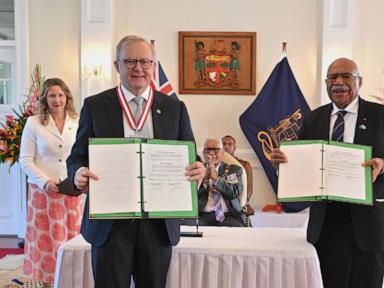
Australia just signed a massive security deal with Fiji. It's called the Ocean of Peace Alliance, and it binds both nations to a mutual defense obligation. If someone attacks Fiji, Australia is legally committed to step in. This isn't just another vague diplomatic handshake. It's a formal military alliance, making Fiji only the fourth country to hold this status with Canberra, alongside the US, New Zealand, and Papua New Guinea.
If you're wondering why this matters right now, look at Beijing. China has been aggressively expanding its footprint in the South Pacific for years, starting with a secretive security pact with the Solomon Islands back in 2022. Australia views this as a direct threat. By locked-in treaties with its closest neighbors, Canberra is building a literal diplomatic wall to block Chinese military expansion.
Inside the Ocean of Peace Alliance
The treaty signed in Suva by Australian Prime Minister Anthony Albanese and Fijian Prime Minister Sitiveni Rabuka changes the security math of the region. Under the deal, both countries must consult immediately if their sovereignty or security faces a threat.
But the security arrangement is only half the story. Alongside the defense pact, the two leaders signed the Vuvale Union treaty. This funnels over 1 billion Australian dollars ($693 million USD) of Australian investment into Fiji over the next decade. The funds target critical infrastructure, economic development, and maritime policing.
To show you how fast things are moving, consider what happened on the very day of the signing. China test-launched a long-range ballistic missile into the South Pacific. Australian Foreign Minister Penny Wong quickly called the move destabilizing. The timing wasn't an accident. It highlights the exact regional tension this new alliance aims to manage.
Canberra's Aggressive Pacific Strategy
This agreement isn't an isolated event. It is part of a calculated, rapid-fire diplomatic blitz by Australia to secure the region before China can.
Look at the timeline. Just last week, on June 29, Australia signed the Nakamal Agreement with Vanuatu to block foreign military bases there. This Wednesday, Australia's defense treaty with Papua New Guinea officially takes effect. Tomorrow, Albanese flies to the Solomon Islands to convince their new Prime Minister, Matthew Wale, to review and potentially walk away from their security ties with Beijing.
Fiji holds immense sway as the economic heart of the Pacific Islands Forum and one of the few island nations with a standing military. Securing Suva is a massive win for Canberra.
While Prime Minister Rabuka insists this treaty won't ruin Fiji's relationship with Beijing, saying "your enemies are not necessarily my enemies," the reality on the ground is clear. This alliance effectively draws a line in the sand.
What Happens Next
Watch the geopolitical chess board closely over the coming weeks. Here are the immediate developments to track:
- Follow Albanese's high-stakes meetings in the Solomon Islands to see if Honiara pivots back toward traditional Western security partners.
- Monitor the implementation of the A$1 billion Vuvale Union funds, specifically looking at which maritime and police infrastructure projects get prioritized in Fiji.
- Keep an eye on Tonga. Australia has already signaled its intent to upgrade ties there into a similar formal defense agreement soon.
- Watch for Beijing's official diplomatic retaliation or further military posturing in the wake of losing strategic ground in Suva and Port Vila.