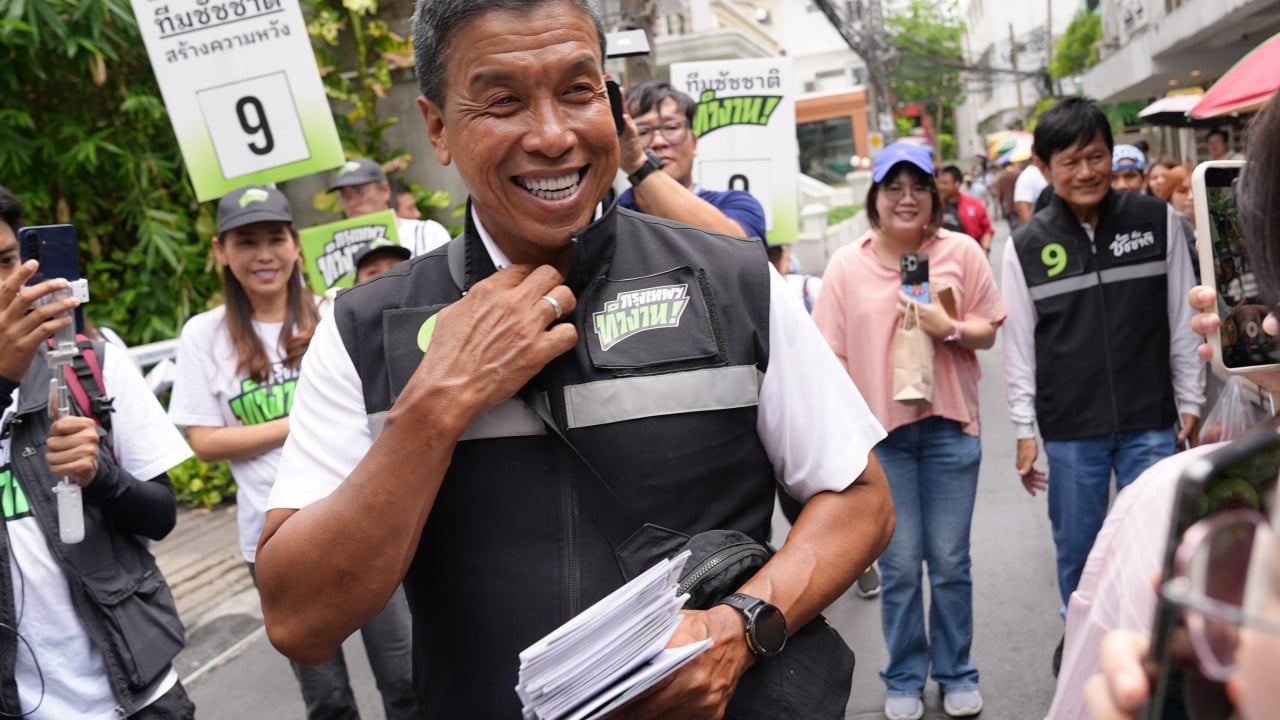
Bangkok voters are heading to the polls today to decide who runs Thailand's massive, chaotic capital. While national politics usually feels like an endless ideological shouting match, city politics has taken a completely different turn. Incumbent Governor Chadchart Sittipunt is aiming for a historic second consecutive term, and the numbers show he's completely transformed how residents view municipal power.
People outside Thailand often look at Bangkok through the lens of color-coded protests, military coups, and grand political drama. This election completely shatters that narrative. It isn't about saving democracy or protecting traditional institutions. It's about broken pavements, filthy air, and why the drainage system fails every time a monsoon cloud parks itself over Sukhumvit.
The Managerial Landslide Everyone Saw Coming
Chadchart Sittipunt won his first term in 2022 by a record-breaking 1.3 million votes, running as an independent. He didn't ride a wave of party loyalty. Instead, he promised to fix the basic stuff. He showed up on Facebook Live at 5:00 AM inspecting flooded alleys and trash piles. That style of hyper-local management resonated deeply.
Fast forward to June 2026. Chadchart resigned early on May 18 to trigger this election and clear the way for a clean four-year mandate. The latest polling from the National Institute of Development Administration shows him holding a massive lead. Over 67% of surveyed voters plan to hand him a second term. His closest rival, Chaiwat Sathawornwichit from the opposition People’s Party, struggles down at just over 8%. Independent challenger Mallika Boonmeetrakool Mahasook sits around 7%, while the traditional Democrat Party candidate Anucha Burapachaisri barely registers at 3%.
This massive gap tells a clear story. Bangkokians are separating local governance from national ideological wars. Just look at the February 2026 general election. At the national level, a conservative coalition led by the Bhumjaithai and Pheu Thai parties took control of parliament, slowing down the progressive opposition. Yet when it comes to the city, the exact same voters who backed partisan national candidates want an independent manager to run the Bangkok Metropolitan Administration.
Why Depoliticization is the New Political Meta
Political scientists call this shift the depoliticization of city politics. Basically, people are exhausted. The constant drama of national coalitions, party dissolutions, and constitutional fights hasn't cleaned the canals or reduced the commute times.
Younger voters especially have adopted a deeply pragmatic strategy. They still want big structural changes at the national level, but they recognize that a city governor can't reform the military or change the constitution. A governor can, however, make sure a school lunch program has actual nutrition or that a dark alley gets functioning LED streetlights.
Data collected from social media discussions by analytics firm Wisesight between May and June 2026 confirms this hyper-focus on local issues. The five most discussed topics online weren't about national ministries or political philosophy. They were:
- Corruption and bureaucratic transparency
- Severe PM2.5 air pollution
- Pavement quality and street cleanliness
- Skyrocketing cost of living
- Flooding and broken drainage infrastructure
Voters want competence. A King Prajadhipok's Institute poll found that 26.4% of respondents value a candidate's direct knowledge of local problems above all else. Only a tiny 3.4% said they cared if a city official belonged to a trustworthy political party.
The Four Big Gritty Problems Awaiting the Winner
Winning the election is the easy part. Managing Bangkok is a daily nightmare of overlapping jurisdictions, stubborn state enterprises, and climate vulnerability. Whoever takes the oath of office faces a brutal checklist.
1. The Annual Suffocation of PM2.5 Air Pollution
Every dry season, the city chokes under a thick blanket of toxic smog. While Chadchart has tried introducing electric buses and monitoring emission sources, the governor lacks the authority to stop agricultural burning in neighboring provinces or enforce strict regional factory standards. Voters are growing tired of excuses about jurisdictional limits. They want the BMA to use its zoning laws and public health powers to punish polluters within city borders.
2. A Sinking City in a Monsoon Zone
Bangkok is built on soft clay and is literally sinking under its own weight, even as sea levels rise. Heavy rain routinely paralyzes the economy. Chadchart's campaign has emphasized smaller, localized fixes—cleaning out thousands of kilometers of pipes and installing smart water gates rather than relying solely on massive, multi-billion-baht drainage tunnels that take a decade to build. The strategy has kept some neighborhoods dry, but major storms still expose structural vulnerabilities.
3. Pavements and Everyday Walkability
For an international megacity, walking through Bangkok is an obstacle course. Uneven tiles, random utility poles blocking paths, and motorcycles speeding on sidewalks make pedestrian life dangerous. Challengers like the Democrat Party's Anucha have hammered the incumbent on this, arguing that progress has been too slow and localized to trendy areas.
4. Rooting Out Small Scale Corruption
While grand corruption grabs national headlines, everyday extortion hurts residents the most. Bribes for construction permits, vendor fees, and shady deals in district offices drain public trust. The main opposition candidate, Chaiwat, has built his platform around digital government tools to eliminate human intermediaries in the licensing process, forcing the incumbent to defend his own anti-corruption record.
The Limits of the Independent Manager Myth
While the poll numbers suggest a walkover for Chadchart, his apolitical stance draws sharp criticism from activists. They argue that by treating Bangkok's problems as purely managerial issues, the governor ignores the deep structural inequalities built into the city. The BMA doesn't control the police, the electric utility, or the main mass transit lines. All of those report directly to national ministries.
Without a strong political party backing him, an independent governor has to constantly negotiate with national politicians who might view a popular local leader as a threat. The current national coalition government, dominated by Bhumjaithai and Pheu Thai, holds the purse strings for major infrastructure grants. If the governor plays too nice to keep the peace, critics say he fails to fight for Bangkok's fair share of the national budget.
Despite these structural hurdles, the city's electorate is clear. An imperfect manager who focuses on the details is vastly preferable to an ideological warrior who ignores the trash collection schedule.
What Happens Next
The Bangkok Metropolitan Administration has set a voter turnout target of over 70%, aiming to blow past the 60.73% recorded in 2022. High turnout generally signals strong civic ownership of local policy, proving that depoliticization hasn't led to apathy.
Track the official vote counting updates through the Election Commission of Thailand portal as results filter in tonight. Pay close attention to the concurrent Bangkok Metropolitan Council election results. If independent councilors sweep alongside the governor, it will confirm a total rejection of traditional party machinery at the local level. If the opposition People's Party grabs a significant chunk of council seats, expect a much more confrontational budgetary process over the next four years. Keep a close eye on the immediate post-election policy announcements regarding monsoon flood preparations for the upcoming peak rainy season.