When thousands of viewers tuned into the Big Bear Eagle Nest Cam on a mid-July morning, they expected the usual scene: majestic mountain pines, quiet breezes, and two fluffy eaglets clamoring for fish. Instead, they witnessed an eerie silence. Jackie, the formidable female bald eagle who captured hearts across the globe, was missing.
Hours later, local firefighters and rescue teams found her grounded near Dana Point Park, exhausted, underweight, and unable to take flight. What started as a territorial fight with two subadult eagles quickly turned into a high-stakes medical mystery that has stumped wildlife specialists across California.
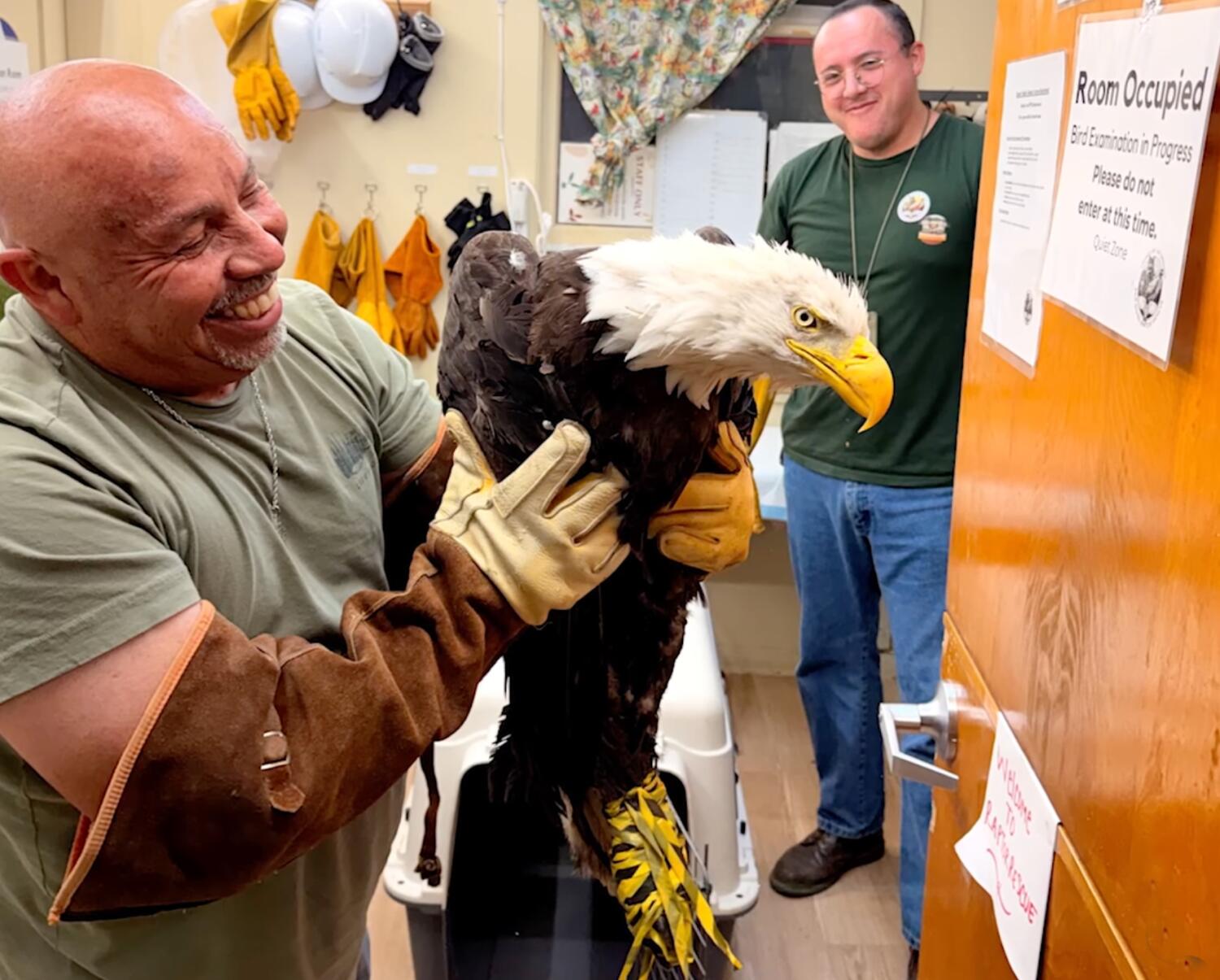
Earlier this week, veterinary teams at the Ojai Raptor Center took a desperate gamble. They performed a late-night, life-saving blood transfusion to keep the iconic raptor alive. While she remains in critical condition inside an urgent care unit, her survival hinges on answering a single, stubborn question: what is draining the life out of Big Bear’s favorite eagle?
Inside the Late Night Race to Save Patient 26-519
Wildlife medicine isn't like human healthcare. You can't just run to a local blood bank when an eagle's blood count drops to dangerous lows. When Jackie—officially designated as Patient 26-519 at the Ojai Raptor Center—arrived, initial blood tests showed severe anemia and kidney inflammation. Her red blood cell count had crashed so low that her body couldn't transport enough oxygen to sustain normal organ function.
Dr. Kat Rasp and the veterinary staff knew supportive fluids and physical rest wouldn't cut it. She needed fresh, compatible avian blood immediately.
Finding a donor bald eagle on short notice is a massive hurdle. Luckily, the California Living Museum (CALM Zoo) in Bakersfield had a resident, non-releasable bald eagle named Spirit. Teams coordinated rapidly between Bakersfield and Ojai to draw donor blood from Spirit and rush it to the hospital room.
The transfusion took place late Monday night. Avian blood transfusions carry huge risks. Birds have high metabolic rates, and cross-matching blood types in wild raptors isn't as straightforward as matching human ABO types. If the patient's immune system rejects the donor cells, the reaction can prove fatal within minutes.
Jackie made it through the procedure. By Tuesday and Wednesday, caretakers reported that her energy levels picked up. She started standing, perching, and eating both with human assistance and on her own. She even started showing her signature feisty personality, snapping at staff during health checks.
That feistiness is a fantastic sign, but nobody on the medical team is celebrating just yet.
Ruling Out the Usual Suspects in Raptor Illness
When a wild eagle collapses without obvious traumatic physical injuries like broken wings or gunshot wounds, toxicologists usually point to a few standard culprits. The Ojai Raptor Center spent the past several days systematically crossing off those suspects one by one.
First on the list was lead toxicosis. Lead poisoning is an absolute scourge among North American raptors. Eagles swallow lead bullet fragments when scavenging hunter-harvested game carcasses or gut piles. Almost half of all sampled bald eagles show evidence of chronic lead exposure. However, blood panels ruled out toxic lead levels in Jackie’s system.
Next came foreign objects. Eagles fishing in lakes frequently ingest lost fishing hooks, monofilament line, or sinkers. A full-body CT scan performed at the Veterinary Medical and Surgical Group (VMSG) showed no metal objects, no swallowed tackle, and no obvious internal cancerous tumors.
Her kidney inflammation, which looked alarming during initial diagnostic intake, has actually improved with targeted treatment.
What about rodenticide? Rat poison is another frequent killer of predatory birds. When rodents eat anticoagulant bait, they become slow, easy targets for hungry raptors. While there isn't a instantaneous definitive blood test for every rodenticide compound out there, veterinarians decided not to wait. They placed Jackie on preventative treatment for potential rodenticide exposure even though they don't suspect it's the root cause.
So why is her anemia continuing?
That's the mystery keeping experts up at night. Severe anemia without obvious blood loss, lead toxicity, or heavy metal poisoning can point to rare internal bacterial infections, parasitic blood pathogens, autoimmune conditions, or unseen metabolic disorders. Wildlife blood work takes time because specialized viral and bacterial cultures can't be rushed in a lab microwave.
What Is Happening at the Big Bear Nest Right Now
While Jackie fights for her life in an Ojai hospital room, life high above Big Bear Lake hasn't stopped.
Her long-time mate, Shadow, has stepped up in a big way. The couple welcomed two new eaglets this past April, named Sandy and Luna. Single parenting in the wild is notoriously brutal, especially when young eaglets are still learning to hunt and rely heavily on daily fish deliveries.
Shadow has been holding down the fort completely solo. Nest cam watchers from the Friends of Big Bear Valley (FOBBV) have documented Shadow routinely bringing in fresh fish, feeding Sandy and Luna, and aggressively chasing away intruding raptors.
The territorial dynamics around the nest remain intense. Naturalists spotted Shadow perching near a subadult female eagle—the very same age class of birds that got into the tussle with Jackie right before her rescue. Some viewers worried Shadow might immediately take a new mate, but avian biologists reassure fans that's unlikely right now.
Mating bonds between established bald eagle pairs are incredibly strong. Shadow's immediate biological priority is raising Sandy and Luna to full independence. His hormonal drive to court a new female won't trigger until late autumn or early winter when the next breeding cycle approaches. For now, he is focused purely on survival, territory protection, and food provision.
The Harsh Reality of Wildlife Rehabilitation Funding
Watching a dramatic rescue on a 24-hour livestream makes it easy to forget how fragile the underlying rescue infrastructure actually is.
Facilities like the Ojai Raptor Center handle hundreds of critical wildlife cases every single year, ranging from injured red-tailed hawks to majestic bald eagles like Jackie. Yet, these rehabilitation centers receive almost zero sustained government funding.
Every CT scan, every specialized antibiotic, every emergency transport, and every drop of donor blood relies almost entirely on private public donations. When Jackie was admitted, over 14,000 individuals pitched in to support her campaign and the center's broader raptor emergency care operations.
When high-profile animals make headlines, donation drives spike. But the medical equipment, specialized holding pens, and experienced staff required to save an eagle take year-round financial backing. Without non-releasable education birds like Spirit residing at facilities like the CALM Zoo in Bakersfield, emergency blood transfusions wouldn't even be an option in California.
How You Can Actually Help Raptors Like Jackie
If you're following Jackie's recovery and wondering how to turn your concern into tangible action, sitting on social media refreshing updates isn't the only thing you can do. Here are concrete ways to protect wild raptors right now:
- Ditch anticoagulant rat poisons around your home. Use mechanical traps or exclusion methods instead. Poisoned rodents are the leading cause of secondary toxicity in local owls, hawks, and eagles.
- Switch to non-lead ammunition and non-lead fishing tackle. Lead fragments in field-dressed game or discarded fishing lines pose a constant, preventable threat to scavengers.
- Respect wildlife center boundaries and communication channels. The Ojai Raptor Center has repeatedly asked the public not to call, text, or email their emergency hotlines for updates on Jackie. Phone lines must stay open for citizens reporting newly injured wildlife in real time.
- Support local wildlife rehabilitators directly. Consider donating funds or needed supplies to certified wildlife rehabilitation centers in your state.
Jackie remains in guarded, critical condition. Her journey back to the Big Bear skies is far from guaranteed, but her willingness to fight gives every specialist in her room reason to keep pushing. Veterinary teams expect to release another formal medical update after further lab work concludes early next week.