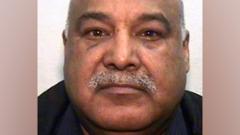
Shabir Ahmed walked out of a British prison on July 2, 2026. If you've followed the grim history of child sexual exploitation in the UK, you know exactly who he is. He’s the 73-year-old mastermind of the notorious Rochdale grooming gang—a man his vulnerable victims were forced to call "Daddy."
He served 14 years of a 19-year sentence for 30 child rape and sexual offence charges involving girls as young as 12. Back in 2012, when he was locked up, the state made a promise to his victims. They told them Ahmed would be booted out of the country the minute he finished his time. He was stripped of his British citizenship, leaving him with only his Pakistani nationality. It should have been an open-and-shut deportation.
Instead, he’s still here, living in a taxpayer-funded bail hostel under 24-hour supervision.
The British government is currently scrambling, locked in high-stakes talks with Pakistan to figure out a way to deport him. Prime Minister Keir Starmer has directed Home Secretary Shabana Mahmood to look at every conceivable option to force his removal, calling the case "particularly heinous." But the state is fighting a mess of its own making.
The 1971 Loophole Keeping a Monster in the UK
How does a convicted child rapist who isn't even a British citizen anymore avoid getting kicked out? It comes down to a forgotten piece of legislation: the Immigration Act 1971.
Under this decades-old law, certain Commonwealth citizens who settled in the UK before 1973 enjoy an ironclad protection. If you arrived before the cutoff date and maintained lawful residence for at least five years before deportation proceedings started, the law says you can't be removed. Ahmed fits that description perfectly. He moved from Pakistan to the UK decades ago, well before the 1973 deadline.
Losing his British passport didn't dissolve this specific legal shield. It’s an incredibly frustrating paradox for the public and a nightmare for the survivors.
Politicians are furious, but they're mostly playing catch-up. Conservative leader Kemi Badenoch announced her party would try to amend the current immigration and asylum bill to close the loophole instantly. Meanwhile, political heavyweight Andy Burnham vowed that "nothing is off the table" to get Ahmed out, insisting the law must adapt to put victims first.
But changing a law takes time, and Ahmed is already on the streets.
Betrayal and Terror on the Streets of Greater Manchester
While politicians debate statutes in Westminster, the real-world fallout is happening in Greater Manchester. The people who blew the whistle on the gang are living in fear.
Sara Rowbotham, the former sexual health worker who spent years gathering the evidence that brought Ahmed’s ring down when the police refused to listen, admits she’s terrified. She faces the genuine prospect of bumping into him near her home. Rowbotham points out a massive flaw in the current safety net: Britain's probation services have been starved of investment for years. Monitoring a high-risk offender requires massive resources, and there’s widespread skepticism about whether the state can actually pull it off.
Then there's the victim support—or lack thereof.
A survivor known only as "Amber" found out about Ahmed's release from the news, not from the official agencies that were supposed to protect her. She described nights of insomnia and physical illness brought on by the sudden revelation. The gang Ahmed ran was highly organized; even if he's banned from entering Rochdale itself, the fear that he could pull strings from a nearby borough hangs heavy over the survivors.
The Diplomatic Standoff with Islamabad
The legal loophole is only half the battle. The other obstacle is diplomatic.
Labour minister Jacqui Smith confirmed that a major part of the problem is that Pakistan has basically refused to take him back. Deportation isn't a one-way street. You can't just put someone on a plane; the receiving country has to agree to accept them.
Islamabad isn't exactly eager to welcome a high-profile, convicted child abuser onto its soil. Whistleblower Sara Rowbotham herself confessed to being torn on the issue. While she wants him out of Britain, she openly questions whether deporting him just exports the danger to vulnerable women and girls in Pakistan.
Right now, Foreign Secretary Yvette Cooper and Home Secretary Shabana Mahmood are trying to apply diplomatic leverage to convince Pakistan to cooperate.
What Happens Right Now?
Until the government passes emergency legislation or cuts a deal with Islamabad, Ahmed remains under a strict, expensive management plan paid for by the British public. Here’s what his current reality looks like:
- 24-Hour Supervised Housing: He must reside at an approved bail hostel with round-the-clock staffing.
- GPS Tracking: He is forced to wear an electronic monitoring tag tracking his every movement.
- Exclusion Zones: He faces a strict geographic ban preventing him from setting foot in Rochdale.
- Lifetime Registration: He is on the sex offenders register for life and banned from any contact with children or his past victims.
The Next Logical Steps for the Home Office
If the government wants to restore any semblance of public trust, they need to stop offering vague platitudes and take concrete action.
First, the Home Office must fast-track a targeted amendment to the Immigration Act 1971. The protection meant for law-abiding Commonwealth immigrants who arrived in the 1960s should never serve as a shield for individuals convicted of serious sexual violence.
Second, the Ministry of Justice needs an immediate audit of its Victim Contact Scheme. The fact that survivors are discovering the release of their abusers through media reports rather than a dedicated caseworker is an institutional failure that can be fixed with better administrative oversight.
Finally, diplomatic pressure on Pakistan needs to be tied to broader bilateral agreements. If the UK provides millions in foreign aid and security cooperation, the repatriation of non-British citizens convicted of heinous crimes must be a non-negotiable part of that relationship.
UK MP Targets Pakistani Men Behind Grooming Gangs As Cases Reopen
This video highlights the ongoing political fallout and the wider context of Operation Beaconport, which continues to re-examine historical child sexual exploitation cases across the UK.