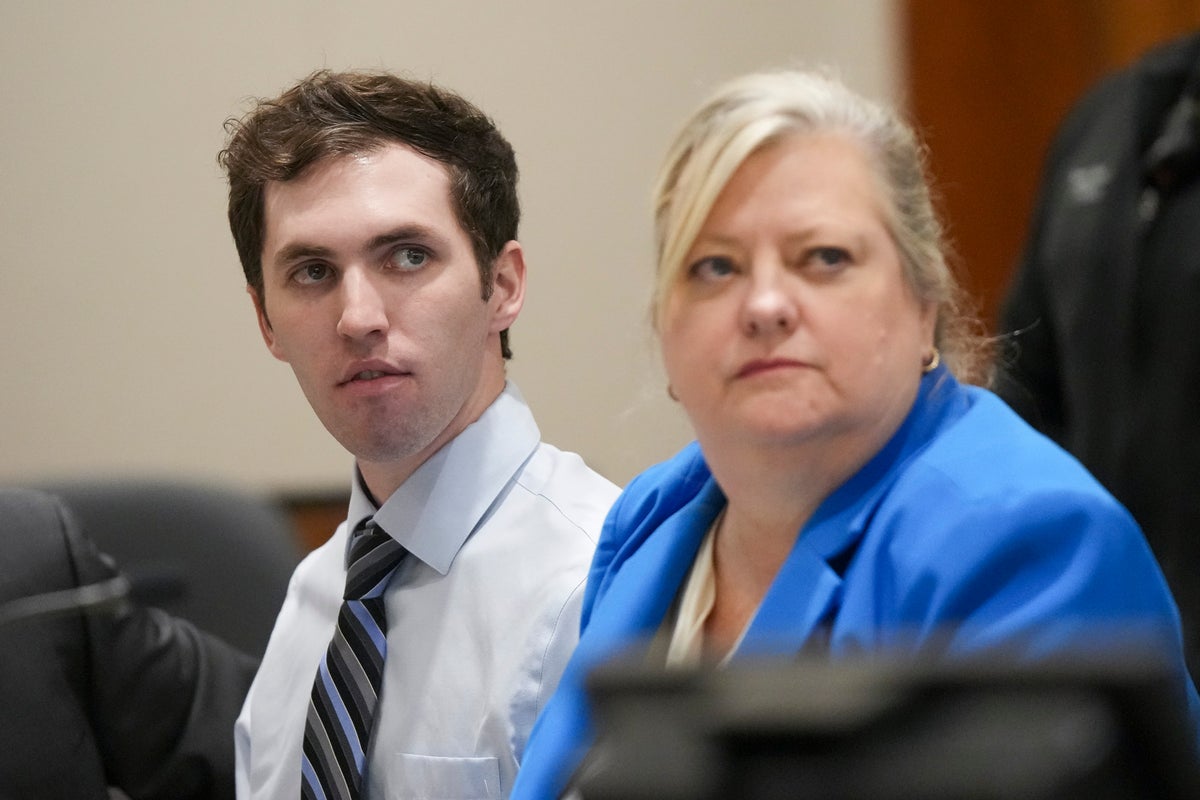
The courtroom in Provo, Utah was dead silent on Monday morning when Erika Kirk walked through the doors. She was holding hands with her late husband's mother, Kathryn Kirk. A few rows behind them sat the parents of Tyler Robinson, the 23-year-old man accused of assassinating conservative activist Charlie Kirk last September. This marks the very first time the family of the slain Turning Point USA co-founder has stood in the same room as his alleged killer.
If you think this is just another standard procedural court date, you are completely wrong. This five-day preliminary hearing is essentially a mini-trial designed to determine whether prosecutors have enough evidence to push forward with an aggravated murder trial and pursue the death penalty.
The stakes could not be higher. Donald Trump Jr. sat right there in the courtroom with the Kirk family, highlighting the massive political undercurrents of a case that has shocked the country.
Before the opening statements even began, the Kirk family issued a joint statement.
"Charlie was a beloved husband, son, brother, friend, and father," the family shared. "Every court proceeding serves as a painful reminder of his death and the loss that has irrevocably impacted our lives and the lives of his children. We remain deeply grateful for the support, prayers, and kindness we have received. This outpouring has sustained us during the darkest days of our lives."
Here is what is actually happening on the ground in Utah, what the prosecutors are laying out, and what the defense is trying to tear apart.
The Core Evidence Facing Tyler Robinson
Utah County prosecutors are not holding back. Chief Deputy Utah County Attorney Chad Grunander told State District Judge Tony Graf that the state plans to present between 40 and 50 exhibits this week. They don't have to prove guilt beyond a reasonable doubt yet. That is for the actual trial. Right now, they just need to show probable cause.
They are bringing a mountain of forensic and digital evidence to do exactly that.
The Forensic Smoking Gun
The state claims it has airtight forensic links connecting Robinson directly to the murder weapon. Authorities recovered DNA matching Robinson's profile from several key pieces of evidence found at the scene. This includes the rifle's trigger, a fired cartridge casing, two unfired cartridges, and even a towel used to wrap the weapon. When you have DNA on the trigger and the casing, it becomes incredibly difficult for a defense team to argue mistaken identity.
The Paper and Digital Trail
Then there are the written words. Prosecutors allege that Robinson basically spelled out his intentions before and after the shooting. According to court filings, Robinson left a physical note for his roommate, who was also his romantic partner.
The note explicitly stated: "I had the opportunity to take out Charlie Kirk and I'm going to take it."
If that is not enough, prosecutors also pointing to text messages Robinson sent to his partner. In one message, he explicitly noted that he had enough of Kirk's "hatred," adding that some hatred "can't be negotiated out." This paints a clear picture of premeditation and political motivation, which directly feeds into the state's pursuit of capital punishment.
What Happened on the Roof of the Losee Center Building
On the first day of the hearing, the prosecution called former Utah Valley University police Officer Chris Bagley to the stand. His testimony painted a chilling picture of how the shooting went down on September 10, 2025.
Kirk was in the middle of a massive outdoor student Q&A session in an open courtyard, addressing a crowd of thousands. Witnesses said he had just begun debating someone about gun violence when a single shot rang out. Kirk was struck in the neck. Chaos instantly erupted as thousands of people scrambled for safety.
Bagley testified that right after the shot was fired, he ran up a public staircase to reach the roof of the Losee Center building. He knew that specific rooftop offered a perfectly clear line of sight to the exact spot where Kirk had been speaking.
When Bagley reached the roof, he found a clear disturbance in the gravel. He described it as looking like a "sniper pad," a spot where someone had clearly been lying down flat to stabilize a weapon and take aim. Right next to that spot, Bagley discovered a red-and-black screwdriver left behind.
The Security Failures Under Scrutiny
While the prosecution is focused on proving Robinson did it, the defense team, led by attorney Kathryn Nester, is already pivoting. During her cross-examination of Officer Bagley, she immediately started poking holes in the campus security measures that day.
Her questions exposed a staggering lack of security for an event featuring such a high-profile, controversial political figure.
- No Metal Detectors: Despite thousands of people gathering in an open campus space, there were absolutely no metal detectors used to screen the crowd.
- No Drones: The university police department did not deploy any aerial drones to monitor the surrounding rooftops or courtyards in real time.
- No Rooftop Guards: Bagley admitted that when he showed up for work at 11 a.m. that morning, there were no law enforcement officers stationed on the roofs, stairways, or walkways.
- Understaffed Security: Only six campus officers were assigned to handle a crowd that numbered in the thousands.
The defense is clearly trying to build a narrative around the chaotic environment and potential gaps in the investigation. They want to raise doubts about how the scene was managed immediately after the trigger was pulled. Bagley noted that he found a pistol holster on the ground during his search, even though he knew the fatal shot came from a rifle. The defense will undoubtedly use these kinds of details to argue that the scene was messy and confusing.
Why This Case Could Lead to the Firing Squad
This isn't just about a life sentence. Utah prosecutors are actively seeking the death penalty. To successfully get a capital conviction under Utah law, the state must prove specific aggravating circumstances.
In Robinson's case, the prosecution is arguing that the shooting directly endangered the lives of the thousands of students and onlookers packed into the university courtyard. Firing a high-powered rifle from a rooftop into a dense crowd of people easily fits that definition.
If the judge sends this to trial and a jury convicts Robinson, he could face capital punishment. In Utah, that means execution by either lethal injection or a traditional firing squad.
Robinson's legal team has already tried to get the death penalty taken off the table completely. Judge Graf rejected that motion, leaving the highest possible stakes fully active as the hearing progresses.
Grace Amidst the Political Firestorm
The political fallout from Kirk's death continues to ripple across the country. Kirk and Turning Point USA were massive instruments in mobilizing young conservative voters. His assassination drew immediate, furious condemnation from high-ranking Republicans. President Donald Trump actually broke the news of Robinson's arrest during a live Fox News interview last September, instantly calling for the death penalty.
Yet, inside the courtroom, the emotional center of gravity remains Erika Kirk.
Following her husband's death, Erika stepped up to take the helm of Turning Point USA. Rather than retreating from the public eye, she has actively fought to ensure these court proceedings remain completely open to the public and the media, fiercely opposing defense motions to block cameras from the courtroom.
Most surprisingly, she chose radical grace during her husband's memorial service. She stood before a grieving crowd and publicly forgave the 23-year-old man accused of destroying her family.
"I forgive him because it's what Christ did and is what Charlie would do," she said during her eulogy.
What Happens Next in the Courtroom
This preliminary hearing is scheduled to run for five full days. Because the rules of a preliminary hearing allow for secondhand information and hearsay, prosecutors can move through their 40 to 50 exhibits relatively quickly without needing every single witness to fly into Provo to testify in person.
For instance, Robinson's roommate and romantic partner is not expected to take the stand live. Instead, the judge has already ruled that prosecutors can use the roommate's recorded statements and text exchanges. The defense fought hard to block this, demanding an in-person cross-examination to challenge the roommate's credibility, but Judge Graf ruled that those specific challenges must wait until the actual trial.
Once the prosecution finishes laying out its forensic puzzle, the defense will get its chance to argue that the state’s mountain of evidence doesn't meet the threshold of probable cause.
Don't expect Judge Graf to dismiss the case. Given the DNA evidence on the trigger, the physical confession note, and the digital text trail, the legal standard for a preliminary hearing will almost certainly be met. Expect the judge to officially bind Tyler Robinson over for trial by the end of the week.
If you want to track the unfolding legal strategy, watch how the defense handles the forensic DNA evidence during cross-examinations over the next forty-eight hours. That will reveal exactly how they plan to fight this case when a full jury is finally seated.