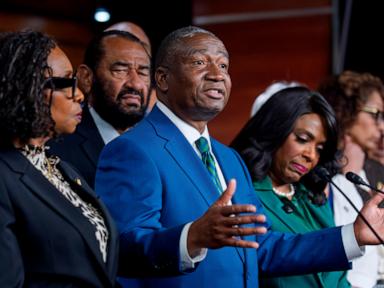
Louisiana Representative Cleo Fields is walking away from his congressional seat after state lawmakers redrew his district to hand Republicans an easy win. Instead of fighting an uphill battle in a newly minted GOP stronghold, Fields announced he’ll run for his old seat in the Louisiana State Senate following the sudden death of state Senator Larry Selders.
History is repeating itself in Baton Rouge. If you feel like you’ve read this exact story before, you aren’t crazy. Fields went through this exact same pattern back in the 1990s. He won a seat, court rulings tossed out his majority-Black district, and he was forced to step aside. Now, thirty years later, the national redistricting fight has caught him in the exact same political trap.
His exit isn’t just a personal loss for Louisiana Democrats. It represents a massive tectonic shift in how congressional maps get drawn across the Deep South.
The Supreme Court Mandate That Disassembled District 6
To understand why Cleo Fields isn’t running for reelection, you have to look back at the court rulings that got us here.
In April, the U.S. Supreme Court issued a decisive ruling in Louisiana v. Callais. The justices declared that Louisiana’s 6th Congressional District—a majority-Black district created specifically to give minority voters fair representation—relied far too heavily on race. The court labeled the district lines an unconstitutional racial gerrymander.
That single ruling pulled the rug out from under Democrats.
Following the ruling, Governor Jeff Landry and the Republican-controlled Louisiana Legislature went straight to work in May. They redrew the map from scratch. They dismantled the 6th District as a Black-majority seat, shifting its borders to cluster heavily white, conservative voters in the Baton Rouge area and southern Louisiana.
The outcome wasn't subtle. The new map leaves Representative Troy Carter’s 2nd Congressional District as Louisiana’s sole majority-Black district. Five out of Louisiana’s six seats are now primed for Republican victories.
When the legislature altered those lines, they practically erased Fields’ voter base overnight. He faced a choice: run in a district engineered to elect a Republican, or find another way to serve. He chose to step down.
In a public statement detailing his decision, Fields didn't hold back his frustration over the ruling. He called the court decision a major setback for civil rights, pointing out that minority candidates almost never win in districts where they aren't the majority. After prayer and reflection, he decided not to seek reelection in the 6th District or anywhere else in Louisiana's federal delegation.
Deja Vu in Louisiana Politics
If you follow Louisiana political history, this whole episode feels painfully familiar.
Back in 1992, Fields won a seat in the U.S. House of Representatives representing Louisiana's 4th Congressional District. That seat was a newly minted majority-Black district created after federal mandates forced Louisiana to comply with the Voting Rights Act. It stretched in a long "Z" shape from Shreveport all the way down to Baton Rouge.
Fields served two terms in D.C.. Then legal challenges struck.
Conservative activists sued, arguing the "Z" shaped district was an illegal racial gerrymander. The Supreme Court agreed and threw out the map. Louisiana redrew its lines, carved up Fields’ constituency, and put his home inside a solidly Republican district. Rather than run in a district designed for him to lose, Fields retired from Congress in 1997.
He went back home. He built a long career in the Louisiana State Senate, serving across three different decades.
Then 2024 arrived. Federal courts ordered Louisiana to create a second majority-Black district after years of litigation. Fields saw his chance. He ran for the newly created 6th District, won, and returned to D.C. after a 28-year absence.
His second stint in Congress lasted barely a single term.
Two years later, history repeated itself down to the exact detail. The Supreme Court struck down the map, state lawmakers dismantled his district, and Fields decided to return to state-level politics.
Why the Electoral Calendar Looked So Distorted
This redistricting fight didn't just alter map lines; it completely broke Louisiana's election timeline.
Normally, congressional candidate filings and spring primaries follow a predictable, smooth rhythm. But Governor Landry took the unusual step of suspending Louisiana’s scheduled May primaries. The state needed time for lawmakers to pass a brand-new map following the Supreme Court's spring mandate.
The legislature pushed congressional primaries back to November 3.
They also reinstated Louisiana’s famous "jungle primary" system. In a jungle primary, every candidate regardless of party appears on the exact same ballot in November. If no single candidate clears 50% of the vote outright, the top two finishers move to a runoff election scheduled for December 12.
This late calendar gave Republicans every advantage they needed.
National Republican leaders were already eyeing the 6th District as a top target to flip. With the district redrawn to heavily favor conservative voters in suburban Baton Rouge, any Republican candidate running on the November ballot starts with an immense built-in advantage.
Pivoting Back to Baton Rouge
Fields isn't riding off into the sunset. He’s pivoting immediately to a local power struggle.
Earlier this month, state Senator Larry Selders died unexpectedly, leaving Senate District 14 open. That district covers key parts of Baton Rouge—the exact political base Fields has represented for decades.
Instead of waging a doomed federal campaign, Fields is jumping straight into the special election for District 14.
The special election is set for December 12, with candidate qualifying running in mid-October. Fields made it clear that he feels his efforts are better spent fighting for his constituents directly at the state capitol rather than grinding out a gridlocked, unwinnable fight in Washington.
For Fields, this move is pragmatic. He retains real influence inside the Louisiana Legislature, where he already knows every player, rule, and lever of power.
What Most People Get Wrong About Southern Redistricting
A lot of political commentators frame this as a simple story about one politician giving up. That misses the bigger picture entirely.
What happened in Louisiana is part of a nationwide strategy happening across multiple states. State legislatures are actively testing how far they can push district boundaries under current Supreme Court interpretations of federal law.
Look at Alabama. The Supreme Court permitted Alabama to use a congressional map favoring Republicans for this election cycle. In Louisiana, lawmakers actually debated going even further—attempting to draw a map where Republicans could win all six seats. They eventually backed off that extreme proposal because spreading Republican voters across all six districts could have inadvertently made those seats vulnerable in high-turnout years.
Instead, they played it safe. They packed Democrats into Troy Carter’s 2nd District and made the remaining five seats comfortably red.
The Voting Rights Act of 1965 was designed to protect minority representation in states with a history of voter discrimination. But as legal standards around racial gerrymandering shift, the legal definition of what constitutes a "fair district" keeps changing. State legislatures now have significantly more leeway to redraw maps that dismantle minority-opportunity districts, provided they claim the changes are driven by partisan goals rather than racial ones.
The Real Winner in Louisiana’s Redrawn Map
Republicans scored a massive win here.
By eliminating the second Black-majority district, the GOP effectively locks in a 5-1 majority in Louisiana’s delegation to the U.S. House of Representatives. In a closely divided Congress where party control hinges on a tiny handful of seats, picking up Louisiana’s 6th District is a critical piece of the national Republican strategy.
For Democrats, this is a painful setback.
The party spent years fighting in federal court to secure two Black-majority districts in Louisiana, arguing that a state with a Black population near 33% deserves more than one representative out of six. That multi-year legal battle yielded just two years of actual representation before the courts overturned it.
How to Track the Impact of Louisiana's Redistricting
If you want to follow how this unfolds through November and beyond, keep these concrete steps in mind:
- Watch the District 6 GOP Primary: Keep an eye on which Republican candidates qualify for the redrawn 6th District in Baton Rouge. Whoever secures the GOP backing will likely hold this seat for years to come.
- Monitor Senate District 14 Qualifying: Candidate qualifying for the special election to fill the late Larry Selders' state Senate seat takes place in mid-October. Watch to see if Fields faces any significant primary challenges locally.
- Track November 3 Voting Patterns: Pay close attention to voter turnout in the newly redrawn 6th District during the November 3 jungle primary. High turnout among Black voters in Baton Rouge will show how much resistance remains against the new district boundaries.
- Follow National Voting Rights Litigation: Watch ongoing legal challenges in neighboring southern states. Supreme Court precedents set in Louisiana and Alabama will determine how maps are drawn after the next census.


