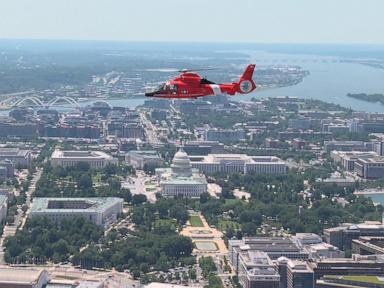
If you plan to take your boat out to watch the fireworks this Fourth of July, expect plenty of company wearing orange life vests and carrying badges. The U.S. Coast Guard is staging one of its largest peacetime security deployments in recent memory.
This isn't your typical holiday weekend patrol. Because 2026 marks the nation's 250th anniversary, federal authorities are treating the celebrations with unprecedented intensity. Washington, D.C. has officially designated its July 4 fireworks display a National Security Special Event for the very first time. That designation puts maritime security on par with a presidential inauguration or a Super Bowl.
If you think you can just cruise up the Potomac or drop anchor anywhere in New York Harbor, you're in for a rough awakening. The Coast Guard, alongside local police and state agencies, is locking down critical waterways. They are drawing hard lines in the water. Cross them, and you will face stiff fines or see your boat towed.
Understanding these restrictions isn't just about avoiding a ticket. It's about safety on a weekend when waterways become dangerously overcrowded.
The Scale of America 250 Maritime Security
The federal government expects hundreds of thousands of people to crowd the coastlines and riverbanks. To handle the influx, the Coast Guard is surging personnel, cutters, and small boats from various regional sectors directly into major metro areas. The focus centers heavily on Washington, D.C., Baltimore, and New York City.
The main driver behind this massive mobilization is a series of massive events. In Washington, it's the Salute to America 250 celebration. In Maryland, it's Sail 250 and the Baltimore Air Show. Up the coast in New York, the International Naval Review 250 is bringing an array of military and tall ships into the harbor.
With so many high-profile vessels and massive crowds in one place, intelligence agencies are taking zero chances. Officials state there are no specific, credible threats right now. But the sheer volume of people makes these waterways a top security priority. The visible presence of armed Coast Guard patrols acts as both a deterrent and a rapid-response mechanism.
Hard Rules on the Potomac and Anacostia Rivers
If you're operating a vessel in the National Capital Region, the rules are tight. The Coast Guard Sector Maryland-National Capital Region has established strict safety and security zones that reshape how you can navigate the local rivers.
Potomac River and Tidal Basin Restrictions
A mandatory safety zone takes effect starting at 8 a.m. on July 2 and runs until 6 a.m. on July 5. All waters of the Potomac River from the Francis Scott Key Bridge down to 200 yards south of the 14th Street Bridge complex are completely closed to recreational vessels.
There's only one exception to this rule. You can enter this zone if you are actively transiting directly through to get somewhere else. You cannot linger. You cannot drift. You absolutely cannot drop anchor to watch the fireworks from inside these boundaries.
The Anacostia River Lock
The restrictions don't stop on the Potomac. The Anacostia River faces similar closures, particularly around areas adjacent to public gatherings and military installations. The Coast Guard is working hand-in-hand with the D.C. Metropolitan Police Harbor Patrol to enforce these boundaries.
If you violate these zones, boarding teams will intercept you immediately. Expect federal boarding officers to step onto your deck, inspect your registration, and order you out of the zone. If you refuse or display signs of impairment, your boat will be boarded, and you will be detained.
The Crackdown on Boating Under the Influence
The surge in resources isn't just about stopping security threats. It's also about stopping boaters from killing themselves and others. The holiday weekend coincides with Operation Dry Water, a nationwide campaign targeting boating under the influence (BUI).
Operating a boat under the influence is just as illegal as driving a drunk car, but it's arguably more dangerous. The combination of intense summer heat, sun glare, and wave motion accelerates the effects of alcohol. Your reaction time drops sharply.
During this mobilization, the Coast Guard is deploying extra boarding teams specifically trained to spot impaired operators. They look for subtle signs. Weaving through traffic, improper lighting, throwing an excessive wake in a no-wake zone, or failing to respond promptly to radio commands will get you pulled over.
The legal limit for blood alcohol concentration on a boat is .08 percent, matching the standard highway law. The penalties are severe. A federal BUI charge can land you in jail for up to a year, cost you thousands of dollars in fines, and result in the immediate seizure of your vessel.
New York Harbor and Sail 250 Preparations
Further north, New York Harbor is preparing for its own massive logistical challenge. The Captain of the Port New York is placing temporary marking buoys throughout the harbor starting July 1. These buoys will remain in place through July 9 to manage the traffic from the International Naval Review and the Sail 4th 250 events.
These temporary buoys serve a critical purpose. They clearly map out security zones, spectator areas, and commercial shipping channels.
The influx of historic tall ships and international naval vessels means large commercial ships will have limited room to maneuver. A recreational boat sitting in a commercial channel creates an immediate hazard. The Coast Guard will use a combination of patrol boats and aviation assets to keep those channels completely clear.
Temporary flight restrictions will also affect drone operators. If you fly an unauthorized drone over the harbor or near federal vessels, agencies like the NYPD and Coast Guard will track the signal, seize the drone, and hit you with heavy federal fines.
What You Need to Do Before Hitting the Water
Staying out of trouble this weekend requires active planning. You can't just wing it.
First, get your hands on the official guidance. The Coast Guard publishes detailed Marine Safety Information Bulletins for every major region. Bulletin 10-26 covers the Washington D.C. area, while Bulletin 09-26 details the rules for Baltimore and Maryland. You can download these directly from the Coast Guard Navigation Center website.
Second, check your safety gear before you leave the dock. Ensure you have a properly fitting life jacket for every single person on board. Children must wear them at all times. Check your fire extinguishers, test your horn, and ensure your navigation lights work perfectly. A burnt-out bow light is an invitation for a patrol boat to pull you over after sunset.
Third, establish a designated skipper. If you're going to have alcohol on board, the person behind the wheel must stay completely sober. No exceptions.
Finally, keep your radio tuned to VHF-FM Channel 16. The Coast Guard broadcasts urgent marine safety information and updates on security zones over this channel. If an area closes unexpectedly due to crowding or safety issues, that's where you'll hear it first.
The waters will be packed, the heat will be intense, and the security presence will be heavy. Plan your routes early, respect the orange boat crews, and keep your distance from the security perimeters.
Massive security push underway in Washington, D.C., for July 4 celebrations
This video provides a breakdown of the federal security measures, local agency coordination, and major crowd management expectations in Washington, D.C. for the historic milestone celebrations.