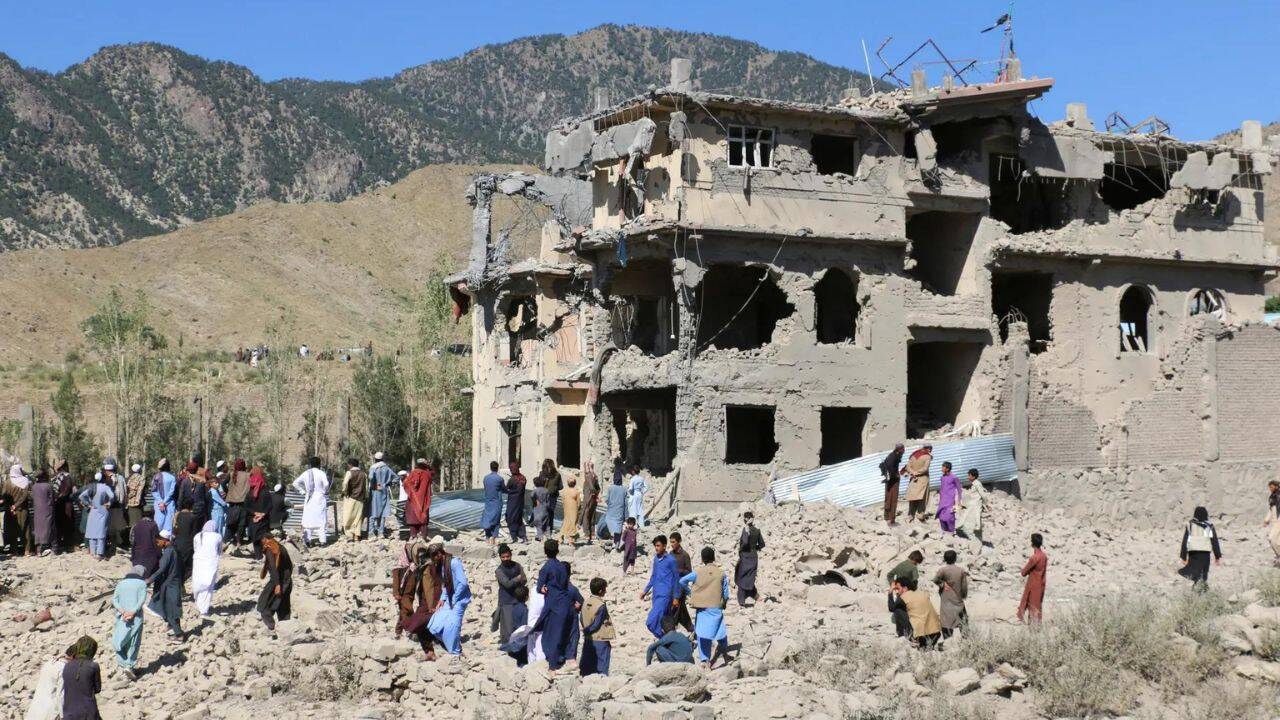
The cycle is predictable, bloody, and entirely unsustainable. Over the weekend, armed militants stormed the regional headquarters of the paramilitary Pakistan Rangers in Karachi, leaving three soldiers dead. Within twenty-four hours, the Pakistani military launched retaliatory cross-border airstrikes into eastern Afghanistan. It is a script we have seen play out repeatedly, but the human cost on the ground reveals a much darker reality than official military press releases ever admit.
When the first bombs hit Walust Village in the Giyan District of Paktika province, the initial explosion tore through homes, killing mostly women and children. What happened next highlights the sheer brutality of modern counter-border operations. As local villagers naturally rushed out of their homes to dig through the rubble and rescue survivors, a second strike hit the exact same location. This "double-tap" bombing turned a local rescue effort into a mass casualty event, leaving 28 villagers dead and 158 others injured.
Pakistan officially denies targeting civilians. They claim their ongoing military campaign, Operation Ghazab lil-Haq, strictly targets sanctuaries used by groups like Jamaat-ul-Ahrar and the Tehrik-e-Taliban Pakistan (TTP). But on the ground, the distinction between a militant hideout and a civilian home has completely evaporated.
The human cost of Operation Ghazab lil-Haq
Since Pakistan launched this campaign in February, the military strategy has shifted from occasional retaliatory actions to an active, multi-front border war. The goal was to force the Afghan Taliban to stop sheltering militants who launch attacks inside Pakistan. Instead, the strategy is creating a massive humanitarian crisis along the Durand Line while failing to secure Pakistan's major cities.
The campaign is currently playing out across three distinct zones:
- The Northern Front (Nuristan and Kunar): Heavy Pakistani artillery shelling has effectively blocked critical roads to Kamdesh and Bargi Matal. According to United Nations reports, these prolonged closures have cut off roughly 100,000 local residents from basic food and medical supplies for months.
- The Eastern Front (Khost, Paktia, and Nangarhar): This is where the heaviest aerial bombardment occurs. While Pakistan claims to target militant corps, satellite data confirmed that strikes have hit major infrastructure, including warehouses at Bagram Airfield.
- The Southern Front (Paktika): On the ground, Pakistani forces have aggressively pushed the border fence line up to 12 kilometers inside what Afghanistan considers its sovereign territory, effectively cordoning off 32 square kilometers of land.
The Afghan Taliban has not stayed quiet. Under the direct command of Defence Minister Mullah Yaqoob, Afghan forces have fired back with regular cross-border drone attacks targeting Pakistani garrison cities like Quetta, Kohat, and even the capital, Islamabad. Though Pakistan intercepts most of these drones, the threat was severe enough to trigger a nationwide domestic ban on drone flights inside Pakistan.
Why the military math does not add up
The fundamental flaw in this escalation is the belief that conventional military pressure can force the Afghan Taliban to turn on their ideological brothers. When the Taliban took back Kabul, Islamabad expected them to secure the border in exchange for years of logistical support. That expectation was a massive miscalculation. The Afghan Taliban views the TTP's fight against the Pakistani state as an internal Pakistani matter, refusing to act as Islamabad’s border police.
This leaves Pakistan trapped in a loop of hybrid coercion. They use airstrikes to signal resolve, pair them with economic pressure at vital border crossings like Torkham and Chaman—where 40% of Afghanistan’s customs revenue is generated—and hope Kabul blinks.
But Kabul isn't blinking. Instead, every civilian casualty from a secondary airstrike gives the Taliban more political leverage, deepens local animosity, and fuels recruitment for the very militant networks Pakistan is trying to destroy. You cannot bomb a border into stability when the underlying political relationship has completely broken down.
What happens next
If you are tracking this conflict, look past the official statements and watch these specific pressure points over the coming weeks:
- The Torkham Border Flow: Watch whether Pakistan completely shuts down commercial transit. This is their strongest non-military lever, but it directly harms border communities on both sides.
- Airspace Violations: Look for whether Pakistani jets continue deep strikes into provinces like Kabul and Kandahar, or if they restrict operations to the immediate border zone to avoid a total diplomatic break.
- Domestic Militant Blowback: Evaluate whether these cross-border operations actually reduce security incidents in Pakistani cities like Karachi, or if they trigger a wave of retaliatory bombings inside Pakistan.