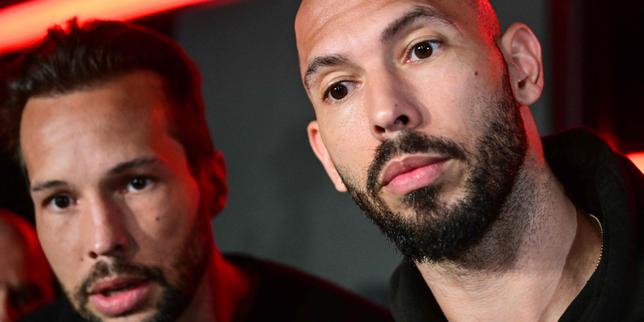
Donald Trump won't step in to save Andrew Tate and his brother Tristan from being extradited to the United Kingdom.
The White House made that stance crystal clear on Thursday, July 23, 2026, when Press Secretary Karoline Leavitt shut down speculation that the president would intervene on behalf of the controversial influencers. Asked directly whether Trump or his administration had any plans to block the transfer of the pair to British law enforcement, Leavitt offered a simple answer. "No".
That brief response sent shockwaves through the online ecosystem where the Tate brothers built their fortune and fame. For months, fans speculated that the administration would shield them from overseas prosecutions. Instead, Washington is washing its hands of the entire affair.
If you expected a dramatic presidential intervention, you fundamentally misunderstand how international legal treaties and Washington politics operate. Here is what actually happened behind closed doors, why the White House refused to throw them a lifeline, and what comes next for the Tate brothers as they face severe charges across the Atlantic.
The Miami Arrest That Shocked the Manosphere
The drama reached a boiling point on Saturday, July 18, 2026, when US Marshals arrested Andrew Tate and Tristan Tate in Miami, Florida. The federal authorities executed a sealed warrant issued on behalf of British law enforcement.
The brothers weren't hiding. They had been living in Florida after flying out of Romania on a private jet in 2025. Romanian prosecutors had previously charged them with human trafficking and sexual exploitation of minors, but those proceedings ran into endless legal snarls. Sensing an opening, the Tates relocated to the Sunshine State, where they continued broadcasting to millions of followers while maintaining high-profile political connections.
Their freedom in America was brief.
UK authorities stepped up with a massive indictment detailing dozens of criminal acts spanning nearly a decade. Upon their Miami arrest, the brothers appeared in federal court before US Magistrate Judge Lauren Louis. Their defense attorney, Joseph McBride, immediately took to the microphones outside the courthouse to denounce the proceedings as a politically motivated witch hunt.
McBride insisted that low-level functionaries at the Justice Department approved the arrest without getting the green light from top leadership. But the Justice Department publicly pushed back, clarifying that senior leadership in its Criminal Division personally vetted and authorized the warrant execution.
The defense narrative was simple. They hoped Donald Trump would recognize them as allies who helped rally young male voters during the 2024 campaign and step in to stop their arrest.
That hope proved entirely false.
Why the White House Is Keeping Its Distance
Andrew Tate, 39, built an empire around an aggressive, hypermasculine persona that aligned strongly with right-wing online circles. He regularly posted praise for Trump and even tried building direct ties with Donald Trump Jr. and Barron Trump. So why wouldn't the president throw him a lifeline?
Politics is cold. Realpolitik is colder.
Protecting two men facing dozens of serious sexual offense charges in an allied nation carries massive political downside and zero tangible reward. Taking a bullet for internet influencers facing rape allegations isn't sound political strategy.
Secretary of State Marco Rubio made the administration's position explicit while traveling in the Philippines on July 22. Rubio stated plainly that the State Department has no intent to poke its nose into the judicial process.
"There's no role for us to play at this moment or maybe ever in that regard," Rubio told reporters.
That line says everything. By framing the issue purely as a standard judicial matter between law enforcement agencies, the administration insulated itself from claims of political favoritism.
Scrutiny was already building on Capitol Hill. Democrat Representative Yassamin Ansari of Arizona sent a formal letter to House Oversight Committee Chairman James Comer. She demanded an immediate probe into whether any Trump administration officials, congressional staffers, or presidential associates attempted to shield the Tates from law enforcement.
Ansari made her point bluntly in her letter: no individual, regardless of their wealth, social media clout, or access to the first family, stands above the law. Faced with congressional oversight threats and severe criminal allegations against the brothers, the White House chose the only logical path. They stepped out of the way.
Understanding the 59 UK Charges Against the Tate Brothers
To understand why this legal avalanche is impossible to stop politically, you have to look at the charges. British prosecutors aren't coming after the Tates for controversial tweets or offensive podcast takes. The Crown Prosecution Service stacked a total of 59 charges against the two brothers for alleged offenses committed between 2010 and 2017.
Andrew Tate faces 42 individual charges, including:
- Seven counts of rape
- Three counts of arranging or facilitating trafficking for sexual exploitation
- Three counts of assault occasioning actual bodily harm
- 19 counts related to child indecent imagery and extreme pornography
Tristan Tate, 38, faces 17 individual charges, including:
- Two counts of rape
- One count of sexual assault
- Three counts of arranging or facilitating human trafficking for sexual exploitation
These charges build upon earlier allegations brought by UK authorities and existing indictments in Romania. Additionally, the state of Florida opened its own criminal investigation into the brothers in March 2025.
When prosecutors assemble an indictment of this scale involving multiple jurisdictions, political leaders don't interfere. Doing so creates a dangerous precedent that ruins diplomatic relationships with top intelligence and security partners like the UK.
What Happens Next in the Federal Extradition Process
Now that the White House has bowed out, the legal process moves through standard federal channels. The extradition of dual citizens like the Tates follows a strict legal mechanism governed by the 2003 US-UK Extradition Treaty.
The process doesn't happen overnight. It follows five specific phases.
Phase 1: Judicial Review in Federal Court
First, a US magistrate judge in Miami must evaluate the evidence provided by the United Kingdom. The court doesn't decide guilt or innocence. Instead, the court decides whether the British evidence establishes "reasonable suspicion" under the 2003 treaty and whether dual criminality applies. Dual criminality means the acts charged in the UK would also constitute serious crimes under US federal or state law. Because rape, sexual assault, and sex trafficking are major felonies in both countries, this requirement is easily met.
Phase 2: Defense Legal Challenges
The Tates' legal team, led by Joseph McBride and extradition specialist Jacques Semmelman, will challenge the request at every step. McBride already argued that the UK cannot legally demand extradition while Romanian proceedings remain open. The defense will also claim that publicity prevents a fair trial in London. Extradition defense experts note these arguments rarely win in US federal courts, but they do consume time.
Phase 3: Certification by the Federal Court
If Judge Louis finds the UK request meets treaty requirements, the judge certifies the case to the US Department of State. Crucially, an order of extradition certification cannot be appealed in the traditional way. The Tates would have to file a writ of habeas corpus in federal district court, which triggers another round of judicial review.
Phase 4: State Department Authorization
Once the courts clear the request, the final decision sits on the desk of Secretary of State Marco Rubio. While the Secretary of State technically holds statutory discretion to sign or reject the surrender warrant, political rejections under the 2003 treaty are almost unheard of for non-political criminal charges like rape and trafficking.
Phase 5: Transfer of Custody
After the surrender warrant is signed, US Marshals hand the brothers over to British officers at an airfield for transport directly to a British court.
This whole sequence takes time. Experts familiar with US-UK extraditions estimate appeals and writ challenges could drag out the timeline for 12 to 24 months. But barring a massive procedural flaw in the UK paperwork, the law heavily favors extradition.
The Real Myth About Presidential Pardons
Many online commentators mistakenly asked if Donald Trump could simply issue a presidential pardon to wipe out the Tates' legal trouble.
That shows a complete misunderstanding of constitutional power.
Article II, Section 2 of the US Constitution grants the president authority to pardon offenses against the United States. That authority applies exclusively to federal crimes prosecuted in US courts. A president cannot pardon:
- Crimes charged by foreign nations like the United Kingdom
- Crimes charged by individual states like Florida
- Civil judgements or foreign extraditions
Trump could not pardon Andrew or Tristan Tate out of these 59 UK charges even if he wanted to. The president holds no legal authority over British criminal indictments.
Actionable Takeaways for Tracking the Case
If you are following this legal saga, ignore social media rumors and focus on actual court dockets. Here is how to track what happens next:
- Monitor PACER Dockets: Search the U.S. District Court for the Southern District of Florida under United States v. Tate to see sealed filings, bail motions, and extradition hearing schedules.
- Watch for Habeas Filings: The real legal fight will occur if the magistrate judge certifies extradition and defense attorneys file a habeas corpus petition to block surrender.
- Track the Crown Prosecution Service Updates: Official announcements from the UK CPS will detail schedule adjustments for potential trials in London.
- Separate Noise from Law: Ignore political posturing on streams and podcasts. The 2003 US-UK Extradition Treaty operates almost entirely on procedural facts, not political allegiance.
The White House made its stance official, leaving Andrew and Tristan Tate to face the American federal court system alone.