Imagine stepping out of a truck to save lives, only to face a barrage of stones and angry shouts. This is the grim reality for medical teams in eastern Democratic Republic of Congo right now. An escalating Ebola outbreak is sweeping through provinces like Ituri, but health workers aren't just fighting a deadly virus. They're dodging physical assaults.
The Bundibugyo strain of Ebola has re-emerged, and with it, an old, familiar enemy has grown stronger. Dangerous rumours are spreading through communities faster than the disease itself, convincing residents that the virus is a hoax or, worse, a conspiracy. When medical teams try to manage highly infectious bodies or set up treatment centers, local panic boils over into raw violence.
The Deadly Cost Of A Burial
Traditional funerals in northeastern DR Congo are deeply communal events. Families wash the dead, touch the bodies, and gather in large numbers to mourn. But with Ebola, a corpse is a ticking biological bomb. The virus thrives in bodily fluids, making dead bodies incredibly infectious.
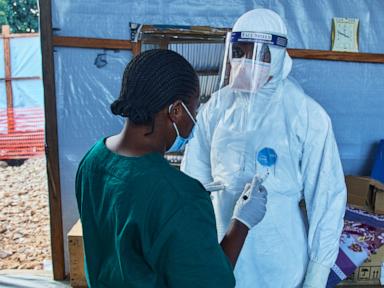
When international agencies and local health workers step in to enforce safe, dignified burials, it clashes violently with local customs. To residents already suspicious of outside intervention, seeing teams in white, faceless hazmat suits take away their loved ones looks terrifying.
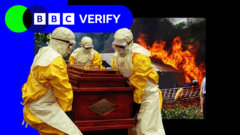
Recently, in the east of the country, an angry crowd attacked health workers who were trying to bury an Ebola victim safely. The hostility grew so intense that the medical team had to abandon the coffin entirely to save their own lives.
Leaving a highly infectious corpse exposed in a community is a worst-case scenario. It guarantees the virus will spread to anyone who touches it, creating a vicious cycle where more people die, fuel more panic, and trigger more aggression against medical teams.
[Image of Ebola virus transmission]
Why People Believe The Lie
It's easy to look at the situation from the outside and wonder how anyone could think a lethal virus isn't real. But suspicion doesn't happen in a vacuum. Eastern DR Congo has endured decades of conflict, political instability, and neglect. When heavily funded international organisations suddenly roll into a village with expensive vehicles and high-tech gear, locals get suspicious. They ask why there's endless money to fight Ebola, but almost nothing to cure the poverty, hunger, or militia violence they face every single day.
This deep-seated distrust makes communities fertile ground for wild misinformation. Rumours quickly morph into local truths. Some believe Ebola is an invention by politicians to delay elections or siphon foreign aid money. Others think the treatment centers are actually where people are injected with the virus.
When a patient enters an isolation ward and dies alone, away from their family, the community sees it as proof of foul play. They don't see a medical failure. They see a murder.
No Vaccine For This Fight
During previous Ebola outbreaks, medical teams had a powerful weapon, the Ervebo vaccine. It saved countless lives during the massive 2018–2020 epidemic. But the current 2026 crisis involves the Bundibugyo strain, and the existing vaccines don't work against it.
The World Health Organization has raised alarms, noting that this outbreak is spreading with terrifying speed across multiple provinces, and even crossing borders into neighbouring Uganda. Without an approved vaccine or targeted antiviral drugs, health workers have to rely entirely on isolation, supportive care, and strict contact tracing.
But you can't trace contacts when people are hiding their sick. You can't isolate patients when medical trucks are being stoned.
Organizations like Médecins Sans Frontières are finding it incredibly difficult to deploy resources to the hardest-hit zones. Every single medical intervention requires an armed escort or intense community negotiation just to keep the doctors and nurses alive.
Flipping The Strategy To Stop The Violence
Throwing more security forces at the problem won't fix it. In fact, sending armed guards with medical teams usually reinforces the idea that the government and outsiders are trying to control the population by force. To stop the attacks and contain the virus, the response strategy has to shift from enforcement to true partnership.
- Ditch the top-down lectures: Medical experts need to stop talking down to communities. Showing up with a megaphone and telling people their traditions are dangerous breeds immediate resentment.
- Empower trusted local voices: People don't trust foreign doctors or government officials, but they do trust their local religious leaders, youth advocates, and traditional healers. These are the people who need to handle the education.
- Incorporate traditions instead of crushing them: Instead of banning family presence at burials, teams must find compromises. Families can be given protective gear to view the body from a safe distance or participate in prayers without touching the deceased.
- Address broader community needs: If an agency rolls into a village to fight Ebola, they should also bring basic necessities like clean water, general healthcare supplies, and food. Showing that you care about the community's survival as a whole builds immediate goodwill.
Right now, the emergency response is lagging behind the crisis. If international groups and local authorities don't change how they talk to communities immediately, the death toll will keep rising. The primary obstacle to ending this outbreak isn't a lack of medical knowledge. It's the wall of terror and misinformation that turns life-saving medicine into a target for violence.