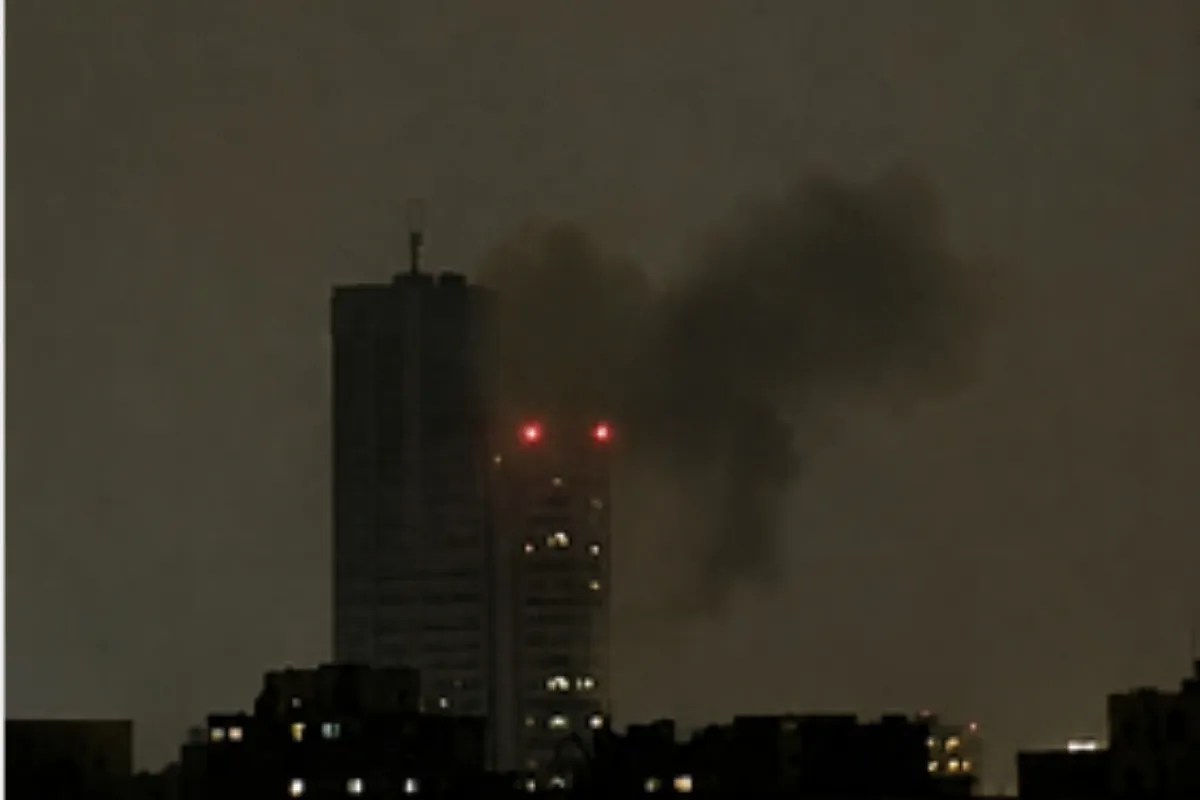
Tensions in the Persian Gulf just reached a dangerous breaking point. When air raid sirens started wailing across Bahrain in the middle of the night, residents were told by the Ministry of Interior to drop everything and head to the nearest safe location immediately. It wasn't a drill. Iranian drones and cruise missiles were incoming, targeting military and tech assets across the small island nation.
If you think this is just another distant military spat, think again. The ripple effects of this direct confrontation touch global oil supply lines, tech infrastructure, and international air travel.
What Actually Happened During the Midnight Attacks
The Iranian Islamic Revolutionary Guard Corps launched coordinated drone and missile strikes directed at multiple targets inside Bahrain. Air defense systems scrambled into action across the kingdom, intercepting several aerial projectiles over residential and commercial zones.
Iran claimed its strikes zeroed in on key military and infrastructure points. Specifically, Tehran targeted the Sheikh Isa Air Base, where American forces operate, alongside central data center facilities in the region. Earlier reports also pointed to attacks on radar systems stationed at Jabal al-Dukhan, Bahrain's highest peak.
Bahrain's Interior Ministry issued urgent public safety alerts on official channels. Citizens and expatriates were advised to remain calm, stay indoors, and avoid key security or military installations.
Panic spread quickly on social media, but authorities warned against sharing unverified footage or operational details that could inadvertently aid targeting accuracy. Emergency services remained on high alert throughout the night, with air raid sirens blaring across Manama.
Why Bahrain Became a Prime Target for Tehran
Bahrain occupies a uniquely sensitive geographic and strategic position in the Middle East. Situated right in the heart of the Persian Gulf, the island country hosts the United States Navy's Fifth Fleet. That military presence makes it an absolute magnet for Iranian retaliation whenever regional hostilities erupt between Washington and Tehran.
When direct clashes between US forces and Iranian assets intensified, Tehran made its strategy crystal clear. It decided that any regional country hosting American troops, bases, or critical communications setups would be treated as an active theater of war.
Bahrain isn't the only Gulf nation caught in this crossfire. Neighboring Kuwait has also faced waves of Iranian drone strikes aimed at US logistics bases and regional energy facilities. But Bahrain's tiny geographic footprint makes missile strikes feel far more immediate and terrifying for its local population.
The Bigger Picture Behind the Broken Ceasefire Deals
To really grasp why bombs are falling right now, you have to look at the chaotic sequence of diplomatic failures over recent months.
A diplomatic push mediated by Pakistan had briefly resulted in a memorandum of understanding aimed at cooling down direct hostilities between Washington and Tehran. For a short moment, it looked like a broader regional war might be averted.
That fragile truce fell apart almost overnight.
Disagreements over shipping routes in the Strait of Hormuz sparked a new cycle of aggressive tit-for-tat exchanges. American airstrikes hit targets inside Iran, and Tehran responded by striking back at Gulf nations hosting US military infrastructure.
Hardliners in Tehran pushed for aggressive pre-emptive hits rather than waiting for incoming strikes. They argued that any threat should be treated as an active attack, leading directly to the overnight missile salvo that sent Bahrain into lockdown.
Real World Consequences for Residents and Travelers
War isn't abstract when sirens wake you up at 2 AM.
For the hundreds of thousands of foreign workers and local citizens living in Bahrain, daily life turned upside down in an instant. The government enacted strict guidelines to manage public safety and prevent mass chaos.
- Flight disruptions hit major regional airlines, leading to rerouted international flights and temporary airspace closures.
- Public gatherings and non-essential travel were severely restricted near key infrastructure zones.
- The King Fahd Causeway, connecting Bahrain to Saudi Arabia, saw tight security checkpoints and fluctuating operational status.
- Emergency protocols required households to stock basic supplies, water, and emergency medical kits.
Foreign diplomatic missions, including the US Embassy and the UK Foreign Office, issued updated travel warnings urging their nationals to remain indoors, maintain constant contact with embassies, and prepare emergency exit plans.
Economic Impact on Global Markets and Energy Routes
Whenever missiles fly over the Persian Gulf, global financial markets react instantly.
The Strait of Hormuz lies right on Bahrain's doorstep. It is the single most vital maritime choke point for global oil transportation, carrying roughly a fifth of the world's petroleum supply. Iranian naval activity and missile strikes nearby send oil prices spiking immediately.
Energy traders don't wait around to see if a tanker gets hit. They price in the risk right away. Increased shipping insurance premiums mean higher freight costs for every barrel of oil moving out of the Gulf. That cost eventually trickles down to gas stations and consumer prices worldwide.
Tech infrastructure is another unexpected casualty in this conflict. Striking physical data centers and communications relays disrupts regional logistics, banking networks, and corporate cloud operations. Tehran's shift toward targeting digital and energy infrastructure signals a dangerous modern doctrine where civilian digital backbones are treated as military targets.
Mistakes People Make When Following Gulf Conflict News
Navigating news during an active military conflict is tricky. Misinformation spreads fast, and bad reporting creates unnecessary panic.
1. Believing Unverified Videos on Social Media
During late night attacks, old footage from entirely different conflicts gets re-uploaded as "live coverage." Always cross-reference footage with verified news feeds or official government announcements before sharing.
2. Assuming Attacks Mean Full Scale Ground Invasions
Drone and cruise missile strikes are designed for targeted destruction and psychological pressure. They do not necessarily signal an immediate amphibious or ground invasion of the target country.
3. Ignoring Official Local Directives
When local authorities activate air sirens, debating the political nuances behind the attack doesn't keep you safe. Following shelter protocols immediately is the only sensible action.
Actionable Steps to Stay Safe in High Risk Conflict Zones
If you live in or travel through regions experiencing active military escalation, taking practical precautions beforehand is critical.
- Maintain an emergency bag containing essential medications, official documents, passports, cash in local and foreign currencies, and portable power banks.
- Register your presence with your native country's embassy or consulate to receive real-time security alerts and evacuation directives.
- Identify the sturdiest interior rooms or designated shelter areas within your building, staying far away from exterior windows and glass doors.
- Keep at least three to five days of non-perishable food and clean drinking water stored at home.
- Rely solely on verified state media outlets and official ministry statements for emergency updates rather than speculative social media channels.


