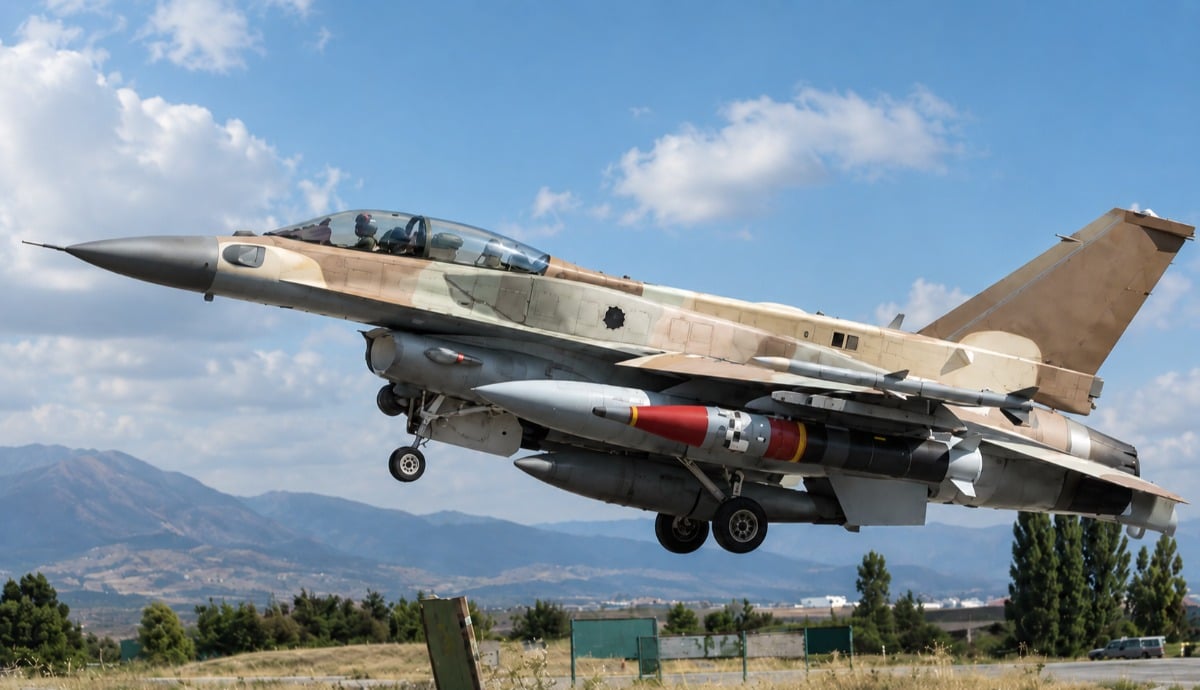
Western militaries are facing a brutal reality check. Years of underfunding and a slow-moving defense industry have left many countries completely unprepared for high-intensity warfare. While defense officials spend years debating specifications on paper, real conflicts are moving at lightning speed. This exact dynamic explains why the massive crowd at the Farnborough Airshow is focusing heavily on one specific chalet.
Rafael Advanced Defense Systems is showcasing its lineup of battle-tested weapons at Farnborough, and the reception highlights a massive shift in how global militaries buy hardware. Buyers don't want promises anymore. They want weapons that have already faced real combat environments, survived heavy electronic interference, and successfully intercepted modern threats.
The state-owned Israeli defense giant has seen its international order books surge, despite intense global political friction. European nations are quietly signing massive checks because their own domestic production lines can't deliver ready-now technology fast enough. When a real crisis hits, a combat-proven track record beats an unproven prototype every single time.
The Standoff Strike Powerhouses
Modern air forces can no longer assume they will dominate the skies on day one of a conflict. Advanced air defense grids mean fighter jets need to release their payloads from hundreds of kilometers away. Rafael is addressing this specific headache at Farnborough by highlighting its long-range precision strike portfolio.
The standout here is the Ice Breaker cruise missile. This isn't just another missile designed for optimal weather conditions on a test range. It is a fifth-generation weapon engineered specifically to slip through heavy GPS jamming and highly contested airspaces. It relies on an advanced imaging infrared seeker combined with artificial intelligence for scene matching. Basically, the missile looks at the terrain, compares it to its internal data, and finds the target without needing a satellite signal. It can hit targets up to 300 kilometers away, whether launched from a fighter jet or a ground vehicle.
Alongside it sits the Rocks, a supersonic air-to-surface missile designed to bust open heavily fortified or deeply buried underground structures. Air forces are realizing that standard GPS-guided bombs are practically useless when heavy electronic warfare units scramble the skies. The Rocks uses satellite navigation but switches to optical targeting during its final approach, making it incredibly difficult to throw off course. At Farnborough, Rafael is pushing expanded launch platform developments for this missile, opening the door for more Western fighter jets to carry it.
The Laser Integration Taking Over Air Defense
Air defense used to be about shooting expensive missiles at expensive planes. Today, it is about trying not to go bankrupt while shooting down cheap drones and incoming rockets. The math of traditional air defense is completely broken. Spending a million dollars on an interceptor missile to destroy a two-thousand-dollar drone is a quick way to lose a war of attrition.
That brings us to the Iron Beam system. While many countries are still experimenting with laboratory lasers, Rafael has spent the last few years validating how to integrate its high-energy laser weapon directly into the Iron Dome's battle management architecture.
This integration is where the real value lies. Air defense commanders don't have to choose between a laser or a missile. The automated command system analyzes the incoming threat, calculates the atmospheric conditions, and automatically routes the target to either a traditional kinetic interceptor or the laser beam. The laser offers a virtually infinite magazine and brings the cost per interception down to mere dollars.
At the show, the focus has shifted to the Iron Beam 450, which offers scalable directed-energy protection across mobile and forward-deployed setups. This isn't theoretical concept art. It is a direct response to the massive swarm attacks seen in recent regional conflicts.
The Drone Threat Requires Hard Kill Layers
Electronic warfare can stop a lot of drones, but it cannot stop all of them. When military planners look at the sheer volume of loitering munitions used in current conflicts, they realize that soft-kill jamming isn't enough. You need physical, kinetic options that don't cost a fortune.
To fill this critical gap, Rafael is using Farnborough to pitch its layered counter-UAS suite. The company is moving away from the idea of a single silver bullet for drone defense. Instead, they are pushing a family of affordable hard-kill solutions including Sky Dart, Hunter Eagle, and Ghost Hunter.
These systems are designed to intercept low-altitude, fast-evolving drone threats at a fraction of the cost of larger anti-aircraft missiles. By pairing these kinetic interceptors with their established electronic warfare platforms, they are giving frontline troops a practical way to survive swarm tactics without draining their primary missile stockpiles.
Why European Procurement Has Swapped Ideology for Reality
There is a massive disconnect between political rhetoric and actual defense purchasing. Many European nations talk a big game about building domestic supply chains and relying solely on continental manufacturers. Yet, when you look at actual defense contracts, the reality looks very different.
Take Germany as a prime example. Berlin recently approved a massive 451 million dollar deal to purchase 90 Litening 5 targeting pods from Rafael for its Eurofighter Typhoon fleet. This happened during a period of significant political tension and public debate. Why did Germany do it? Because the Litening 5 is already carried by more than 28 air forces globally and works flawlessly across multiple aircraft types. European alternatives are simply years away from matching that level of maturity. When your defense posture requires immediate readiness, you cannot afford to wait five to ten years for a domestic consortium to finish its development cycles.
Rafael is smart enough to know that selling directly from Israel can cause political headaches for buyers. Their strategy to bypass this involves building a deeply integrated European industrial ecosystem. They aren't just shipping crates of weapons from the Middle East. They are establishing local manufacturing infrastructure and subsidiaries across Europe. This approach creates local jobs, secures the supply chain, and offers accelerated delivery timelines that traditional procurement models simply cannot match.
The Missing Pieces and Future Risks
No weapon system is entirely perfect, and relying heavily on a single foreign supplier always carries risks. Critics rightly point out that over-reliance on external state-owned firms can expose a military to sudden supply chain bottlenecks if that supplier gets locked into a major domestic conflict. When a manufacturing nation needs every single missile for its own survival, foreign export orders naturally get pushed down the priority list.
Furthermore, the open-architecture design that Rafael champions is a double-edged sword. While it allows western forces to integrate these systems into their existing command structures, it also demands constant cyber vigilance. The software driving these AI-based scene-matching missiles and automated air defense grids must be continually updated to counter the rapid software iterations of modern adversaries.
Moving Past Paper Specifications
If you are a defense strategist or procurement officer attending Farnborough, the lesson from the Israeli pavilion is clear. Stop buying defense tech based on polished brochures and optimistic multi-year timelines. The era of the hypothetical weapon system is over.
To protect assets against modern, fast-moving threats, look for hardware that has already survived dense electronic jamming, real swarm attacks, and actual combat conditions. The global threat climate is accelerating way faster than traditional bureaucratic procurement processes can handle. Prioritizing immediate availability, localized supply networks, and combat-proven maturity is the only way to avoid holding an empty inventory when things go south.


