International waters aren't the legal shield they used to be. For over four years, Moscow has relied on a massive, poorly maintained armada of ghost ships to keep its oil revenues flowing despite heavy Western sanctions. Western nations mostly watched from afar, tracking these vessels on digital maps while complaining about the environmental risks.
That hands-off strategy is dead.
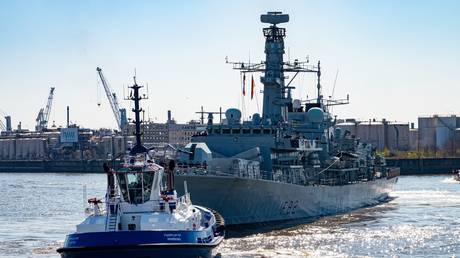
The French navy just boarded and detained a sanctioned oil tanker called the Deliver in the Mediterranean Sea near Sicily. This marks the fifth time France has targeted a vessel tied to Russia's shadow fleet. European navies are no longer just monitoring the maritime shell game. They're deploying commandos to halt it.
If you want to understand why this shift matters, look at how the chess pieces are moving. The Deliver had loaded up at Primorsk, a major Russian export terminal on the Baltic Sea. It braved the Atlantic, slipped into the Mediterranean, and was charting a course for Singapore through the Suez Canal. It almost made it out of European reach. Instead, French authorities intercepted it right in the middle of a vital global shipping lane.
The Fraudulent Flag Loophole That Triggered the Boarding
You can't just stop a commercial ship in international waters because you don't like its cargo. International maritime law protects freedom of navigation on the high seas. This legal barrier is exactly what Russia has exploited to bypass the G7 oil price cap.
But the operators of the Deliver made a critical mistake that gave the French navy perfect legal justification to strike.
The tanker was flying the flag of Cameroon. However, European maritime intelligence discovered that Yaoundé had officially purged the ship from its registry weeks earlier. In the eyes of maritime law, a ship stripped of its registry but still flying a flag is considered a stateless vessel.
Under the United Nations Convention on the Law of the Sea, warships have a "right of visit" to board any vessel suspected of being without nationality. The moment the Deliver sailed without a valid registration, it lost its sovereign protection. French commandos used this exact technicality to fast-rope onto the deck, inspect the paperwork, and divert the ship.
Europe Escalates the Maritime Crackdown
This isn't a one-off stunt by Paris. We're seeing a coordinated, multi-nation offensive designed to raise the financial stakes for companies willing to haul Russian crude.
The timeline of interventions over the last few months shows a clear pattern of escalation across Europe's most vital waterways.
- May 31: French forces seize the Tagor in the Atlantic Ocean, 400 nautical miles west of Brittany, exposed for flying a fraudulent Cameroonian flag while carrying Russian oil.
- June 14: The British military intercepts and detains the shadow fleet tanker Smyrtos right inside the heavily trafficked English Channel.
- June 23: The French navy tracks and strikes the Deliver near Sicily, cutting off its path to the Asian market.
Nine suspected shadow fleet vessels have been physically detained or heavily inspected across European waters since January. The UK government went a step further, granting explicit military authorization for armed forces to board suspicious tankers navigating British territorial zones. London is even reviewing plans to seize and sell off nearly 100,000 tonnes of Russian crude from intercepted tankers, with the intent to send the cash directly to Ukraine.
Why the Shadow Fleet Still Runs the Risk
The Kremlin didn't take long to react to the Sicily operation. The Russian embassy in Paris immediately blasted the seizure as an act of state-sponsored piracy that violates international law. But beyond the angry diplomatic rhetoric, Moscow faces a structural problem. It cannot afford to stop using these ships.
The math behind the shadow fleet explains why operators keep taking these massive risks. Russia relies on these aging, un-insured tankers to move roughly 70% of its seaborne oil exports. Without them, the Kremlin would have to comply with Western price caps, starving its military budget.
Most of these vessels are rust buckets owned by anonymous shell companies registered in offshore tax havens. They frequently change their names, spoof their transponder signals to fake their locations, and transfer oil from ship to ship in the middle of the ocean to hide its origin. Cameroon's government has even issued public warnings about how aggressively Russian front companies are exploiting the African nation's flag to disguise illicit transit.
Practical Realities of the Maritime Oil War
For shipping logists, global traders, and insurers, the rules of the ocean have fundamentally shifted. You can no longer assume that a ship operating outside Western financial systems is safe from physical intervention.
If you track maritime energy flows or manage compliance, these developments demand immediate tactical adjustments.
Watch the Outcast Registries
Do not trust the paperwork on face value. The compliance breakdown on the Deliver proves that flag states are actively purging vessels without updating global databases in real time. Pay close attention to ships flying flags of convenience that have recently seen spikes in tonnage, specifically Cameroon, Gabon, and Eswatini.
Map the Choke Points
The days of shadow tankers moving freely through European waters are over. Expect high-friction enforcement actions to concentrate around the Danish Straits, the English Channel, and the waters surrounding Sicily. These geographic bottlenecks make it easy for European navies to track transit patterns and deploy boarding teams when a ship's registration lapses.
Prep for Environmental Collateral
This aggressive boarding strategy carries real physical danger. Most shadow fleet vessels are over 15 years old, lack standard protection, and bypass mandatory safety inspections. Forcing these heavily loaded, poorly maintained tankers to divert to alternative anchorages significantly increases the risk of structural failure or major oil spills along the European coastline.
The European Union is currently putting the final touches on its 21st sanctions package against Russia. While earlier diplomatic efforts focused entirely on bank accounts and corporate entities, the real battleground has shifted to the open ocean. By physically seizing vessels like the Deliver, Europe is demonstrating that it's finally willing to use hard military power to break Russia's maritime lifeline.