The phone at Zouhaeir Hertelli's funeral home near Paris’ Orly airport won't stop ringing. Every few minutes, a grieving family or a stressed-out medical worker asks the exact same question. Do you have room for one more body?
With every single one of his 32 cold-room slots filled, Hertelli has to keep saying no.
It's a grim, quiet crisis unfolding across the French capital. Paris mortuaries are completely full. A record-smashing June 2026 heatwave just tore through Western Europe, leaving a trail of packed emergency rooms and overflowing morgues in its wake. Public Health France dropped its first preliminary numbers, and they are brutal. During the three-day peak of the heatwave, the country saw at least 1,000 excess deaths above the normal baseline.
On a typical day in April or May, France records between 900 and 1,000 deaths nationwide from all causes. Last Wednesday, as temperatures shattered all-time records, that number jumped to over 1,200. On Thursday and Friday, it blew past 1,400 daily deaths.
This isn't just a bad summer week. It's a systemic failure of urban infrastructure.
The Brutal Reality of the Silent Killer
We tend to think of natural disasters as loud events. We look for the howling winds of a hurricane or the visible destruction of a wildfire. Heat is different. It doesn't knock down buildings, but it breaks human bodies with terrifying efficiency.
World Health Organization Director-General Tedros Adhanom Ghebreyesus didn't mince words, calling Europe the fastest-warming continent on Earth. It's heating at roughly twice the global average rate. Right now, over 150 million Europeans are trapped under extreme heat warnings.
What makes this specific wave so lethal is the one-two punch of daytime highs and nighttime lows. It's one thing when the thermostat crosses 40°C (104°F) at 3 PM. It's another thing entirely when the air stays suffocatingly hot at 2 AM. Without air conditioning—which is incredibly rare in French homes—the human body never gets a chance to cool down, reset, and recover. Heart rates stay elevated, core temperatures creep up, and organs simply begin to fail.
The data shows exactly who is bearing the brunt of this:
- The Elderly: 85% of the excess deaths involved people aged 65 and older.
- The Isolated: The vast majority of these deaths occurred at home, not in hospitals.
- The Dense Suburbs: The sharpest spike in mortality hit the Île-de-France region, the concrete-heavy urban sprawl surrounding Paris.
Emergency doctor and MP Philippe Juvin warned that the current count of 1,000 deaths is likely a massive underestimate. Because so many people live alone, health officials fully expect to find more victims in their apartments days or weeks after the heat breaks. French interior minister Laurent Nuñez noted that ambulance services had to respond to a staggering 122,000 callouts during the peak heat period alone.
Why European Cities Are Heat Traps
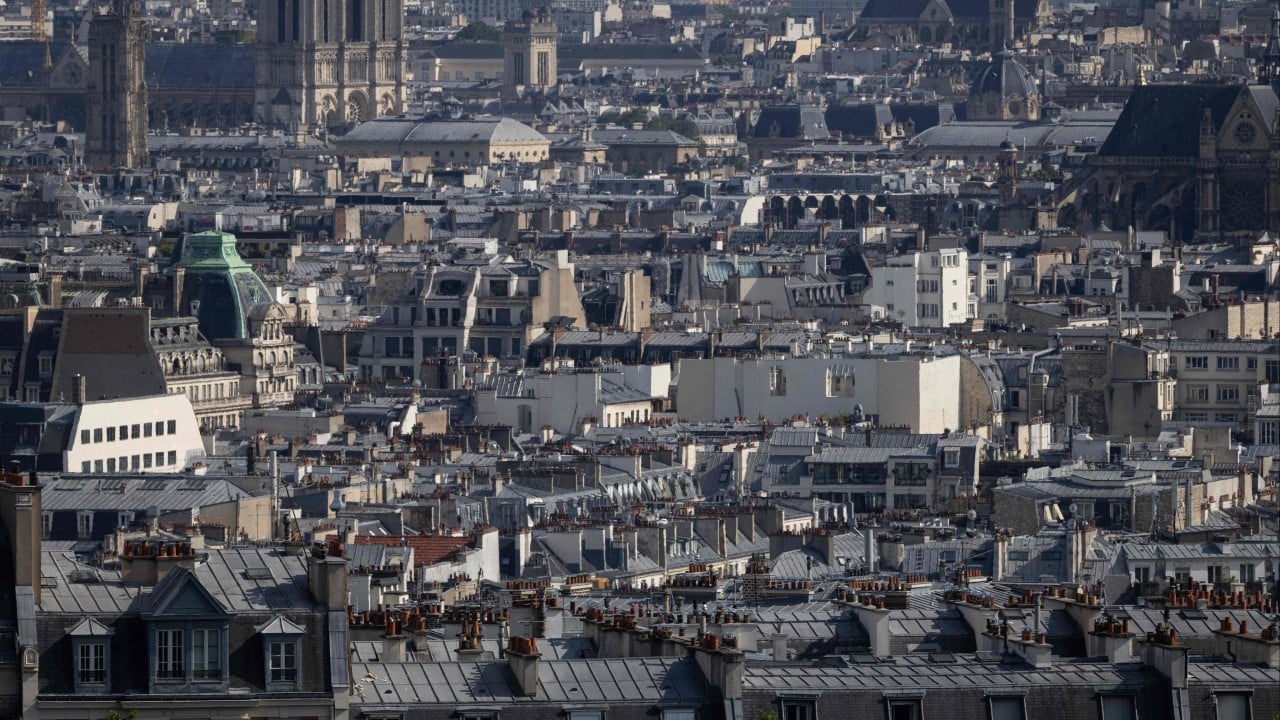
You can't blame this entirely on global emissions. A huge part of the problem is architectural. Paris was built to capture and retain heat, a design philosophy that made perfect sense in the 19th century but acts like an oven today.
Think about classic Parisian architecture. Those iconic zinc roofs look beautiful in photos, but zinc conducts heat beautifully, turning top-floor apartments into literal hot boxes. The city's famous Haussmann apartment buildings feature massive stone facades that absorb thermal energy all day and radiate it back out all night.
Then you have the classic urban heat island effect. Miles of dark asphalt, concrete pavements, and a distinct lack of green canopy mean the city center stays up to 10°C hotter than nearby rural areas. When you combine this architecture with the fact that less than 5% of residential homes in France have structural air conditioning, you get a predictable public health catastrophe.
The pressure on the backend of the system is just as severe. Fabien Huguet, director of the funeral service Family Obsèques, reported that waiting times for crematoriums in Paris have stretched out to several days. The entire death-care infrastructure is bottle-necked because it was sized for a normal, predictable baseline of mortality—not a sudden, climate-driven mass casualty event.
The Threat Moving East
France was just the opening act. As the weekend progressed, the high-pressure system shifted its weight toward central and eastern Europe, leaving a trail of broken infrastructure in its wake.
In Germany, police had to deploy water cannons just to cool down sweltering crowds in Berlin. The national rail operator, Deutsche Bahn, urged travelers to cancel non-essential trips after onboard air conditioning systems failed across multiple routes, trapping passengers in locked, baking train cars. Countless stretches of the famous Autobahn highway system began to buckle and crack as the extreme heat caused the concrete slabs to expand past their structural limits.
Meanwhile, Spain has already linked at least 327 deaths to the heat in a matter of days, and agricultural ministers are warning of devastating losses to crops and livestock across the Mediterranean.
What Needs to Change Right Now
If you live in an older European city, relying on the state to cool down your neighborhood isn't a viable short-term strategy. Urban remodeling takes decades. To survive the summers that are clearly coming next, individuals and local communities need to shift how they handle extreme heat.
- Ditch the Heavy Drapes during the Day: Keep windows completely closed and shutters down the moment the sun hits your building. Don't open them until the outside air temperature drops below your indoor temperature at night.
- The "Low-Tech" Cool Down: If you don't have AC, focus on cooling your skin, not the room. Hang wet towels near open windows at night to create a basic evaporative cooling effect, and take lukewarm—not freezing cold—showers to drop your core temperature safely.
- Audit Your Vulnerable Neighbors: The biggest takeaway from the Paris data is that isolation kills. If you have elderly neighbors or folks living alone on the top floors of your building, knock on their doors. Make sure they are actually drinking water, because the human thirst reflex degrades significantly with age.