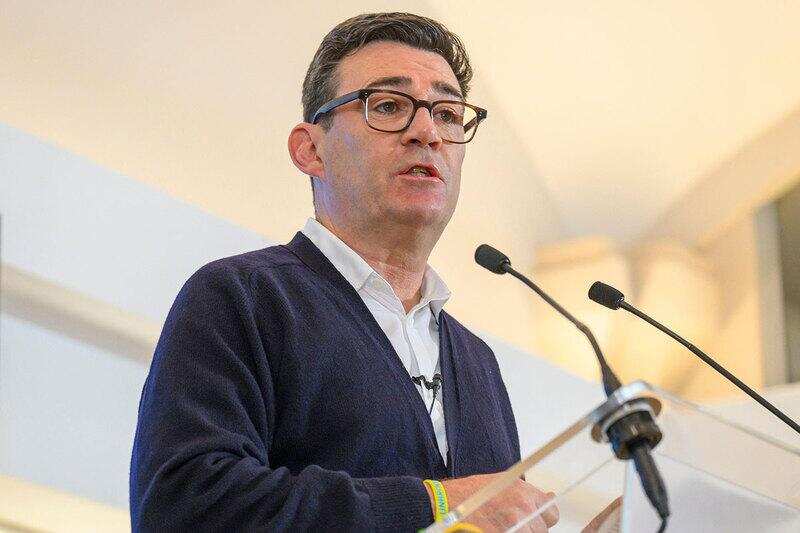
Westminster is terrified. Keir Starmer has packed his bags, and the keys to the kingdom are lying on the table. Andy Burnham is standing right there, ready to take them. His speech in Manchester outlines a massive shift in how the United Kingdom functions. People call it a radical shake-up, a northern rebellion, or a fantasy project. They are looking at it all wrong. The Andy Burnham 10-year economic plan is not an idealistic socialist wishlist. It is a calculated, hard-nosed blueprint designed to strip power away from London bureaucrats and give it to local communities.
For forty years, the British state has operated on a simple assumption. Whitehall decides, the Treasury funds, and the regions beg. Burnham wants to kill that model for good. He is proposing what he calls a circuit-breaker for the British economy. If he takes over as prime minister, the core machinery of the state will change. This plan matters because Britain is completely stuck. Growth is flat, public services are broken, and people have lost all faith in traditional politics. Burnham is offering a way out, and he is using his track record in Greater Manchester as the ultimate proof of concept.
The Reality Behind the Andy Burnham 10-year Economic Plan
You cannot understand this new national strategy without looking at what Burnham calls Manchesterism. It sounds like an academic buzzword, but the reality is much more practical. It is a mix of strict fiscal discipline and heavy public intervention when the market fails ordinary people.
Critics from the right think Burnham is trying to nationalize everything and ruin the economy. Critics from the hard left think he is too cozy with big business and property developers. Both sides are missing the point. Manchesterism means running sound finances to give global investors the confidence to pour cash into local projects. Look at the skyline of Manchester. Private money built those towers.
Burnham intends to bring that exact strategy to the rest of the country. He wants to anchor local economies around major universities, turn regional start-ups into scale-ups, and build infrastructure that actually functions. The core idea is that economic progress cannot happen without social stability. If people are trapped in damp housing, stuck on expensive buses, or neglected by failing schools, they cannot be productive workers. Social progress is the engine of economic growth, not a luxury reward for it.
Dismantling Whitehall with No 10 North
The most dramatic piece of this strategy is the creation of No 10 North. This will be an extended branch of the prime minister's office based right in the heart of Manchester.
This is not a symbolic gesture or an occasional regional press conference. It is a direct attack on the centralisation of power in London. The goal of this new office is to force the entire machinery of government to work directly with regional mayors. Burnham wants to change the default operating system of UK plc. Instead of regional leaders heading to London on bended knee to ask for scraps of funding, national civil servants will be stationed in the regions to deliver local ambitions.
Opponents mock this as a bureaucratic distraction. They say it is just shuffling chairs between politicians instead of fixing the actual problems. That is a shallow view. Where power sits determines who gets heard. Moving prime ministerial functions to the North means the daily pressures of the rest of Britain will sit directly in the face of the executive branch. Burnham wants power to flow out into the Midlands, the South West, and the East of England. London has had a monopoly on decision-making for too long, and it has left the country with some of the worst regional inequality in the developed world.
Taking Control of Essential Services
The plan targets the basic essentials of life. Burnham wants to give every part of the UK the power to take greater public control over water, energy, transport, and housing.
He is using the Bee Network as his primary evidence. Greater Manchester brought its deregulated bus network back under local authority control. The results speak for themselves. Services became cheaper per kilometre than under privatization, fares were capped at two pounds, and the local government bought back the bus depots. Burnham wants to apply this exact ten-year roadmap to other utilities across the country.
- Transport - Expanding municipal control over buses and trains to connect workers with actual jobs.
- Housing - Stripping power away from national agencies like Homes England and giving local authorities the teeth to build secure social housing.
- Utilities - Reforming water and energy networks through public intervention to bring down soaring costs for families and businesses.
This is not about ideology. It is about lowering the cost of living so people have more money to spend in their local high streets. High utility bills act as a direct tax on growth. By fixing the basics, you clear the path for private investment.
Reforming the Tax System to Protect the High Street
Small businesses are getting crushed in Britain. Burnham knows this, and his plan targets the unfair advantages held by global internet giants.
The current system of business rates rewards speculative landlords who leave town centres empty while suffocating local cafés, pubs, and independent shops. Burnham intends to slash business rates for high-street enterprises. He plans to fill the financial gap by slapping higher taxes on the massive warehouses owned by online retailers like Amazon. Mega-corporations have spent years using loopholes and profit-shifting to avoid paying their fair share. This leaves local economies hollowed out and high streets boarded up.
There is also serious discussion within his team about scrapping council tax and stamp duty entirely. These are outdated, regressive taxes that penalize working families while letting billionaires in Mayfair off the hook. Burnham has shown a strong preference for a Land Value Tax to replace them. While the technical details will cause fierce debates in Parliament, his instinct is clear. He wants to shift the tax burden away from workers and onto accumulated wealth and property speculation.
Fixing the Skills Gap and Boosting British Jobs
Britain has a massive problem with young people who are not in education, employment, or training. The plan responds directly to this crisis by overhauling the education system to create genuine parity between academic and technical pathways.
For decades, governments have been obsessed with pushing every single teenager toward a university degree. This has left the country with massive skills shortages in engineering, green technology, and advanced manufacturing. Burnham wants regional mayors to take full control over post-16 education and welfare. This allows local leaders to design training programs that match the actual job vacancies in their specific regions.
He also intends to rewrite public procurement rules. The new directive will focus heavily on buying British. When the government spends taxpayers' money on major infrastructure, that cash needs to stay in the UK economy. Contractors will be forced to deliver concrete social value in return, meaning mandatory apprenticeships, local work placements, and real investments in community development.
The Massive Roadblocks Ahead
It will not be an easy ride. Burnham faces immense institutional resistance, and the financial margins are razor-thin.
The markets are incredibly sensitive. If international investors think a soft-left prime minister is about to launch an unsustainable spending spree, they will panic. We all remember the Liz Truss disaster. Burnham knows he cannot afford a repeat of that chaos. He has repeatedly stressed that his plans will stick strictly to current fiscal rules and sound public finances. He is trying to walk a delicate tightrope, using centralized state discipline to decentralize economic power.
The Treasury will also fight him every step of the way. Rumours suggest Burnham wants to split the Treasury or create an entirely new devolution department to bypass Westminster traditionalists. Whitehall veterans warn that breaking up the core financial ministry will cause massive internal disruption at a time when Britain needs immediate results. He only has a short window before the next general election to prove this model actually works.
The Next Steps for British Growth
The era of top-down Westminster control is reaching its end. If you want to see where the country is heading, look at the concrete actions being laid out right now.
- Establish No 10 North - Establish the operational headquarters in Manchester to bridge the gap between national policy and local execution.
- Devolve Fiscal Powers - Hand local authorities control over business rates and regional infrastructure funds to end the culture of begging Whitehall for cash.
- Cap Basic Costs - Use the legal mechanisms proven by the Bee Network to intervene in failing transport and utility markets.
- Enforce Buy British Rules - Align public procurement with local manufacturing to protect jobs and create immediate apprenticeships for young people.
This strategy is a direct response to a broken political culture. It rejects the old Westminster habits of point-scoring and short-term thinking. Whether Burnham can successfully break the grip of London centralisation remains the biggest question in British politics, but his ten-year plan is the only serious alternative on the table.