The brief illusion of peace in the Middle East has completely shattered. If you thought the interim ceasefire signed in June was going to hold, the last forty-eight hours have served as a brutal wake-up call. The United States military is actively redirecting ships in Hormuz as the White House prepares to pound Iranian military assets for what could be weeks.
We are not just looking at a standard flare-up. This is the total collapse of a fragile diplomatic experiment, replaced by a high-stakes naval blockade that puts a fifth of the world's energy supply directly in the crosshairs. While headline writers focus on the theatrical back-and-forth between Washington and Tehran, the actual tactical reality on the water is far more complicated—and dangerous—than most people realize. For a different look, check out: this related article.
The Illusion of the Sixty Day Truce
To understand how we got here, we have to look at what was actually signed last month. Following the death of Iranian Supreme Leader Ayatollah Ali Khamenei earlier this year, Pakistani and Qatari mediators scrambled to stitch together a temporary deal. The goal was simple on paper: reopen the Strait of Hormuz, establish a sixty-day window for broader peace talks, and figure out what to do with Iran's nuclear enrichment facilities.
But the deal was built on quicksand. The text of the memorandum of understanding was notoriously vague. It stated that Iran would "make arrangements" to ensure safe transit without charging fees for sixty days. Related insight on the subject has been shared by BBC News.
Predictably, both sides interpreted that line in entirely different ways.
Tehran believed "making arrangements" gave their newly minted Persian Gulf Strait Authority the right to vet crew manifests, demand registration, and dictate which shipping lanes commercial tankers could use. The White House saw this as a blatant violation of international maritime law. When Iran began targeting commercial tankers that refused to comply, the ceasefire was effectively dead.
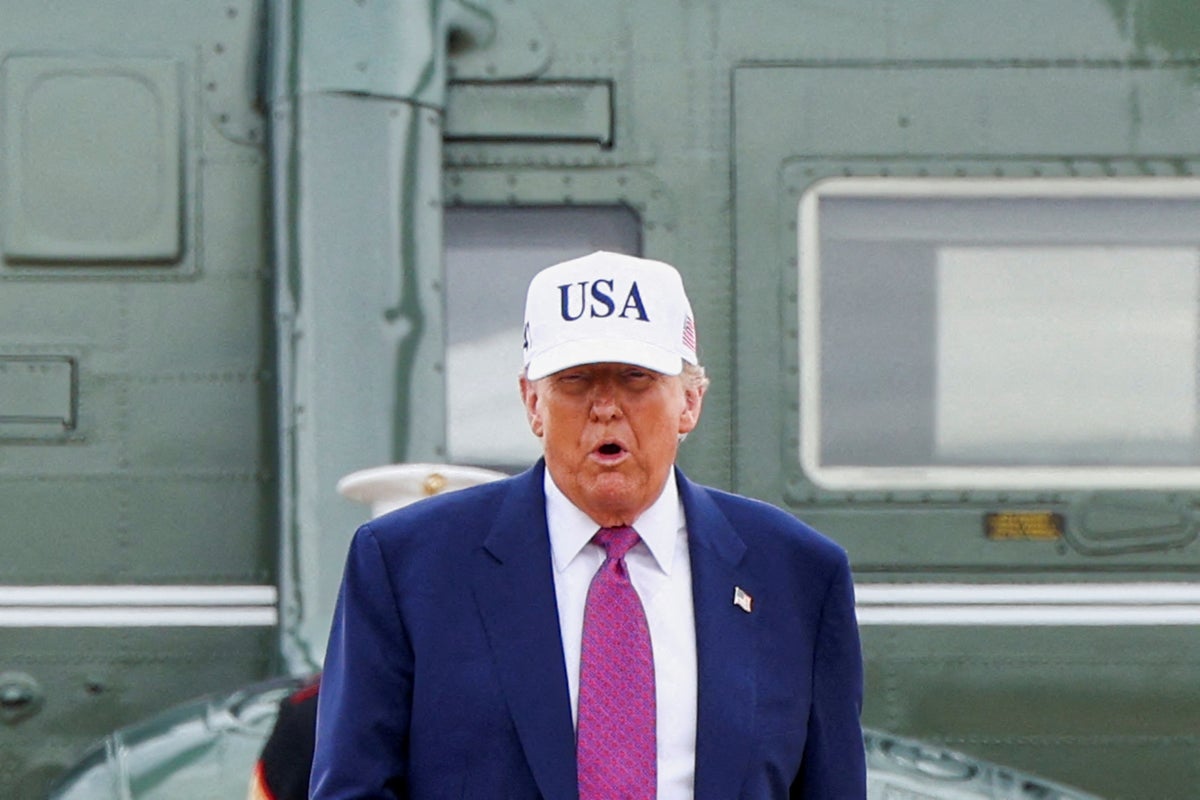
Trump didn't mince words about the failed agreement, calling the memorandum a "test" and noting that deals don't mean much when you are dealing with bad actors. By Monday, he had formally notified Congress that hostilities had officially resumed.
The High Cost of the Southern Highway
When the Pentagon talks about redirecting ships, they are referring to a very specific, highly contested strip of water.
The U.S. military has spent months trying to establish what they call the "Southern Highway". This route hugs the rugged coastline of Oman, keeping commercial tankers as far away from Iranian territorial waters as physically possible.
But running this southern route is not as simple as drawing a new line on a map.
- The Mine Menace: Iran has heavily mined the central deep-water channels of the strait. This forces large, draft-heavy tankers into incredibly narrow corridors.
- The Geography Trap: Even on the Omani side, ships are well within the range of Iran’s shore-based anti-ship cruise missiles and fast-attack drone swarms.
- The Escort Problem: The U.S. Navy simply does not have enough surface combatants to provide a physical, close-in escort for every single commercial vessel transiting the area.
This is why we are seeing a massive buildup of American naval power in the northern Arabian Sea. Right now, there are at least nineteen U.S. warships sitting just outside the strait. This armada includes two full aircraft carriers—the USS George H.W. Bush and the USS Abraham Lincoln—alongside thirteen destroyers, a cruiser, and the amphibious assault ship USS Boxer, which carries over a thousand Marines.
This is an enormous concentration of firepower. Its presence is designed to do one thing: enforce the newly declared blockade on Iranian ports while trying to keep the Omani shipping corridor open by sheer intimidation.
The Blockade Mechanics and the Use of Force
Enforcing a naval blockade is an incredibly complex legal and military maneuver. According to instructions issued by the Navy-led Joint Maritime Information Center, any ship suspected of trying to enter or leave an Iranian port is now subject to interception, diversion, and capture.
If a ship refuses to comply, the rules of engagement are remarkably severe. During the previous iteration of the blockade earlier this year, U.S. warships intercepted more than 140 commercial vessels. In nine distinct cases where ship captains ignored orders, American forces fired directly into the vessels' engine rooms to physically disable them.
This is not a symbolic blockade. It is an active, kinetic operation.
But while the U.S. military is redirecting ships in Hormuz to keep them safe, Iran is striking back. They aren't just targeting the tankers; they are targeting the host nations where American forces are stationed. Over the last few days, rocket and drone attacks have rained down on U.S. allied positions in Jordan, Bahrain, Kuwait, and the United Arab Emirates. Sirens have been wailing at the home of the U.S. Navy’s Fifth Fleet in Bahrain, proving that Iran has no intention of backing down quietly.
Why Trump Walked Back the Passage Tolls
Perhaps the strangest twist in this entire saga was Trump’s sudden proposal—and immediate abandonment—of a twenty percent "reimbursement fee" on all cargo passing through the Strait of Hormuz.
When Trump announced the return of the blockade, he claimed the U.S. would act as the "Guardian of the Strait" and demanded that the rest of the world pay for the privilege. The logic was classic Trump: if American taxpayers are funding the massive naval presence keeping global trade routes open, the countries benefiting from that oil and gas should foot the bill.
The announcement sent shockwaves through the maritime industry. It also drew immediate, sharp rebukes from international bodies. The International Maritime Organization pointed out that there is zero legal basis under international law to charge transit fees through an international strait. Even Secretary of State Marco Rubio had previously argued that international waterways must remain free of tolls.
But the real pressure didn't come from international lawyers or UN agencies. It came from Washington’s closest allies in the Persian Gulf.
Within twenty-four hours of the announcement, the emirs and kings of the Gulf States were on the phone with the White House. They pointed out that a twenty percent tax on energy exports would devastate their economies and throw global markets into absolute chaos. Under pressure, Trump walked back the toll idea, replacing it with vague promises of new investment and trade agreements from the Gulf partners.
It was a rare moment of tactical retreat for an administration that usually prides itself on never backing down.
The Sixty Day War Powers Clock Is Ticking
By formally notifying Congress of the resumption of hostilities, the administration has triggered a critical mechanism under the War Powers Act of 1973.
This law dictates that a president can only engage U.S. forces in hostilities for sixty days without explicit congressional authorization.
War Powers Act Timeline (Started July 7, 2026)
[Day 1] Hostilities Resume -> [Day 2] Notification to Congress -> [Day 60] Congress Must Approve or Troops Withdraw
We are now in that sixty-day window. Critics on Capitol Hill are already accusing the administration of misinterpreting the law, arguing that you can’t just repeatedly reset the sixty-day clock by signing short-lived ceasefires and then immediately declaring new wars. Senate Democrats have even blocked a major defense spending bill in protest of the ongoing conflict.
But the White House seems completely unfazed by the political pushback. Trump has made it clear that the current wave of airstrikes is just the beginning. In recent interviews, he warned that if Iran does not return to the negotiating table on U.S. terms, the target list will expand from military radar installations and missile sites to civilian infrastructure like power plants and key bridges. American forces have already struck at least one major Iranian bridge to signal their intent.
What Happens Next on the Water
For shipping companies, cargo insurers, and energy markets, this escalation is a worst-case scenario. Crossing numbers through the strait have already plummeted by over fifty percent compared to last week, reducing transit to a mere trickle of what it was before the war started.
If you are a maritime operator trying to navigate this mess, here is what you need to prepare for immediately:
- Strict Routing Compliance: Do not attempt to deviate from the designated "Southern Highway" along the Omani coast. Trying to cut corners to save fuel will put you directly into active military operational zones or unmapped minefields.
- Verify Blockade Status: If your vessel has historically conducted business with Iranian ports, expect to be boarded, searched, and potentially diverted by U.S. or allied naval assets.
- Expect Massive Insurance Spikes: War risk insurance premiums for transiting the Gulf are about to skyrocket again. Factor these astronomical costs into your freight calculations before committing to any regional transits.
The U.S. military is digging in for a protracted campaign, and Iran has made it clear they view control of the Strait of Hormuz as an issue of national survival. With both sides convinced they hold the winning hand, the waters of the Gulf are going to remain highly volatile for the foreseeable future. Keep your vessels on the Omani side, comply with naval directives, and prepare for a very bumpy ride.
The escalation has also sparked deep concern globally, as seen in recent coverage detailing how Iran's TV declared a full closure of the Strait of Hormuz following the heavy U.S. bombing campaigns. This video is highly relevant because it shows the official Iranian state media reaction and their vows of retaliation against American military facilities in the region.