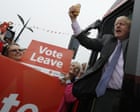
Ten years ago, the British public did something that blindsided the global political establishment. They voted to leave the European Union. A decade later, in June 2026, the shockwaves haven't stopped. In fact, with Keir Starmer recently stepping down and the UK political scene in another state of frantic reinvention, the ghosts of 2016 are louder than ever.
We talk about the referendum as a single moment in time, but it wasn't. It was a messy, loud, and deeply personal collision of egos, ambitions, and genuine public frustration. Looking back at the Brexit oral history from the people who were actually in the rooms where it happened reveals how much of today's chaos was baked into that single vote.
The Night the Old Order Broke
If you talk to the campaign insiders who spent the night of June 23, 2016, staring at flickering television screens, they all remember the exact moment the mood shifted. Early on, Ukip leader Nigel Farage practically conceded defeat. The early polling suggested Remain would edge it.
Then Newcastle came in. The Remain win there was razor-thin. Minutes later, Sunderland delivered a massive blowout for Leave.
The atmosphere changed in an instant. David Cameron’s team at Downing Street realized their calculations were completely off. They expected economic warnings to scare voters into stability. Instead, millions of people used the ballot paper as a weapon against a status quo that made them feel completely ignored.
By 4:00 AM, the financial markets were in freefall. The pound hit a 31-year low. It became clear that the United Kingdom had voted to walk away from a 43-year partnership.
What Both Sides Missed completely
The Leave campaign didn't win because they had a flawless master plan. They won because they understood emotion better than their opponents did. "Take Back Control" wasn't just a slogan. It was a brilliant piece of psychological marketing that meant whatever the voter wanted it to mean. To some, it meant less immigration. To others, it meant revitalizing dying industrial towns or escaping European regulations.
The Remain camp ran a clinical, numbers-driven operation that people quickly labeled Project Fear. They kept talking about gross domestic product and treasury forecasts. They forgot that when people feel like they have nothing left to lose, warnings about losing money simply don't work.
Insiders from the Remain camp now admit they were trapped in a bubble of their own making. They genuinely believed the British public would never choose economic uncertainty. They failed to see that the uncertainty of daily life in neglected towns was already a reality for millions.
The Human Cost of Political Ambition
You can't separate the policy from the personalities. The entire referendum was essentially a civil war within the Conservative Party, disguised as a national debate. Boris Johnson’s decision to back Leave wasn't driven by a lifelong dislike of Brussels. It was a calculated gamble to position himself as the heir apparent to David Cameron.
When the result dropped, Cameron knew his political career was finished. His resignation outside Number 10 the next morning set off a chain reaction. We have seen six different prime ministers since that morning. Each one has tried, and mostly failed, to manage the fallout of that single decision.
The endless internal warfare didn't stop with the Tories. It reshaped the Labour Party too. It forced politicians to choose sides in a culture war that the public grew utterly exhausted by, yet could not escape.
A Decade of Unintended Consequences
Ten years later, the data tells a complicated story. Former chief negotiator Michel Barnier recently pointed out that the UK could theoretically rejoin the EU on a short timeline if it truly wanted to, but the political appetite for another brutal debate is nonexistent.
Instead, the country is dealing with the hard realities of life outside the single market. Trade with Europe involves mountains of paperwork. Small businesses have been hit the hardest. Some sectors, like fishing, which was used as the poster child for the Leave campaign, feel completely betrayed by the final deals that were struck.
Yet, it isn't a story of total collapse either. The UK has forged its own foreign policy path, particularly in its stance on global security. But the economic friction is real, and it is a major reason why productivity has stalled.
How to Make Sense of the Legacy
If we want to understand why British politics remains so unstable, we have to stop treating the referendum as an ancient historical event. The deep divisions it exposed between major cities and forgotten towns, between the young and the old, are still there.
The best way to get a real grip on this period is to listen to the people who lived it, rather than the politicians who are still trying to spin it.
Skip the polished memoirs written by leaders trying to protect their reputations. Look for the raw accounts from civil servants, local campaigners, and ordinary voters who watched their communities change overnight.
Pay close attention to how the arguments used in 2016 are being recycled right now by new political movements across Europe. The tactics developed during that campaign became the playbook for modern populist politics globally.
Understand that the debate was never truly about the European Union. It was a massive, chaotic argument about what Britain should look like, who matters, and who gets left behind. Until the political class answers those questions, the aftershocks will keep coming.