The traditional political playbook is dead. If you're looking at the 2026 midterm elections through the old lens of a simple red versus blue matchup, you're missing the real story. The absolute chaos defining this cycle isn't just about party versus party. It's about deep, internal identity crises ripping through both sides of the aisle. These internal fractures are actively shaping the most competitive Senate races in the country.
Look at the numbers. Republicans currently hold a tight 53-47 majority in the upper chamber. On paper, the 2026 map heavily favors them because Democrats are forced to defend vulnerable seats in tough territory. But paper doesn't vote. Factional warfare within both the Republican and Democratic parties has turned what should have been predictable races into absolute wild cards.
Voters aren't just looking at the letter next to a candidate's name anymore. They're choosing sides in bitter, intraparty civil wars. From the gulf coast of Texas to the rocky shores of Maine, these internal splits will ultimately decide who controls the Senate gavel next year.
The Texas Primary Shockwave and the Populist Takeover
Nowhere is the Republican internal divide more obvious than in Texas. For decades, the state was anchored by institutional, business-minded conservatives. Senator John Cornyn was the poster child for this brand of politics. He was a fixture of the GOP leadership, a pragmatic fundraiser, and a predictable conservative vote.
Then came Ken Paxton.
The state's populist Attorney General challenged Cornyn in a brutal primary runoff that wrapped up in late May. Backed heavily by Donald Trump, Paxton turned the race into a referendum on the Republican establishment. He didn't just campaign against Cornyn; he campaigned against the entire concept of the traditional Senate GOP.
Paxton won.
The fallout from this primary has sent shockwaves through the national party. Institutional donors who used to write massive checks without blinking are suddenly sitting on their hands. They're terrified of Paxton's firebrand style and his long history of legal controversies. Democrats, meanwhile, smell blood in the water. They're throwing resources behind Representative James Talarico, betting that moderate suburban voters in Dallas and Austin will be completely alienated by Paxton's hard-right populism.
This isn't an isolated incident. We're seeing similar purges across the country. In Louisiana, institutional favorite Senator Bill Cassidy faced intense primary pressure after drawing the ire of the populist wing. The message to traditional Republicans is loud and clear: adapt or get pushed out. The risk for the GOP is that these scorched-earth primaries leave nominees so bruised and polarized that they struggle to win general elections in increasingly purple suburbs.
The Democratic Civil War in the North
Don't think for a second that Democrats are unified either. While the GOP wrestles with right-wing populism, the left is fighting its own ideological war over economic message and candidate selection.
Take a look at Maine. Republican Senator Susan Collins has been an elusive target for Democrats for nearly thirty years. She regularly wins reelection in a state that votes for Democratic presidential candidates. National Democrats thought they had the perfect formula to finally beat her this year. Senate Majority Leader Chuck Schumer and the party establishment threw their weight behind Governor Janet Mills, a well-known moderate with a proven statewide track record.
The progressive base had other ideas.
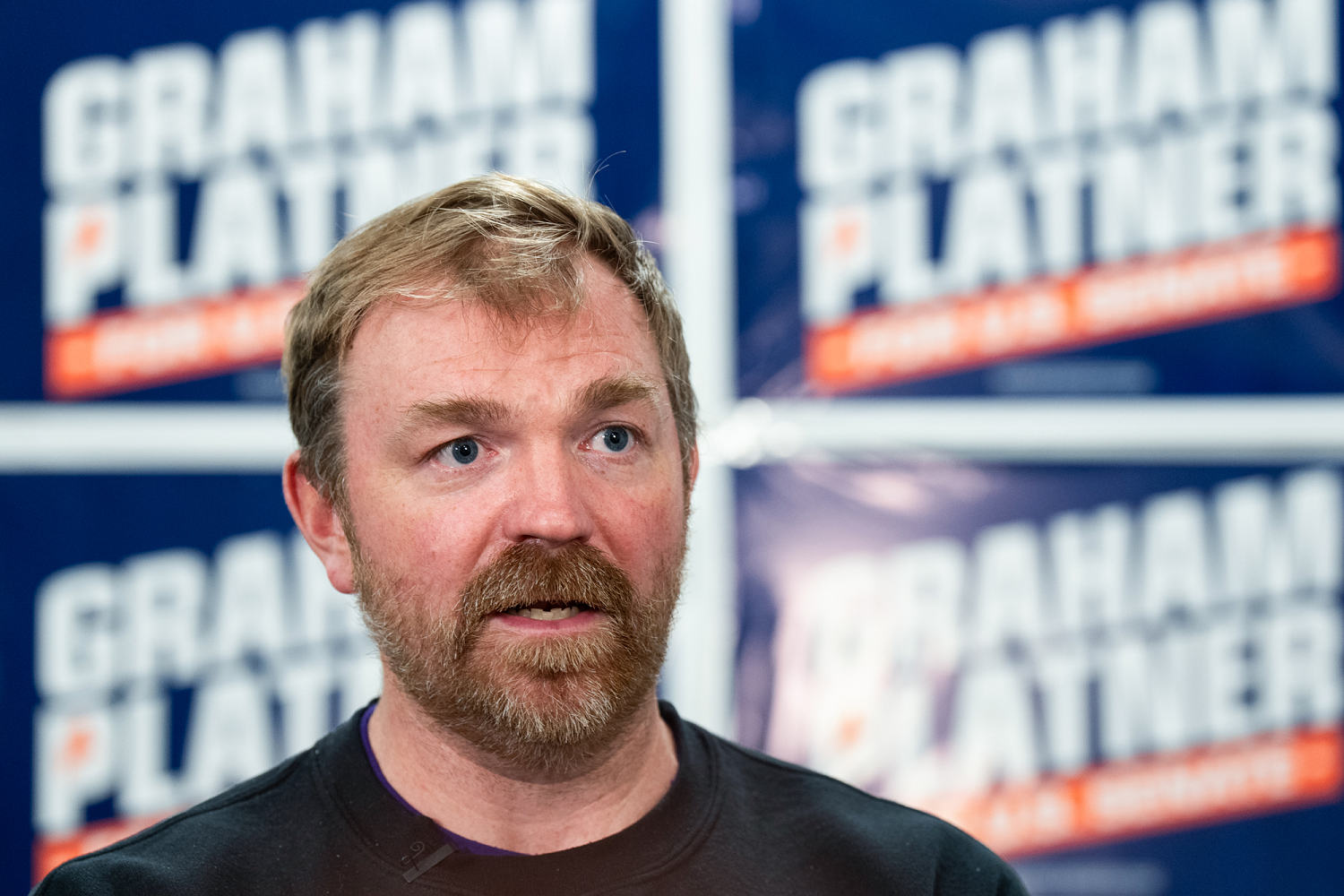
Enter Graham Platner. He's a combat veteran, an oyster farm owner, and an unapologetic progressive upstart. Platner ran an aggressive campaign from the left, hammering Mills for what he called a cautious, corporate-friendly approach to governance. He built massive momentum among younger voters who are furious about housing costs and stubborn inflation. The pressure was so intense that Mills unexpectedly dropped out of the primary in late April, citing fundraising challenges after trailing Platner in internal polling.
Now, Democrats are left with an untested progressive nominee in one of the oldest, most rural states in the country. Platner has undeniable energy, but Republican opposition researchers are already licking their chops. They're planning to paint him as an economic radical to scare off centrist voters in Maine's crucial second congressional district.
We saw a version of this same progressive-versus-establishment tension play out in Michigan, where the retirement of Senator Gary Peters left an open seat. The primary featured mainstream favorite Representative Haley Stevens squaring off against progressive activist Abdul El-Sayed and state Senator Mallory McMorrow. When a party spends all its energy and cash fighting over its own soul, it leaves precious little time to prepare for the general election.
The Ghost of Ticket Splitting
For years, political scientists told us that ticket-splitting was dead. People voted straight tickets because polarization had gotten too severe. If a state went red for president, it went red for Senate.
But 2024 proved that theory wrong, and 2026 is doubling down on the divergence. Voters are getting comfortable separating their views on national figures from their local choices.
Georgia is the perfect case study. Democratic Senator Jon Ossoff is up for reelection in a state that Donald Trump won. Ossoff is widely viewed as one of the most vulnerable incumbents on the map. He's trying to thread an incredibly needle-thin political line. He has to keep the diverse, progressive base in Atlanta motivated while simultaneously convincing moderate, suburban voters that he's a pragmatic check on Washington.
Republicans should have a slam dunk here, but their internal divisions are giving Ossoff a massive lifeline. The GOP primary field in Georgia is crowded and chaotic, featuring a mix of MAGA loyalists and traditional conservatives who spent the spring tearing each other apart. Because the Republican primary has been so toxic, the Cook Political Report recently shifted the Georgia Senate race rating to Lean Democratic. Ossoff is managing to out-fundraise his fractured opponents while maintaining a distinct, independent brand.
The Rematch in Ohio
If you want to see how an individual brand can overcome partisan gravity, watch Ohio. The state has steadily marched to the right over the last decade. In 2024, it ousted long-serving Democratic Senator Sherrod Brown when Trump was at the top of the ticket.
Yet, because of J.D. Vance's elevation to the vice presidency, Ohio is holding a special election this November to fill the remainder of his term. And guess who came back for a rematch? Sherrod Brown.
Brown is running against incumbent Republican Senator Jon Husted, who was appointed to the seat. Democrats are banking on the idea that without Trump on the ballot to drag Husted over the finish line, Brown's unique populism can win back working-class voters. Brown talks about the "dignity of work" and focuses heavily on local manufacturing and labor issues. Husted is trying to bridge the gap between DeWine's moderate business wing and the dominant MAGA base in the state.
It's a classic test of whether a specific candidate's personal identity can overcome a state's natural partisan tilt. If Brown wins, it proves that economic populism isn't the exclusive property of the modern Republican party.
What This Means for Your Ballot
These aren't just academic arguments for political junkies. The internal divisions within these parties directly affect the policies that actually make it to the Senate floor. When populists win primaries, traditional compromise becomes almost impossible.
If you want to understand where the country is heading, ignore the national party platforms. Watch the state-level fights. Watch the suburban counties outside Atlanta, Phoenix, and Dallas. That's where the real power shifts are happening.
The era of predictable, generic political parties is over. Factionalism is the new normal, and the side that manages to heal its self-inflicted wounds first will be the one holding the majority when the dust settles.
If you want to stay ahead of these shifts, stop watching the national cable news shouting matches. Start looking at local fundraising reports and county-level primary turnouts in Texas, Maine, and Georgia. That's where the real story is being written. Keep a close eye on independent voter registration numbers in your own state. The voters who refuse to align with either fractured party are the ones who will ultimately decide the balance of power. Look at the specific economic messaging coming out of these campaigns. The candidates who focus on tangible local issues like regional housing costs and manufacturing jobs are consistently outperforming those who rely solely on national culture-war talking points. Pay attention to these granular shifts, because they tell you exactly where national policy is going long before a single vote is cast in Washington.