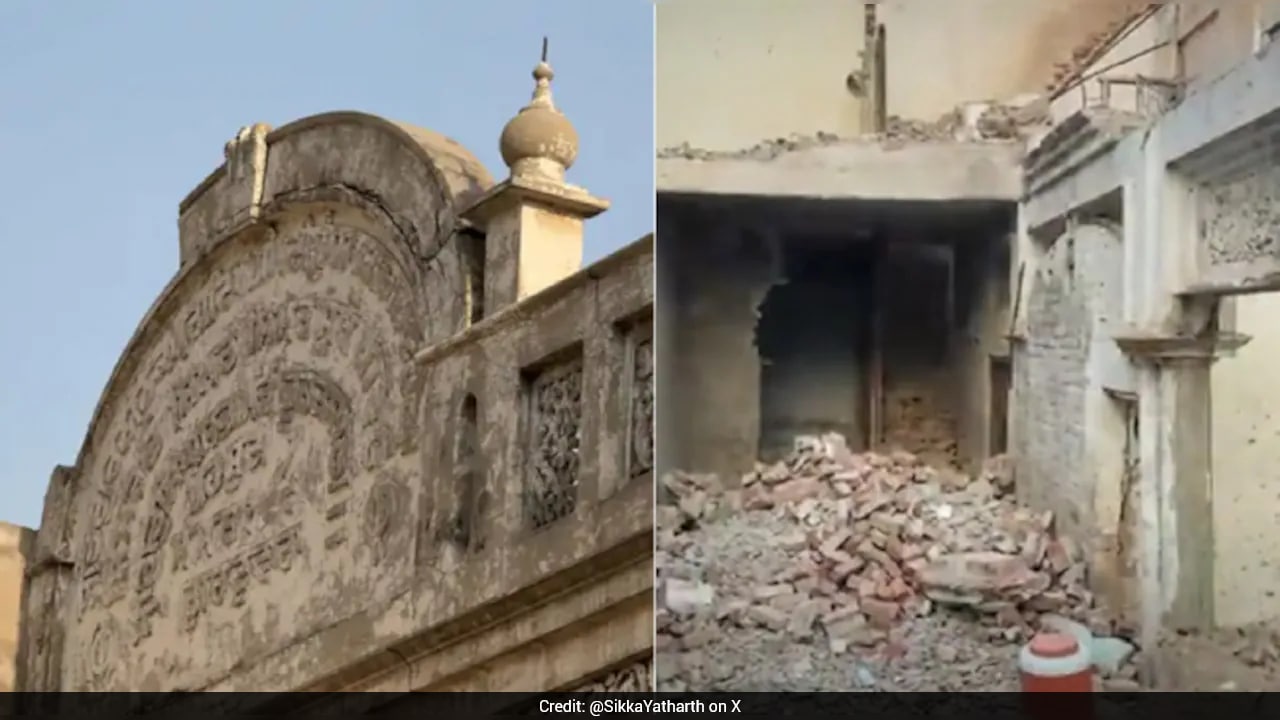
A 125-year-old sacred structure doesn't just crumble by accident. When news broke that a local businessman flat-out demolished parts of the historic Gurdwara Sri Guru Singh Sabha Sahib in Farooqabad, Pakistan, it wasn't just a local property dispute. It became an international flashpoint. India instantly fired back, calling the destruction a highly deplorable and targeted act of vandalism.
If you're wondering why this specific incident sparked such a furious reaction from both local Sikhs and New Delhi, you have to look beyond the immediate rubble. This wasn't some abandoned, unimportant house. The site holds a deep connection to the Singh Sabha Movement, a major 19th-century religious revival that shaped modern Sikh identity. Smashing it to the ground for commercial gain is a massive blow to global heritage. For another perspective, read: this related article.
What Actually Happened on the Night of June 24
The demolition happened under the cover of darkness. Between the eighth and ninth nights of Muharram, heavy machinery rolled into the site in Farooqabad, a town about 70 kilometers from Lahore. A local businessman decided to clear the land. He didn't have a No Objection Certificate. He didn't ask the Evacuee Trust Property Board, the government body supposedly tasked with protecting minority properties. He just brought the walls down.
Local Sikh communities noticed the destruction and immediately hit the streets. They protested. They demanded answers. For days, public authorities said absolutely nothing. No police report was filed right away. No official statements came out. It took loud public outrage for the government to finally wake up and acknowledge that a century-old shrine had been reduced to pieces. Further coverage on this trend has been shared by NPR.
The local traders surrounding the site tried to defend the commercial push. They claimed the building had been abandoned for nearly 80 years. They argued that families had already settled around it and shops were fully functional. To them, it was just old prime real estate. To the Sikh community, it was an irreplaceable piece of history.
The Historical Significance Most People Miss
You can't understand the anger without understanding what the Gurdwara Sri Guru Singh Sabha Sahib represented. It wasn't just a place for daily prayers. It was a core hub for the Singh Sabha Movement, which started in 1873 to protect Sikh culture, language, and education from outside pressures.
Historical Milestones of the Movement:
1873: Movement begins in Amritsar to counter proselytization.
1879: Formal establishment of the Lahore Singh Sabha.
1920s: The movement paves the way for the Akali movement and the SGPC.
Thinkers like Baba Khem Singh Bedi and Professor Gurmukh Singh walked these regions. The Farooqabad shrine sat near Gurdwara Sacha Sauda. During the historic campaigns to free Sikh shrines from the corrupt control of old managers, volunteers actually marched directly from this very Gurdwara in Farooqabad. Destroying this building means erasing the physical proof of that entire struggle.
India Fires Back with Strong Diplomatic Language
New Delhi wasted no time putting pressure on Islamabad. Foreign Ministry spokesperson Randhir Jaiswal issued a blistering statement. He made it clear that India views this as part of a much larger, systemic issue.
"We strongly condemn this highly deplorable and targeted act of vandalism against a revered Sikh shrine," Jaiswal stated. He added that the complete lack of initial action by local Pakistani authorities and the Evacuee Trust Property Board remains a matter of grave concern.
✨ Don't miss: what is the weather in daytona beach florida
The Indian government pointed out that this is not an isolated incident. Just a short while ago, reports surfaced that Gurdwara Chobacha Sahib in Dharampura, a site linked to the Sixth Sikh Guru, met a very similar fate. Whenever locals raise their voices against the state boards handling these properties, they get labeled as anti-national. India is now demanding a swift investigation, the immediate arrest of the businessman, and a full reconstruction of the damaged portions.
The Pakistani Government Promises a Fix
The political heat forced Pakistani officials into damage control. Punjab Chief Minister Maryam Nawaz Sharif took notice of the intense protests. Punjab Minorities Minister Ramesh Singh Arora, who also heads the Pakistan Sikh Gurdwara Parbandhak Committee, rushed to the site to inspect the damage.
Arora publicly admitted that a portion of the building was destroyed. He ordered an immediate inquiry into the land records. Initial checks show the property wasn't even properly registered under the Auqaf or Evacuee Trust records, which highlights a massive loophole that local land mafias constantly exploit.
The provincial government has now sealed the area. They banned all further construction or demolition activities at the site. Arora promised that restoration work will begin within two months. He quoted the administration's policy that they aim to preserve old heritage rather than tear it down. But local activists remain skeptical. They point out that the main dome of this very Gurdwara was destroyed four years ago, and despite police complaints back then, nothing was done to protect it.
How to Track and Protect Threatened Heritage Sites
If you want to ensure that historical structures aren't quietly erased by commercial interests, you can't just rely on official press releases. You need to take independent action.
- Document and Map Digital Archives: Use open-source mapping tools to log the precise coordinates, structural photos, and historical background of older minority shrines. Public digital registries make it incredibly difficult for land grabbers to claim a building was just an unrecorded, abandoned house.
- Support Independent Watchdog Groups: Follow and fund organizations like the basic heritage protection alliances operating out of Punjab. They monitor construction activities near historic zones and flag unauthorized demolitions before the buildings are completely leveled.
- Leverage International Transparency: Share archive photos of threatened locations on global cultural preservation forums. Bringing international attention forces local administrations to enforce building laws and issue immediate stop-work orders against illegal developers.