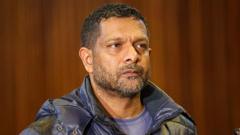
Bullet casings on a quiet street in Houghton tell a story that goes far beyond a typical Johannesburg hijacking. On Sunday night, June 28, 2026, gunmen opened fire on a grey Suzuki Baleno driven by Major General Feroz Khan, the suspended deputy head of Crime Intelligence. He survived, barely, and now lies in critical condition at Netcare Milpark Hospital with multiple gunshot wounds to his lower body and abdomen.
The timing isn't just suspicious. It's explosive.
Khan was scheduled to take the stand at the Madlanga Commission of Inquiry on Wednesday, July 1, 2026. He wasn't there to give routine testimony. He was supposed to answer for a massive web of state capture, a R600 million crime intelligence flush fund, a massive R300 million drug bust, and an illicit precious metals syndicate.
This attempted assassination looks less like a random street crime and more like a desperate attempt to silence a man who knows where the bodies are buried.
The July 1 Testimony Everyone Wanted to Stop
When you look at what Khan was about to testify on, you understand why people are whispering about a hit. The Madlanga Commission is currently digging into how deeply drug cartels have penetrated the South African state. Khan sits right at the intersection of these investigations.
The commission wanted answers on several major fronts.
- The R600 Million Flush Fund: KwaZulu-Natal Police Commissioner Nhlanhla Mkhwanazi previously identified Khan as a central figure in managing a massive, off-the-books intelligence fund used for corrupt operations.
- The Aeroton Drug Bust: In 2021, police seized cocaine worth R300 million in Aeroton. Whistleblowers allege that senior police officials, including Khan, tried to steal a chunk of that confiscated shipment.
- The Murder of Witness D: A whistleblower named Marius van der Merwe, who testified under the pseudonym Witness D, was gunned down in Brakpan in December last year. A person of interest in that hit, Wiandre Pretorius, took his own life earlier this year. The commission planned to grill Khan on his direct ties to Pretorius.
Just weeks before the shooting, Khan lost an urgent High Court bid to block the commission from accessing data on his seized electronic devices. He claimed the data could put lives at risk. It turns out he might have been right.
When the Protectors Need Protection
South Africa is facing a systemic crisis where the line between the criminals and the cops has completely blurred. Khan himself was arrested in May 2026 alongside Major General Ebrahim Kadwa, the head of the Gauteng Hawks, for allegedly running an illegal precious metals syndicate. They were both out on R20,000 bail.
Think about that for a second. The deputy head of Crime Intelligence and the head of the provincial Hawks—the elite anti-corruption unit—were facing criminal charges together.
The South African Police Service (SAPS) has scrambled to contain the fallout. Acting National Commissioner Lieutenant General Puleng Dimpane deployed maximum resources to the investigation. The Gauteng Hawks, Crime Intelligence, and standard detectives are all on the case. More importantly, Dimpane ordered the Political Killings Task Team to join the probe.
SAPS spokesperson Brigadier Athlenda Mathe warned the public against speculating that the hit was staged or directly linked to the commission, calling such talk premature. But when an assassin pulls up in a white vehicle on Third Avenue at 11pm, fires 9mm rounds into a specific target, and leaves a key state witness in a theater room undergoing emergency surgery, the public has every right to ask questions.
The Cost of Blowing the Whistle
The state is failing its witnesses. President Cyril Ramaphosa previously promised to redouble efforts to protect whistleblowers after Marius van der Merwe was murdered last winter. Clearly, those promises haven't translated into real security on the ground.
If a high-ranking Major General with deep intelligence connections can get ambushed outside his own home, what chance does an ordinary citizen have when exposing corruption?
The Madlanga Commission has already seen witnesses demanding to testify behind screens using pseudonyms. This shooting guarantees that future insiders will think twice before cooperating with state inquiries. It creates a chilling effect that money can't easily fix.
What Needs to Happen Next
The investigation can't follow the usual bureaucratic timeline. If you want to see if South Africa can actually protect its judicial processes, watch how authorities handle these immediate steps.
- Secure the Seized Devices: The data handed over to the Madlanga Commission from Khan's phones and laptops must be heavily guarded. That data contains names, dates, and transactions that people are willing to kill for.
- Audit the Political Killings Task Team: This unit needs to operate independently of Gauteng Crime Intelligence, an organization Khan helped lead and where his allies likely still sit.
- Upgrade Witness Protection Immediately: The state needs to treat high-profile commission witnesses with the same level of security reserved for heads of state.
This isn't just about finding the two gunmen who pulled the trigger in Houghton. It's about uncovering the syndicate that paid for the bullets. If the state flubs this investigation, the Madlanga Commission risks becoming an expensive academic exercise rather than a tool for actual justice.
For a deeper look into how these high-level police corruption cases unfold in South Africa, you can watch this detailed report on the Witness D assassination, which outlines the professional nature of these hits and the specific tactics used to eliminate individuals connected to the Madlanga Commission.