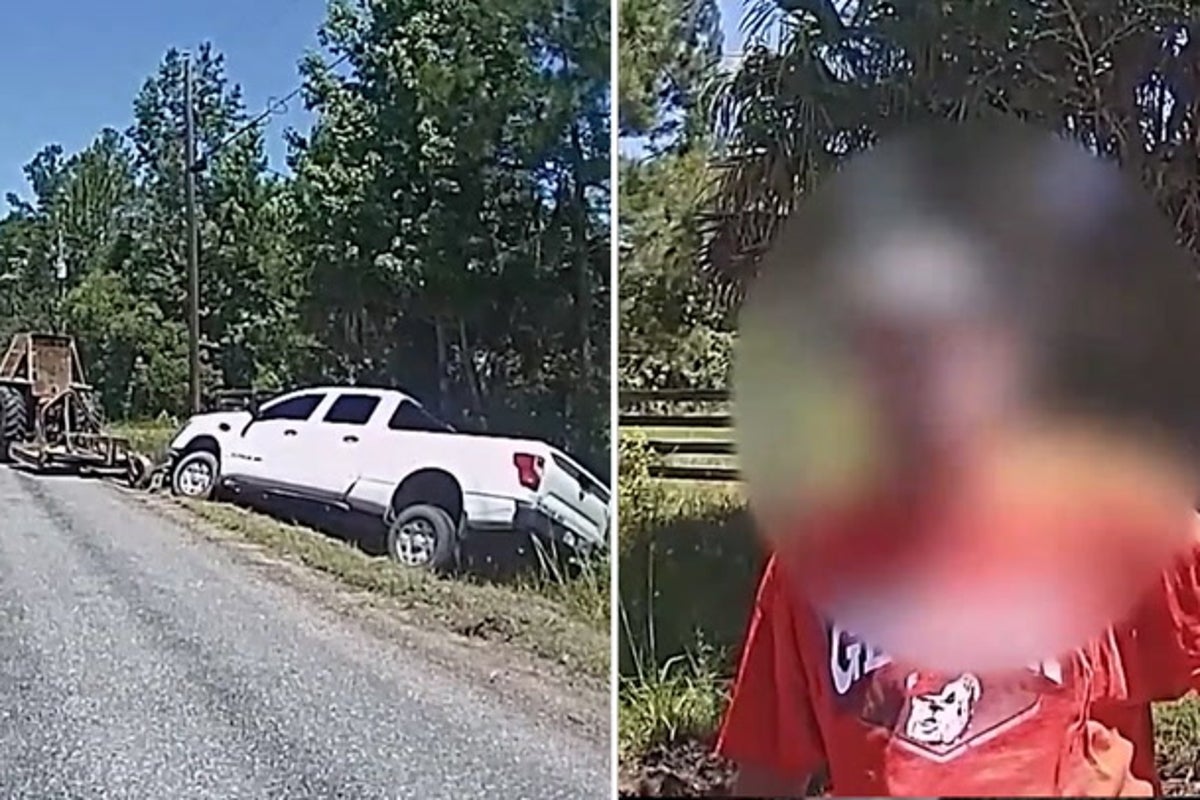
A white pickup truck sits abandoned at a sharp angle, nose-deep in a grassy Florida ditch. The driver is gone. When Nassau County Sheriff's deputies arrive at the single-vehicle crash site, they find a 15-pack of cold beer and a scattering of open containers cluttering the floorboards.
Then comes the sound of a diesel engine chugging down the road.
The missing driver decided to return to the scene of his own accident to resolve the issue himself. His recovery vehicle of choice? A farm tractor.
Nassau County bodycam footage captures the bizarre interaction as the driver stumbles around the heavy machinery. His brilliant plan, which he explained directly to the responding deputies, was simple. He was going to hook the tractor up to his wrecked truck, yank it out of the ditch, drive the tractor home, and then come back for the pickup later.
Instead, he walked away in handcuffs. When deputies informed him that operating a tractor on public roads while intoxicated constitutes a DUI, his defense was a classic piece of legal confusion. He simply stated he had no idea that rule existed.
The Myth of the Heavy Machinery Loophole
Many people genuinely believe you can evade a drunk driving charge if you swap your car keys for a steering wheel that isn't attached to a standard sedan. It's a massive, costly mistake.
Florida law doesn't care if you're driving a luxury sports car, an electric scooter, a riding lawn mower, or a John Deere tractor. Under Florida State Statute 316.193, a person is guilty of driving under the influence if they are operating, or in actual physical control of, a vehicle while impaired by alcohol or chemical substances.
The legal definition of a "vehicle" under state traffic laws is intentionally broad. It covers almost every device capable of transporting a person or property on a highway, excluding devices moved solely by human power like bicycles, or those used exclusively on stationary rails. Since a tractor moves under its own motorized power and drives on public right-of-ways, it fits the legal bill perfectly.
What Happens When You Argue with the Statutes
Ignorance of traffic codes won't save your driver's license. During the Nassau County roadside investigation, the tractor-driving individual failed his field sobriety exercises dramatically, at one point stumbling and falling right over the tractor equipment itself.
The consequences for a tractor-based DUI mirror standard automotive penalties:
- First-time conviction fines ranging from $500 to $1,000.
- Mandatory community service hours.
- Immobilization or impoundment of the vehicle involved.
- Probation periods up to one year.
- Potential jail time depending on blood alcohol levels and property damage.
The Nassau County Sheriff's Office summarized the incident perfectly via social media, reminding the public that DUI laws apply to every single motor vehicle on the books. If you have been drinking, you have to hand over every single set of keys in your pocket.
Practical Steps to Take If You Are Facing a Unique DUI Charge
If you find yourself facing an unconventional DUI charge involving heavy machinery or farm equipment, you need to understand that the prosecution views it with the same severity as a standard highway offense. Treat the situation with immediate legal seriousness.
- Secure the Incident Documentation: Obtain the official police report and any available dashcam or bodycam footage. In cases involving heavy machinery, the exact location of the vehicle—whether it was on private farmland or a public easement—plays a critical role in how the law applies.
- Challenge the Definition of Operation: A skilled defense attorney will look closely at whether you were in "actual physical control" of the vehicle. If the machinery was parked, turned off, or on strictly private property not accessible to the public, the state's case weakens significantly.
- Audit the Field Sobriety Tests: Factory and agricultural equipment require physical exertion to mount and operate. Stumbling or physical awkwardness caught on camera can sometimes be attributed to the sheer size and design of the machinery rather than chemical impairment alone.