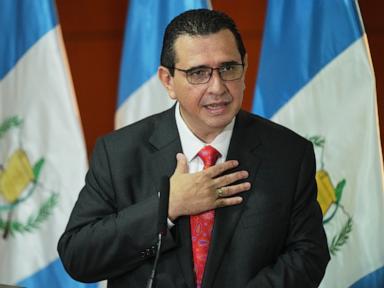
The cleaning of a deeply stained house has finally started in Guatemala City. For eight long years, the building housing the Public Prosecutor’s Office felt less like a center of justice and more like a fortress for political vendettas. That changed when Gabriel García Luna took charge. Now, he is making moves that people didn't think were possible just a few months ago.
On July 1, 2026, García Luna openly promised to tear down what he called the repressive and vengeful machinery built by his predecessor. This isn't just standard political talk. It is a direct assault on a system that forced dozens of honest judges, prosecutors, and journalists to flee the country in fear for their lives. Learn more on a related issue: this related article.
For anyone watching Latin American politics, the real question isn't whether the old system was bad. We know it was. The real question is whether one man can actually rebuild a collapsed justice system from the inside out.
The Total Destruction of Guatemalan Justice Under Porras
To understand why García Luna's early moves matter, you have to look at the wreckage he inherited. Consuelo Porras ran the Public Prosecutor’s Office from 2018 until May 2026. International observers often describe her tenure as a masterclass in institutional destruction. She didn't just fail to investigate crimes. She actively weaponized the law against anyone who tried to stop high-level corruption. More analysis by USA Today highlights comparable perspectives on the subject.
The numbers tell a terrifying story. A study by the institute INECIP showed that impunity for serious crimes skyrocketed past 94% during her time in office. Think about that for a second. Out of every 100 serious crimes reported, fewer than six ever saw any form of justice. Her office routinely threw out 74% of all citizen complaints without even opening an investigation.
Instead of going after drug cartels, extortion rackets, or white-collar criminals, the office spent its energy chasing anti-corruption champions. More than 60 judges and prosecutors faced absurd criminal charges. Over 100 individuals had to pack their bags and head into exile to escape prison. Porras systematically dismantled the special units that worked alongside international bodies to clean up the government. She fired over 500 career prosecutors and replaced them with loyalists who lacked basic legal competence but possessed plenty of willingness to shield corrupt networks.
Her campaign reached a boiling point in 2023 and 2024. When progressive anti-corruption outsider Bernardo Arévalo won the presidency, Porras tried everything to stop him. Her investigators raided electoral offices, opened sealed ballot boxes, and tried to strip Arévalo of his political immunity. She failed, but she left the country's democracy hanging by a thread. More than 40 countries, including the United States and members of the European Union, slapped sanctions on her for undermining the rule of law.
García Luna First Months and the Purge of the Inner Circle
President Arévalo finally got the chance to replace her when her term expired in May 2026. He chose García Luna, a seasoned legal professional with over 25 years of experience in the trenches of the Guatemalan justice system.
García Luna didn't waste time. His first major move struck at the very heart of the old regime's enforcement arm. He completely liquidated the Special Prosecutor’s Office against Impunity, known locally as FECI.
This move surprised some outside observers, but it made perfect sense to locals. FECI was once a legendary anti-corruption unit. But under Porras and her hand-picked director, Rafael Curruchiche, it became a tool for terrorizing political opponents. García Luna sacked Curruchiche entirely and closed the unit because it had lost every shred of public trust.
He didn't stop there. He targeted other key figures who drove the political persecution of independent journalists and the ruling party. Cinthia Monterroso, another prosecutor heavily involved in controversial political cases, found herself stripped of power and transferred to a minor role in a remote region.
Removing these figures sends a massive signal across the entire state bureaucracy. It tells corrupt networks that their immunity shield has serious holes in it. García Luna also ordered an immediate internal audit of all administrative staff and published a complete list of employee names and salaries online to bring transparency back to an office that operated in the shadows for a decade.
The Massive Challenges That Rebuilding Will Take
Getting rid of a few corrupt figures is the easy part. The actual work of restoring a shattered institution is a slow, painful grind. You can't fix a 94% impunity rate overnight.
The first major hurdle is reversing the massive brain drain that occurred over the last eight years. The prosecutors who actually knew how to build a complex case against organized crime or financial fraudsters are gone. Many are living in Washington, Madrid, or San José. Replacing them means hiring hundreds of new lawyers, vetting them for integrity, and training them from scratch. That takes years, not weeks.
There is also the problem of deep bureaucratic entangling. The old administration left behind a mountain of manufactured cases against journalists, activists, and indigenous leaders. García Luna announced a special commission to review these cases of criminalization. He wants to clear the names of political prisoners and make it safe for exiled professionals to return home.
However, sorting through these files while simultaneously managing the daily influx of new criminal complaints is a logistical nightmare. While prosecutors look backward to undo old injustices, organized extortion rings and violent gangs continue to plague Guatemalan citizens. Security remains a top concern for nearly a quarter of all households in the country. Businesses still spend over 10% of their budgets on private security just to stay open. García Luna must show the public that his office can protect them from street crime while he cleans up corporate and political corruption.
What This Means for the Region and Your Next Steps
The shift in Guatemala shows that institutional capture isn't permanent. Even when corrupt factions control the courts, the prosecutor's office, and Congress, a combination of citizen resilience and strategic political pressure can force a crack in the system.
If you want to track whether this transition actually succeeds, you need to watch specific markers over the coming months. Don't just listen to speeches. Keep your eyes on these concrete indicators.
- The Return of Exiled Operators: Watch if high-profile exiled figures feel safe enough to return to Guatemala City. Their return is the ultimate test of whether the justice system has truly changed.
- New Appointments: Track who takes over the newly created investigative commissions. If García Luna fills these seats with independent legal minds rather than political compromises, the reform is real.
- Collaboration with the National Civil Police: Look for a resumption of joint operations between prosecutors and the police force. Under Porras, institutional communication broke down entirely.
- The Status of Past Sanctions: See if international bodies begin easing diplomatic pressure or if they maintain a watchful eye while García Luna cleans house.
The fight to restore the rule of law in Guatemala is far from over. The old networks still retain significant power in the wider judiciary and local governments. But for the first time in nearly a decade, the country has a top prosecutor who wants to use the law to protect the public rather than punish his rivals.