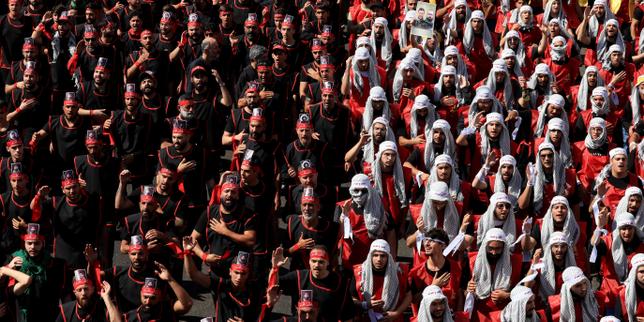
Black banners drape the southern suburbs of Beirut. Thousands of rhythmic fists strike chests in unison. The annual Shia commemoration of Ashura always brings high drama to Lebanon, but this June is different.
The air is thick with smoke from burning tires, tear gas, and the intense heat of political desperation. Hezbollah is putting on a massive show of defiance. They're chanting about resistance, dignity, and refusing to surrender. But strip away the religious fervor and the loud speeches, and you'll find a group facing a brutal reality. If you enjoyed this article, you might want to read: this related article.
The group's leadership wants you to think they've won. The reality on the streets tells a completely different story.
On June 17, a tentative US-Iran framework agreement established a shaky truce. Since then, the gaps between Hezbollah's loud proclamations and the actual security situation have widened. During his televised Ashura address, Hezbollah leader Sheikh Naim Qassem called the diplomatic agreement a formal declaration of American and Israeli defeat. He demanded an unconditional pullout of Israeli troops from every single inch of Lebanese soil. For another look on this story, see the latest update from Reuters.
It's a classic rhetorical move. If you yell about victory loud enough, maybe people won't notice that enemy troops are still sitting in your border villages.
The Irony of Claiming Victory from the Ruins
Walk through Nabatieh or the border towns in South Lebanon right now. You won't see a defeated Israel. You'll see widespread destruction from relentless military strikes.
Even as Qassem spoke to crowds about refusing humiliation, Israeli artillery hit targets in Qabrikha and Nabatiye el-Faouka. Israeli Prime Minister Benjamin Netanyahu made his position clear. His forces intend to stay in the southern buffer zone until Hezbollah is fully disarmed.
This leaves the Lebanese armed group in an awkward spot. They're telling their followers that the resistance is stronger than ever. At the same time, their people are returning to shattered homes while foreign soldiers patrol the ridges above their underground bunkers.
Qassem turned heads right before Ashura started. He admitted that breaking Israel's power in a traditional army-versus-army conflict is impossible for a guerrilla force. It was a rare moment of clarity. Of course, the Israeli military jumped on the comment, calling it proof that the group finally understands its own limits.
But during the actual processions of Ashura, that nuance vanished. The stage demands absolute certainty. The crowd requires messages of unyielding strength. The ritual honors the martyrdom of Imam Hussein at the Battle of Karbala, a historical event defined by choosing a noble death over an unjust surrender. Hezbollah has spent decades mapping this ancient religious narrative onto its modern political struggle.
By framing their current strategic mess through the lens of Karbala, the leadership changes the rules of evaluation. If you lose a battle in a conventional sense, it's a failure. If you lose it while invoking Ashura, it becomes a holy testament to your spiritual purity.
Riots on the Airport Road and Shifting Anger
The anger isn't just directed across the southern border anymore. It's boiling over right in the heart of Beirut.
Partisans on scooters swarmed the central districts and blocked the main highway leading to Beirut International Airport. They burned tires, chanted slogans for the late Hassan Nasrallah, and clashed with the Lebanese army. The military had to fire tear gas just to clear the lanes.
These young men aren't just angry at Israel. They're furious about the diplomatic deals happening over their heads. They see the framework agreement as a betrayal of the blood spilled over months of intense fighting.
This internal friction is making the rest of Lebanon incredibly nervous. A prominent Hezbollah member of parliament, Hassan Fadlallah, openly raised the specter of civil war during these tense days. It's a dangerous card to play. The message to the rest of the Lebanese political establishment is clear. Do not try to capitalize on our military setbacks, or we will turn our weapons inward.
Lebanon is already buckling under an economic collapse. The state infrastructure is almost non-existent. The last thing ordinary citizens want is another round of internal sectarian conflict. Yet, the more pressure the Shia militia feels from foreign diplomatic deals, the more aggressive it behaves toward its domestic critics.
The Washington and Tehran Connection
You can't understand what's happening in Beirut without looking at the broader diplomatic wrestling match between Washington and Tehran. The fifth round of intense talks took place in Washington to solidify the June 17 framework.
The deal is fragile. Iran wants to leverage its regional influence to secure sanctions relief and protect its nuclear program. US officials, including heavy warnings from figures like JD Vance, are insisting that any Iranian hostility will be met with immediate force.
There's also the massive issue of the Strait of Hormuz. Tehran wants to enforce maritime transit fees and restrictions there, which is a major sticking point for international shipping.
This leaves Hezbollah as a piece on a global chessboard. They launched their support front back in March to assist their regional allies. Now, they're watching Tehran negotiate terms that might require the militia to pull back from the border.
To keep its base from feeling like pawns, the group must amplify its militant rhetoric. The louder the talk of resistance in Beirut, the more room Iranian negotiators have to maneuver in Washington. It creates a strange theater where the words spoken at a religious rally are meant for ears in western capitals.
Misconceptions About the Truce
Many outside observers look at the framework agreement and assume the conflict is winding down. That's a mistake.
The truce is violating itself almost every single day. Drone strikes, cross-border shellings, and sound bombs are still regular occurrences. The civilian population remains trapped in a state of constant anxiety.
Local organizations are trying to provide psychological support to families in the south, but it's hard to heal minds when the explosions haven't stopped. The current status isn't peace. It's an unstable intermission where both sides are repositioning themselves for whatever comes next.
Watching the Next Moves for Regional Stability
If you're trying to figure out where this crisis goes from here, ignore the grand speeches and look at these specific indicators instead.
First, keep a close eye on the Lebanese army's deployment patterns around Beirut and the coastal highways. If the military continues to clash with scooter-bound partisans, it means the internal security threat is outstripping the border issue.
Second, watch the language coming out of the ongoing Washington talks regarding the southern border zone. If the final text allows Israeli forces to stay indefinitely without a clear timeline, expect Hezbollah to ramp up its guerrilla operations despite the official framework.
Third, monitor whether the group agrees to any physical withdrawal of its elite units north of the Litani River. That's the real litmus test. Words on an Ashura stage are cheap. Troop movements are expensive.
The coming weeks will show whether the framework agreement can hold or if it will dissolve under the weight of realities on the ground. For now, the black flags remain up in Beirut, hiding a deep strategic crisis behind a wall of religious defiance.