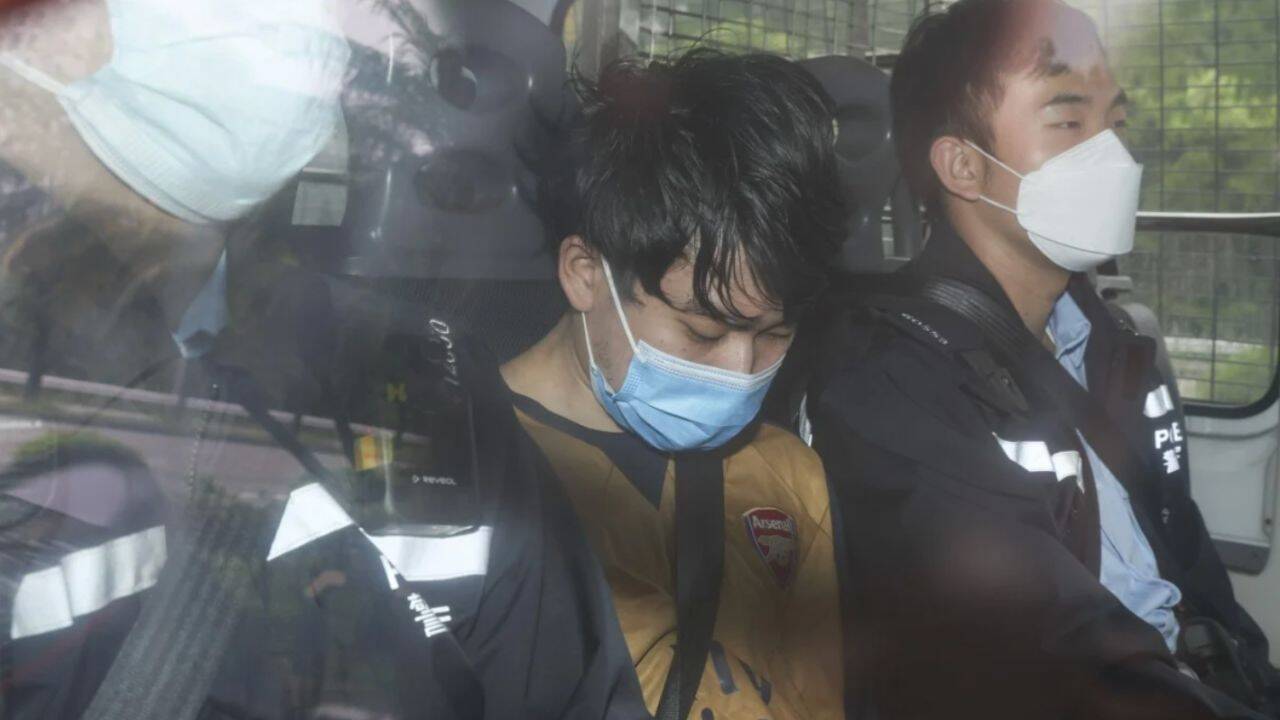
A man wheeling a handcart down a quiet road in the early hours of the morning is not a sight that usually sparks terror. But on April 29, 2022, a jogging couple on Tin Ha Road in Hong Kong noticed something deeply wrong. A human leg was sticking out from a rolled-up quilt secured with plastic wrap and adhesive tape. Inside that bundle was the body of 30-year-old Yip Tsz-ching. Her boyfriend, 29-year-old Ng Ka-sing, was the man pushing the cart.
On July 3, 2026, a High Court jury in Hong Kong found Ng guilty of manslaughter. They acquitted him of murder, accepting the defense that he might not have intended to kill her. He claimed he was merely trying to help her lose weight. You might also find this similar story insightful: Why The Venezuela Earthquake Tragedy Is Worse Than The Official Numbers Show.
Let that sink in. A man beats his partner to death, covers her in chemical burns, deprives her of sleep for over a week, and frames it as a bizarre, misguided wellness strategy.
This case is not a tragic story about a diet gone wrong. It is a terrifying masterclass in coercive control, physical torture, and systemic failure. When we reduce this to a headline about an extreme weight-loss plan, we miss the point entirely. We fail to see how abusers weaponize the language of self-improvement to mask sadistic violence. As highlighted in recent reports by The New York Times, the effects are significant.
The Grim Anatomy of a Deadly Weight Loss Defense
The trial revealed details that sound like a horror movie. Ng did not just look at his girlfriend and suggest she cut back on calories. He locked her away. He barred Yip from leaving their shared flat in Hung Shui Kiu for three whole months. Think about that for a second. Three months of absolute isolation from the outside world.
Then came the physical enforcement of the diet. Ng confessed to police that he beat Yip intermittently with a rod starting from the night of April 27. His excuse? He needed to keep her awake overnight to burn more calories. He claimed he had been depriving her of sleep for more than ten consecutive days before she finally succumbed to her injuries.
Forensic experts painted a far darker picture than a boyfriend who just got a bit carried away. Yip was 1.59 meters tall and weighed 64 kilograms at her death. Her body was covered in extensive corrosive burns spanning 55 percent of her skin. She had severe bruises, deep lacerations, and heavy abrasions across her head and limbs, all caused by blunt force trauma.
The official cause of death was a combination of suffocation, severe head injuries, and those massive, agonizing chemical burns covering her chest, abdomen, and limbs.
Ng tried to claim Yip splashed drain cleaner on herself "for fun" because she had a tendency to self-harm. The jury did not buy his innocence, but a 5 to 2 majority did buy the idea that it was manslaughter rather than outright murder. They believed he did not explicitly intend to end her life. Instead, he just thought he could use her body as a punching bag under the guise of discipline.
Sleep Deprivation and Blunt Force as Weapons of Torture
To understand how a human being dies under these conditions, you have to look at what sleep deprivation actually does to the human brain and body. Going without sleep for ten days is not just exhausting. It is fatal.
When you deprive someone of sleep for that long, their cognitive functions collapse. They lose the ability to speak clearly, think rationally, or defend themselves. Their cardiovascular system experiences massive stress. Blood pressure spikes. The immune system shuts down completely.
Now, layer severe physical trauma on top of that broken body.
Ng used a rod to strike a woman who was already physically collapsing from a week and a half of forced wakefulness. Every hit with that rod did not just bruise her skin. It tore through muscle tissue, caused internal bleeding, and pushed her closer to shock.
When a body is under that level of extreme trauma, it cannot process oxygen properly. The forensic report noted suffocation alongside head injuries. When someone is beaten over the head while severely weakened, their airways can become compromised, or their brain can simply forget to tell their lungs to breathe. It is a slow, agonizing way to die.
There is nothing dietary about this. It is torture, plain and simple.
The Sick Shared Flat Dynamic and the Role of Complicity
One of the most disturbing aspects of this trial was Ng's claim that he was not acting alone. The couple shared their Hung Shui Kiu flat with another family. Specifically, they lived with Yip’s sworn sister and that sister's husband.
Ng testified that the sworn sister was the one who ordered the abuse. He claimed she caught Yip eating without permission during the strict diet and demanded that Ng assault her as punishment. Ng even took off his shirt in front of the jury to show scars on his own body. He alleged that the sworn sister and her husband had abused him too, even burning him with cotton buds soaked in drain cleaner. He claimed he was simply too terrified to disobey them.
Whether Ng was acting entirely out of fear or trying to shift the blame to reduce his sentence, this highlights a terrifying reality about domestic homicide. Abuse rarely happens in a vacuum. People hear things. People see things.
If Ng's story holds any truth, an entire household watched a woman get systematically starved, imprisoned for ninety days, and beaten with weapons, all while treating it like a household discipline routine. Group dynamics can normalize the most grotesque acts of cruelty. When an abusive partner or a toxic family unit decides that a person's weight or behavior requires physical correction, boundaries dissolve entirely.
How Abusers Hide Behind the Language of Helping
We live in a culture obsessed with body image and self-transformation. We are bombarded with messages telling us to push past our limits, ignore our pain, and do whatever it takes to achieve a certain look. Abusers know this. They take that cultural obsession and twist it into a tool of absolute dominance.
It starts small. An abusive partner might tell you they are just looking out for your health. They might comment on your plate, suggest a gym routine, or offer to help you stay accountable. But in an abusive dynamic, "accountability" quickly morphs into punishment.
- They dictate what you can eat and when you can eat it.
- They track your weight daily and humiliate you if the numbers do not drop.
- They use physical violence or emotional starvation as a direct consequence for "failing" the plan.
This is how coercive control operates. It isolates the victim so thoroughly that they begin to view the abuser as the sole authority on reality. Yip could not leave the flat for three months. She had no friends to call, no family members to check on her, and no access to a phone without supervision. When you are trapped in a room for ninety days, being beaten every time you close your eyes or reach for food, your spirit breaks long before your body does.
The defense argued that Ng "hit her by mistake" while trying to help. This argument plays into a dangerous myth. It suggests that if an abuser claims their underlying motive was love or assistance, the violence is somehow less malicious. But you do not accidentally beat someone with a rod for days. You do not accidentally watch someone sustain chemical burns over half their body and do nothing. You do not accidentally wheel a dead body down a street in a plastic-wrapped quilt.
Recognizing the Red Flags of Controlling Behavior Disguised as Wellness
If you or someone you know is in a relationship where fitness or dieting has become a tool of control, you need to understand where the line is crossed. Real health goals are about autonomy, strength, and well-being. Abusive control is about compliance, punishment, and degradation.
Look closely at these behavioral patterns. They are not normal, and they are never safe.
Absolute Isolation From Support Systems
If a partner demands that you stop seeing friends or family because they are a "bad influence" on your lifestyle changes, that is a massive red flag. In the Hong Kong case, three months of isolation ensured that no one could see Yip's deteriorating physical state or save her life.
Physical or Emotional Punishment for Dietary Slipping
Healthy lifestyle changes involve setbacks. If a partner reacts to a dietary slip with rage, silent treatments, enforced fasting, or physical aggression, it is abuse. The idea that Yip was beaten because she "ate without permission" shows that food was used as a mechanism of total ownership.
Forced Physical Deprivation
A partner should never control your basic human needs. This includes your sleep, your access to water, your bathroom use, or your ability to leave a room. Forcing someone to stay awake to burn calories is not a fitness strategy. It is psychological and physical torture designed to break down mental resistance.
Escalating Physical Correction
It usually begins with a tight grip on the arm or a shoved plate. Then it escalates to slaps, then to objects, and finally to weapons like the rod used in this case. If a partner ever uses physical force to correct your behavior, the relationship is already dangerous.
What Needs to Change Next
The Hong Kong High Court jury made its decision based on the legal definitions of intent. They found Ng guilty of manslaughter, not murder. But public perception needs to be far sharper than legal technicalities.
We must stop treating these cases as bizarre, freak occurrences or weird lifestyle anomalies. This was a domestic homicide driven by extreme coercive control and physical torture. It belongs in the same category as every other brutal case of intimate partner violence.
If you suspect someone you know is being controlled or abused under the guise of a strict routine, a new lifestyle, or a family intervention, do not stay silent. Trust your gut. Speak up, contact local domestic violence resources, and do not buy into the excuse that someone is just trying to help their partner change. Real love does not require a rod, it does not lock the door for three months, and it never leaves a body wrapped in plastic on the side of the road.