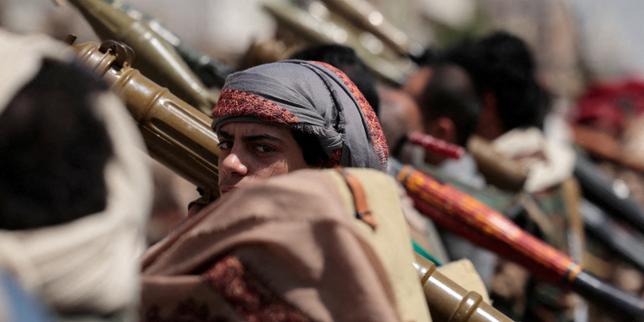
The fragile peace on Yemen's borders is officially dead. When Houthi rebels claimed responsibility for a direct missile strike targeting the southwestern Saudi city of Jazan, it wasn't just another skirmish in a decades-old conflict. It marked a volatile expansion of the wider regional war involving Iran, the United States, and Gulf states. Riyadh launched heavy airstrikes against Hodeïda, a vital port city controlled by the insurgents, thinking it could stamp out maritime threats in the Red Sea. Instead, they triggered an immediate ballistic response.
The Breakdown of the Yemeni Truce
For four years, a shaky quiet held between Saudi Arabia and the Houthi movement. Riyadh wanted out of a quagmire that began back in 2015. But local truces rarely survive regional conflagrations.
Hostilities flared up when the rebels declared a maritime blockade affecting commercial and oil shipping lanes. Saudi Arabia's coalition responded by striking military sites, telecommunication hubs, and naval bases on Kamaran island.
The Saudi-led coalition thought a swift air campaign would force the rebels back. They miscalculated. The Houthis didn't back down. They retaliated by sending missiles crashing toward Jazan, sending plumes of black smoke billowing near critical infrastructure.
Why the Red Sea Crisis Threatens Global Markets
You can't separate what's happening in Yemen from the broader confrontation between Washington, its allies, and Tehran. The Red Sea and the Bab el-Mandeb strait are arteries of global commerce. When tankers get hit, supply chains choke instantly.
Crude oil prices recently spiked past the $100-per-barrel mark before pulling back slightly. Energy traders are terrified. If the Houthis successfully choke off Saudi maritime routes alongside Iran's actions near the Strait of Hormuz, the economic shockwaves will hit consumers everywhere at the pump.
Civil defense agencies in Saudi cities like Jazan and Yanbu have repeatedly issued urgent alerts. Residents know the drill, but the stakes are higher now. This isn't just about local governance in Sanaa anymore. It's about an interconnected web of proxy warfare where a single missile launch can destabilize global energy markets overnight.
What Happens Next in the Middle East
The military option is back on the table with a vengeance. Donald Trump has floated the prospect of harsher strikes against Iranian targets, keeping the pressure dialed to the maximum. Meanwhile, regional actors are running out of diplomatic escape hatches.
If you're watching global logistics, energy costs, or geopolitical risk, keep your eyes on the Red Sea corridor. The friction between Riyadh and the Houthi forces is no longer a localized rebellion. It's the newest front in a war that refuses to cool down.



(mh=45C1wGtD-LV41OF8)12.jpg)