Pakistan just crossed a dangerous line in Afghanistan, and New Delhi isn't staying silent. On Sunday night, Pakistani fighter jets and ground forces launched a massive, coordinated assault across the Afghan border, hitting residential areas in Paktia, Paktika, and Kunar provinces. The strikes left at least 36 civilians dead—including women and children—and injured another 163 people. Within hours, India fired back with an incredibly fierce diplomatic condemnation, calling the military action a "blatant act of aggression" and a direct threat to the stability of the entire region.
This isn't just another routine border skirmish. It's an explosive escalation that shows how unstable South Asia has become in 2026. By jumping to defend Kabul's sovereignty so aggressively, India is signaling a major shift in how it handles its neighbors. New Delhi didn't mince words. The Ministry of External Affairs stated plainly that Pakistan is trying to project its own internal chaos onto foreign soil.
If you want to understand why this specific clash is triggering panic buttons from Kabul to New Delhi, you have to look past the surface-level press releases. This is about a collapsing border, a spectacular intelligence failure inside Pakistan, and a deep geopolitical chess match over who controls the narrative in Central Asia.
The Brutal Reality of the Sunday Night Raids
The details coming out of eastern Afghanistan are grim. According to Afghan government spokesperson Hamdullah Fitrat, Pakistani jets targeted multiple civilian homes under the guise of counter-terrorism operations. In the Chamkani district of Paktia province, a Pakistani jet bombed a home, immediately killing an elderly man and a young child.
Then came the real tragedy. As local villagers rushed to the scene to dig through the rubble and rescue survivors, Pakistani forces allegedly carried out a second strike on the exact same spot. That second blast killed 28 villagers on the spot. This "double-tap" strike strategy is notorious for maximizing casualties, and its use against a civilian rescue party has caused immense anger across Afghanistan.
Meanwhile, in Paktika's Gayan district, another strike flattened a residential home, killing six civilians who were mostly women and children. In Kunar province, the aerial bombardment wiped out local livestock and tore through rural infrastructure.
Pakistan tells a completely different story. Information Minister Attaullah Tarar announced that security forces executed a highly planned, intelligence-based ground operation alongside air strikes to eliminate militant safe havens. Islamabad claims its forces successfully killed 29 militants during the operation. They insist they hit cross-border sanctuaries used by the Tehreek-e-Taliban Pakistan, the group responsible for a wave of bloody attacks inside Pakistan.
The Karachi Trigger That Pushed Pakistan to the Edge
To understand why Islamabad launched these strikes right now, you have to look at what happened just 24 hours earlier in Karachi. On Saturday night, a heavily armed militant cell executed a devastating breach at the provincial headquarters of the Pakistan Sindh Rangers in Gulistan-i-Jauhar.
The attackers rammed a vehicle packed with explosives straight into the main gate of the military garrison. The initial explosion triggered a massive firefight. Three Pakistani paramilitary personnel were killed alongside three of the attackers. An affiliate of Jamaat-ul-Ahrar, a notoriously violent splinter faction of the Pakistani Taliban, quickly took credit for the operation.
For the Pakistani military elite, the Karachi garrison attack was the final straw. It happened in the heart of the country's financial capital, proving that domestic security forces are struggling to protect even their own heavily fortified bases. Facing intense public anger and political instability at home, the government opted for a massive show of force. They turned their crosshairs toward Afghanistan, blaming Kabul for giving the attackers a free pass.
Decoding New Delhi's Fiery Response
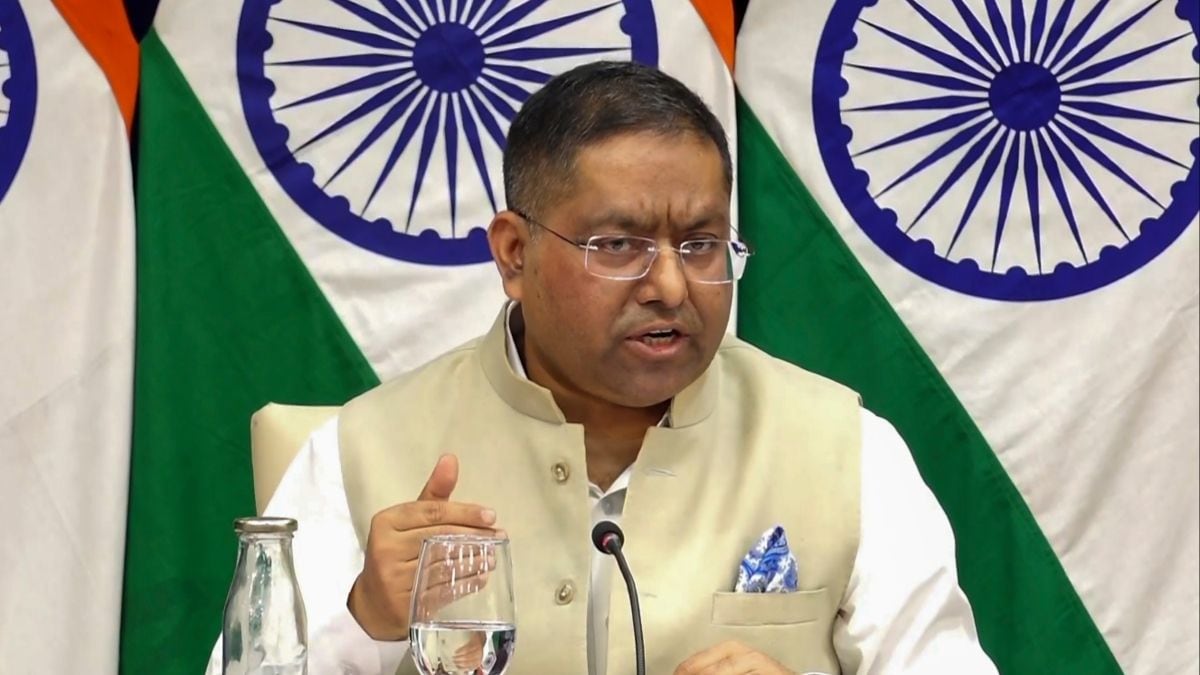
India's reaction came fast and heavy. Ministry of External Affairs spokesperson Randhir Jaiswal released a statement that went far beyond standard diplomatic boilerplate. India didn't just express sympathy; it explicitly attacked the legitimacy of Pakistan's military strategy.
The Indian government accused Pakistan of a persistent pattern of reckless behavior. New Delhi stated that these airstrikes are nothing more than a futile attempt by Islamabad to externalize its internal failures through desperate acts of violence beyond its borders.
That phrase—externalizing internal failures—is a direct jab at Pakistan's current domestic crisis. Pakistan is dealing with severe economic stagnation, endless political infighting, and a breakdown in law and order. By pointing this out, India is telling the world that Pakistan is using Afghanistan as a punching bag to distract its own citizens from the mess at home.
India also reaffirmed its unwavering support for Afghanistan's territorial integrity. This explicit defense of Afghan sovereignty is highly significant. It shows that India is fully prepared to back Kabul diplomatically when it faces military pressure from Islamabad.
The Deeper Geopolitical Chess Match
Why does India care so much about airstrikes in rural Afghanistan? Because the balance of power in South Asia is completely shifting.
For decades, Islamabad viewed Afghanistan as its backyard, a space where it could maintain "strategic depth." When the Taliban took over Kabul in 2021, many analysts assumed Pakistan had won total control over its neighbor's future. That assumption turned out to be completely wrong. The relationship between the Pakistani government and the Afghan Taliban has disintegrated into bitter hostility.
At the same time, India has played a clever, quiet diplomatic game. Instead of completely isolating Kabul, New Delhi re-established a diplomatic presence there. India focused on sending humanitarian aid, building infrastructure, and keeping communication channels open.
Now, that strategy is paying off. By defending Afghanistan against Pakistani operations, India is solidifying its position as a reliable, stable regional partner for the Afghan people. It presents a stark contrast to Pakistan's approach of cross-border shelling and aerial bombings.
The Curse of the Durand Line
The root cause of this endless violence is a line drawn on a map over a century ago. The Durand Line, which serves as the border between Afghanistan and Pakistan, has never been recognized by any government in Kabul—including the current Taliban administration.
The border cuts directly through ethnic Pashtun tribal lands. It is porous, rugged, and nearly impossible to police effectively. Militants move across the border with relative ease, exploiting the terrain to evade security forces.
Pakistan has spent years trying to fence the border, which has led to frequent firefights between Pakistani border guards and Afghan soldiers. When Pakistan carries out airstrikes inside provinces like Paktia and Kunar, it violates what Afghanistan considers its sovereign airspace. This guarantees that the cycle of retaliation will keep spinning. Kabul has already warned that it will respond to these latest strikes in due time, prompting both nations to summon each other's diplomats to lodge formal protests.
Actionable Next Steps for Regional Observers
If you are a political analyst, investor, or security observer tracking South Asian stability, this situation requires close monitoring. The conflict is moving beyond localized border clashes.
First, watch the supply lines. The Torkham and Chaman border crossings are vital trade arteries between Pakistan and Central Asia. Expect frequent closures, which will disrupt regional trade and spike transportation costs.
Second, monitor the diplomatic rhetoric out of New Delhi. If India follows up this verbal condemnation with increased economic or technical aid to Kabul, it will mean India is looking to permanently diminish Pakistan's influence on its western front.
Finally, keep an eye on domestic security inside Pakistan. History shows that when the Pakistani military launches cross-border strikes, militant groups respond with urban bombing campaigns inside Pakistani cities. Security protocols in major hubs like Islamabad, Lahore, and Karachi will likely tighten significantly over the coming weeks. Plan any regional travel or logistics with these inevitable delays and security risks in mind.