A courtroom can hear a lot of desperate lies, but claiming you accidentally "poked" your wife when an autopsy reveals seven deep knife wounds to her chest and neck takes a special kind of delusion. That was the core of Jagpreet Singh's defense. It failed miserably. In a British Columbia Supreme Court, a judge saw right through the absurd narrative and handed down a definitive verdict.
An Indian-origin man convicted of stabbing wife in Canada cannot simply rewrite physics, forensics, and common sense to escape a murder charge. Jagpreet Singh, a 52-year-old man who had just arrived from India days prior, stood in front of Justice Andrea Ormiston hoping a technicality called the provocation defense would save him from spending life behind bars. The court didn't buy it. His testimony was labeled evasive, inconsistent, and entirely unreliable.
When we look at the mechanics of intimate partner violence, cases like this highlight a terrifying pattern. The sudden shift in environment, historical marital friction, and an absolute refusal to take accountability all collided inside a small basement suite in Abbotsford, British Columbia.
The brutal reality behind the Indian-origin man convicted of stabbing wife in Canada
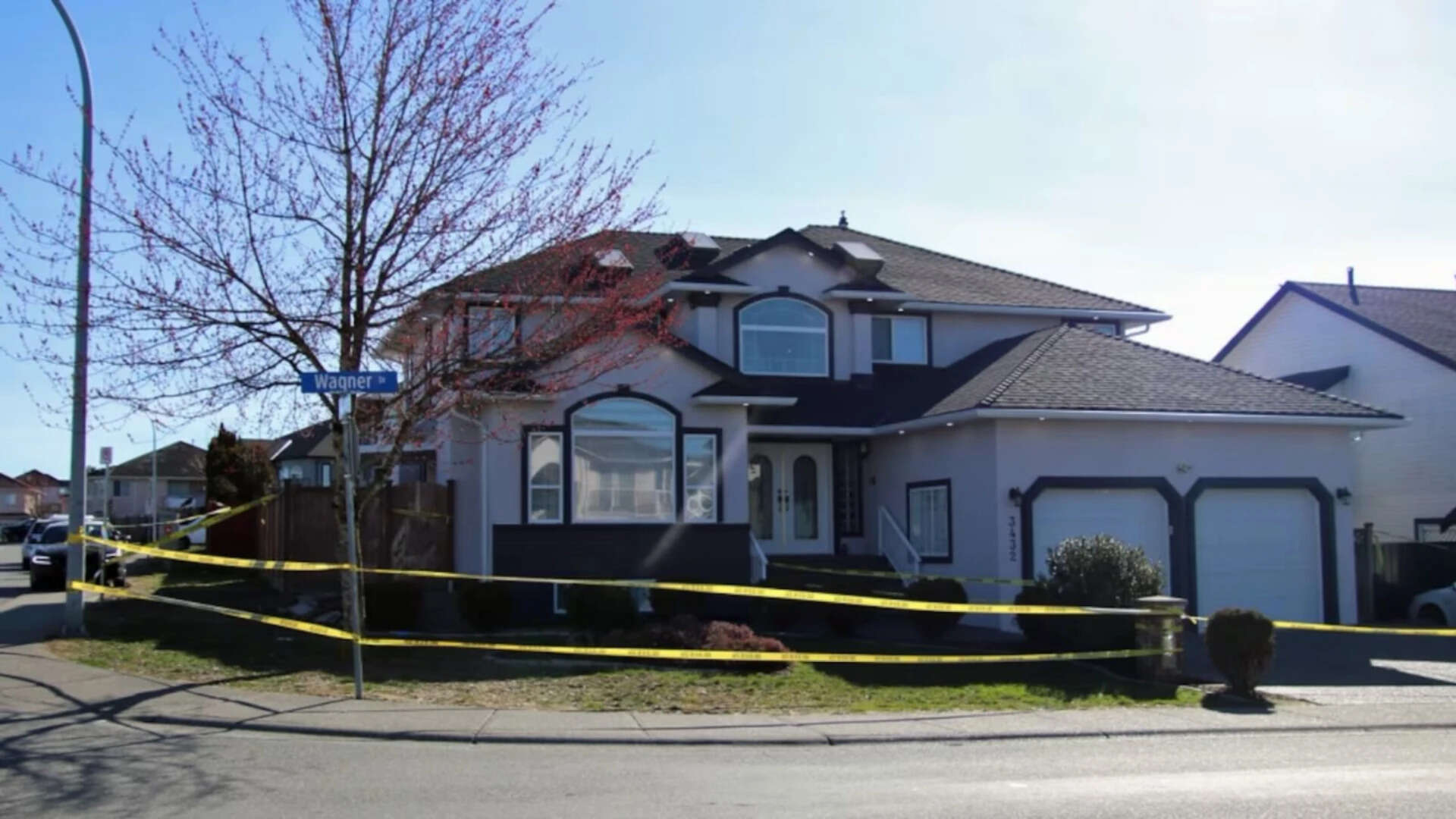
To understand how justice was served, you have to look at what the police found when they arrived at the home on Wagner Drive on March 15, 2024. It was a bloodbath. Balwinder Kaur, a 41-year-old mother who had built a life in Canada over two years, was lying on her back in a massive pool of blood. First responders tried everything to save her, but she died shortly after midnight at the hospital.
The physical evidence spoke volumes, far louder than Singh's stumbling explanations. Investigators found two bloody knives at the scene. One steak knife had its handle completely snapped off, resting near Kaur's body. The other knife was tucked away in a kitchen drawer. Both blades were coated in her DNA.
An autopsy later confirmed that Kaur didn't suffer a minor nick or an accidental scratch. She was stabbed seven times. Four wounds punctured her neck, and three targeted her chest, ripping directly through her heart. The sheer force required to break a knife handle and pierce a human heart completely demolishes any claim of a minor physical scuffle.
When the Abbotsford police entered the basement suite, they found Singh sitting on a couch. A responding constable noted that Singh didn't look like a man who had just accidentally injured his partner. He sat there, staring blankly at the officers, appearing quiet and numb. He claimed he didn't speak English well and struggled to comprehend the situation, but his actions immediately following the stabbing revealed a much darker level of consciousness.
Dismantling the heat of passion and provocation defense
Singh’s legal team tried to play a well-worn card in Canadian criminal law. They tried to get the charge reduced from second-degree murder to manslaughter by arguing provocation. In Canada, manslaughter means you killed someone but didn't explicitly intend to cause their death. To prove provocation, a defense must show that the victim did something so sudden and shocking that an ordinary person would completely lose their self-control and act in the heat of passion.
Singh’s version of the story was almost comical if it weren't so tragic. He claimed that after returning from a trip to the mall around 9:30 p.m., a verbal argument in the bedroom turned physical. He admitted to punching Kaur in the face. Then, he claimed she ran to the kitchen and grabbed a knife to swing at him. He alleged that he successfully disarmed her, but she instantly grabbed a second knife, scratching his shoulder.
According to Singh, it was during this second frantic struggle to disarm her that he accidentally poked her in the stomach with the blade. Conveniently, he testified that he had an absolute blackout and remembered absolutely nothing about how she received the rest of the seven fatal wounds.
Justice Ormiston didn't let that story stand for a second. She noted that Singh did not come to the court to tell the truth. The judge emphasized that the attack was forcefully executed. If you stab someone repeatedly in the neck and chest, areas everyone knows are highly lethal, you intend to kill them. You aren't trying to disarm them. You aren't accidentally poking them. You're executing a targeted assault.
The court also heard testimonies from other people living in the house, including the upstairs landlord and another tenant in an adjacent basement unit. They didn't hear a mutual brawl. They heard Kaur's desperate screams for help. When the landlord rushed down to see what was happening, Singh didn't mention an accident or self-defense. He confessed to what he had done right then and there.
Six days of reunion that ended in a horrific crime scene
The timeline of this murder makes the stomach turn. Singh arrived in Canada on March 9, 2024, traveling on a visitor's visa. Just six days later, his wife was dead.
The couple had been married for over twenty years in India, but their lives had branched out. Kaur moved to Canada in 2022 to take care of their daughter, who had traveled abroad for university studies but later developed severe medical issues. Singh had provided some financial support for the move initially, but the distance created a massive void.
Interestingly, it was Kaur who filed the official paperwork to sponsor Singh's visitor visa. She brought him to Canada, yet her private conversations with friends painted a picture of pure dread. Kaur had explicitly confessed to people in her circle that she was terrified of her husband. She didn't want him to come to Canada. She feared what would happen when he arrived.
Her worst fears materialized in less than a week. The transition from a long-distance marriage back into a confined, shared basement suite created an immediate pressure cooker environment. The court exposed deep financial anxieties and long-standing bitterness between the two, notably regarding a debt Singh claimed Kaur owed him. Instead of a joyful family reunion, Singh brought his deep-seated resentment across the ocean.
Red flags and the terrifying silence before the tragedy
Looking into the digital footprints of the couple reveals an eerie silence that often precedes severe domestic escalation. Analysts tracking their phone records noticed that there was practically zero communication between Singh and Kaur in the months leading up to his flight. No phone calls and no text exchanges were recorded between January and early March 2024.
The silence only broke on February 26, when a automated system log on Kaur's WhatsApp recorded a telling action: "You unblocked this contact." She had completely cut him off digitally before being pressured or convinced to unblock him and finalize his visa process.
When she met him at the airport on March 9, she tried to put on a brave face, sharing videos and photos of their reunion with family. But the mask slipped quickly. On the night of her death, just minutes after they got back to the basement, Kaur made a WhatsApp video call to a number belonging to her son back home. The call was brief. Her son's number tried calling her back four separate times over the next hour. None of those calls were ever answered again. She was already trapped in the room with her killer.
What this verdict means for justice in intimate partner violence cases
This conviction sends a massive message to anyone trying to misuse legal defenses to cover up domestic femicide. The provocation defense isn't a get-out-of-jail-free card for abusive partners who lose their temper when a spouse stands up to them.
The judge made it clear that the evidence, when viewed in its entirety, left no room for reasonable doubt. Singh’s self-serving memory loss regarding the actual stabbing wounds was a transparent tactic to avoid admitting his intent. You don't get to claim you forgot the most brutal part of an action while perfectly remembering the events leading up to it just to fit a manslaughter narrative.
Second-degree murder in Canada carries an automatic sentence of life imprisonment. The only variable left is determining when Singh will be eligible to apply for parole, a window that can range anywhere from 10 to 25 years. With his psychiatric and psychological assessments scheduled to finish later this year, the court will finalize his exact sentencing details in late October.
For immigrant communities and advocacy groups monitoring this trial, the verdict is a bittersweet victory. It proves that the Canadian justice system will thoroughly examine forensic data, look past cultural or linguistic barriers raised as distractions by the defense, and hold abusers accountable. But it also serves as a grim reminder of how quickly domestic control can turn fatal when isolation and past trauma are packed into a new, unfamiliar environment.
If you or someone you know is dealing with escalating anger, control, or threats within a relationship, waiting for things to cool down naturally is a gamble you shouldn't take. Seek out local support networks, document instances of abuse, and build a safety plan before a volatile situation turns into an unmanageable crisis.