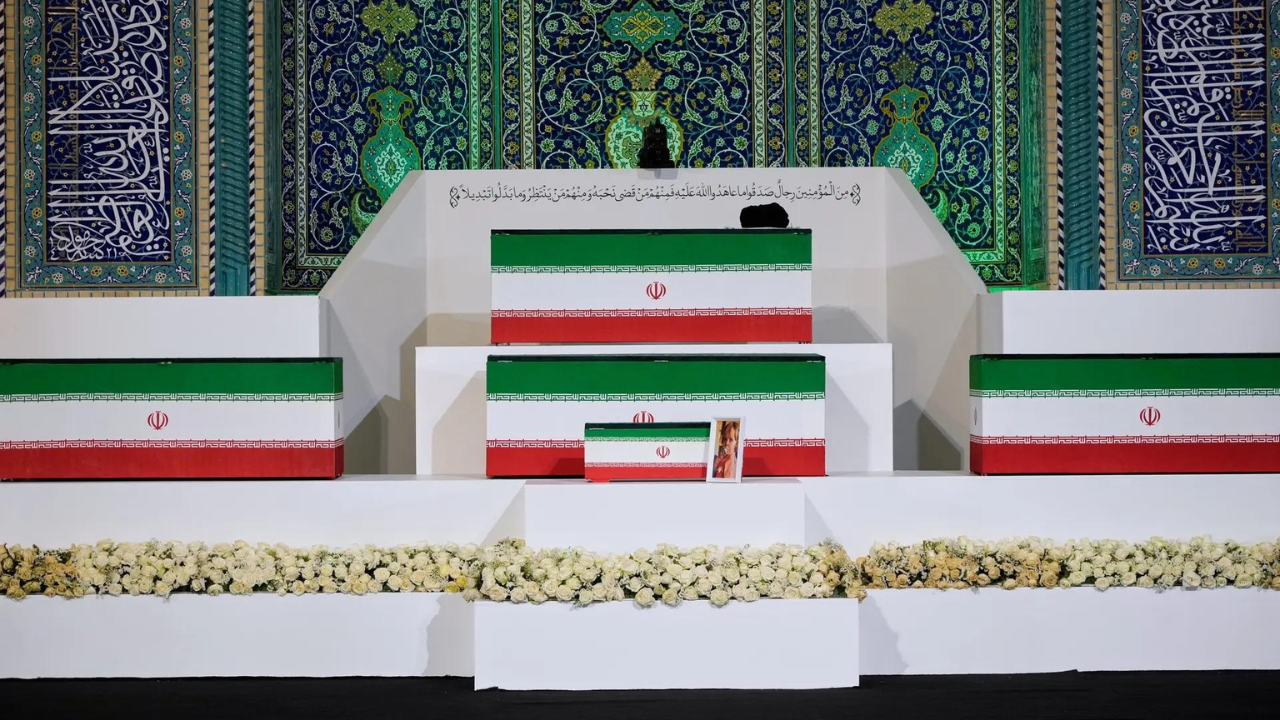
Tens of thousands of people packed into the Imam Khomeini Grand Mosalla in Tehran. They wore black, waved flags, and wailed on command. To an outside observer, the mass grief following the death of Supreme Leader Ayatollah Ali Khamenei looks like total, unyielding devotion to a theocratic state. Western analysts often look at these massive funeral turnouts and assume it means the Islamic Republic has an unbreakable hold on its people. But the reality on the ground in post-war Iran is far more complicated, dark, and calculated than a simple display of public sorrow.
The regime just survived a devastating military conflict. Its infrastructure is battered. The economy is in tatters. Yet, the clerical establishment is using this moment of collective mourning to lock down its survival. They aren't just burying a leader. They are weaponizing grief to send a message to domestic dissidents and foreign adversaries alike. The system survived, and they want you to know they aren't going anywhere.
The Art of the State Manufactured Funeral
State funerals in Iran have always been theatrical. They double as massive political rallies. If you want to understand how the regime maintains its grip after a brutal war, you have to look at the mechanics behind these massive gatherings.
It isn't all organic. The government bused in thousands of workers from state-owned enterprises. Civil servants knew their attendance was being monitored. Schools and universities closed down, directing students straight to the prayer complexes. If you don't show up, your state benefits, your job, or your university enrollment could suddenly vanish. It's a system built on coercion, packaged neatly for international television cameras.
But we can't dismiss the crowds as entirely forced. A significant portion of the population genuinely mourns. For the hardline loyalists, Khamenei was more than a political figure. He represented the earthly representative of Shi'ite Islam's hidden Imam. His death in an enemy strike instantly turned him into a martyr. In Shi'ite culture, martyrdom is a powerful, emotional currency. The regime knows exactly how to spend it.
By placing the coffins of Khamenei and his family members under glass outdoors, the state created a visceral, tragic spectacle. They didn't just show a fallen leader. They showed a slaughtered family, including a young grandchild. This imagery instantly shifts the public conversation away from the regime's political failures or the economic misery brought by the war. It focuses the public entirely on foreign aggression.
Sidelining Dissent in the Shadow of War
What happens to the opposition during a time of national mourning? They get completely suffocated. For years, Iran faced internal protests, women's rights movements, and deep economic anger. The war temporarily quieted some of that, but the fear of a post-war rebellion was very real for the clerical elite.
The mass funeral serves as a giant, loud warning to anyone thinking about organizing a protest. When the streets are filled with millions of regime loyalists chanting anti-Western slogans, an activist can't easily find space to breathe, let alone march. The sheer physical presence of the crowd acts as a paramilitary force. The Basij militia and the Islamic Revolutionary Guard Corps (IRGC) mix seamlessly into the mourning crowds, watching for any sign of defiance.
Opponents of the regime face a brutal double standard. If you don't mourn publicly, you are labeled a traitor or a collaborator with the enemy. Exiled figures, like the former crown prince, can call the funeral a propaganda stunt all they want from the safety of foreign capitals. On the streets of Tehran, saying that out loud will get you thrown into Evin Prison, or worse. The regime uses the collective emotion of the crowd to justify immediate, harsh crackdowns on anyone who steps out of line.
The Invisible Successor and the Security Crisis
One of the strangest details of this entire spectacle is the total absence of Mojtaba Khamenei. As the son and designated successor to the Supreme Leader, he should be the central figure leading the prayers. Instead, he remains completely hidden from public view, allegedly recovering from injuries sustained in the very attack that killed his father.
This absence creates a dangerous power vacuum wrapped in a security panic. The regime is terrified of another strike. They've put out statements about busting CIA and Mossad terror cells in the capital just to keep the population on edge. Fear is a highly effective tool for social control. By keeping the country in a perpetual state of high alert, the government makes internal security the only priority that matters.
Regime Survival Strategy:
1. Externalize blame: Attribute all economic and physical ruin to foreign strikes.
2. Enforce public conformity: Use mandatory attendance to project absolute unity.
3. Suppress internal rivals: Use the security vacuum to arrest potential dissenters.
The military leadership, particularly the IRGC, benefits immensely from this environment. They've essentially taken over the day-to-day management of the country under the guise of wartime emergency measures. While the crowds weep for a religious icon, the generals are quietly consolidation their control over the economy, logistics, and political succession. The theocracy is shifting closer to a straightforward military dictatorship cloaked in religious rhetoric.
Why the West Misinterprets the Mourning
Washington and Jerusalem often make the mistake of thinking that economic ruin and military strikes will automatically cause a regime to collapse from within. They see a country under siege and expect a popular uprising. But pressure from the outside frequently has the opposite effect. It forces a population into survival mode.
When bombs fall, everyday citizens stop thinking about political reform. They start thinking about bread, water, and electricity. They look to the only existing authority capable of distributing resources. The regime leverages its control over food supplies and post-war reconstruction to ensure compliance. You don't rebel against the entity that holds your ration cards.
The anti-American and anti-Israeli anger expressed by the mourners is real. Arash Rahimi, a forty-year-old mourner in the Tehran crowd, summed it up perfectly when he noted that the population now has a direct blood feud with the United States. Even Iranians who don't love the clerical government often feel a deep sense of national humiliation when their state institutions are attacked. The regime skillfully captures that nationalist pride and bends it to serve its own survival.
Practical Realities for Navigating Post War Iran Policy
If you're trying to read the tea leaves of Iran's future, don't look at the size of the funeral crowds. Look at the concrete actions the state takes next.
First, watch the Strait of Hormuz. The regime is already moving to charge vessels for passage and warning European powers against a military presence in the region. They want to show that their capability to disrupt global trade remains completely intact despite the war. This is their primary point of leverage against international sanctions.
Second, pay attention to the internal security directives. The government isn't loosening its grip; it's tightening it. If you have business interests, diplomatic ties, or humanitarian channels connected to the region, expect extreme vetting, frequent blackouts, and intense surveillance.
The hardline establishment has managed to survive an all-out onslaught. They've used the death of their supreme leader to reset the political clock, wipe out domestic opposition, and position the military elite for a permanent hold on power. The grief on display is massive, but the calculation behind it is even bigger. This isn't a regime on its last legs. It's a system that has mastered the brutal art of crisis management.