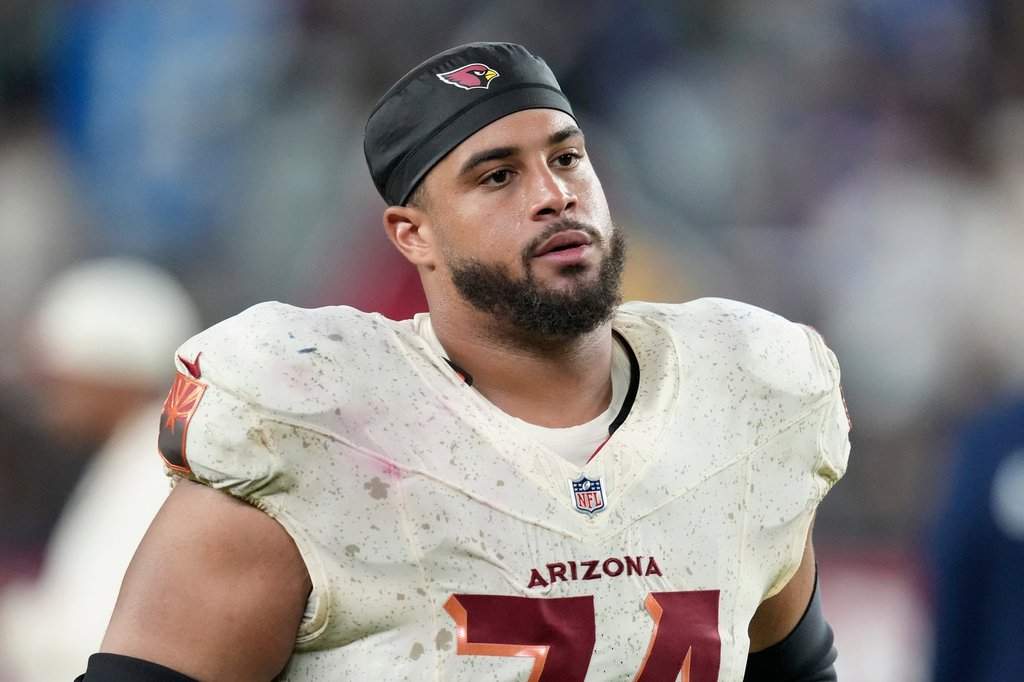
When an active NFL player gets named in a police bust involving seized weapons and multi-kilogram drug busts, headlines turn chaotic fast. Arizona Cardinals offensive guard Isaiah Adams found himself in the middle of that exact storm after Durham Regional Police released details from a Guns and Gangs Unit investigation in Ontario, Canada.
Adams turned himself in to Canadian authorities, faced four serious firearms charges, posted bail, and then boarded a flight back to Arizona to report for training camp. That timeline moved fast. The legal process, however, will take months or even years.
Understanding what actually happened in Ajax and Pickering requires looking past hot takes. The facts on the ground, the defense's position, and the NFL’s discipline policy painted a far more complex picture than a simple police blotter snippet.
The Durham Police Investigation and Where Adams Fits In
Durham Regional Police wrapped up an intensive multi-day operation targeting suspected illegal firearms and drug trafficking in the Toronto suburbs. The investigation kicked off in Ajax, Ontario, where officers pulled over a vehicle carrying two individuals. Inside that car, police discovered more than three kilograms of suspected fentanyl.
That traffic stop led investigators directly to a residential home in nearby Pickering. When police executed a search warrant on the property, they seized a loaded handgun equipped with a prohibited overcapacity magazine, alongside a replica Uzi-style firearm. Serial number checks later confirmed that the loaded handgun had been reported stolen out of Georgia in the United States.
The charges came down quickly. Four people ended up facing criminal counts:
- Isaiah Derrick Adams: Charged with possession of a firearm obtained by crime, possession of a restricted or prohibited firearm without a license, possession of a loaded firearm, and possession of a prohibited device.
- Jaelin Jared Gamble: Charged with possession of a Schedule I substance for the purpose of trafficking (fentanyl).
- Natasha Marie Rotta: Charged with drug trafficking offences alongside Gamble.
- Allyson Mae Adams: Arrested at the Pickering residence and charged with four matching firearms counts.
The distinction here matters immensely. Police did not charge Isaiah Adams with any drug offenses. He wasn't in the vehicle where officers found the fentanyl. His charges stem entirely from weapons allegedly found inside the Pickering residence tied to his family and hometown roots.
What the Defense Is Saying About the Weapon Charges
Adams didn't dodge law enforcement. He turned himself in to Durham police two days after the initial house raid. He appeared for a bail hearing, secured his release, and cleared his travel logistics to return to work in Tempe.
His legal team came out swinging right away. Defense attorney Adam Weisberg issued a direct statement asserting that Adams had zero knowledge of any illegal weapons present at the home.
"Isaiah is completely innocent in this matter," Weisberg stated. "He had no knowledge of any firearm, and he will be fully exonerated."
Criminal defense in Canadian legal jurisdictions relies heavily on proving constructive possession when multiple people use or visit a shared property. Simply being associated with a address where contraband is recovered doesn't automatically equal legal guilt. The Crown must prove beyond a reasonable doubt that Adams knew the weapon was there and held some degree of control over it. If Adams was simply staying at or visiting a relative's house during the NFL offseason without knowledge of what was stored in the building, his defense team has a strong angle to push for a complete discharge or acquittal.
None of the charges against Adams or his co-defendants have been proven in court.
His Rise from Ajax to the Arizona Cardinals
To grasp why this story hit so hard across Canadian sports media, you have to look at Adams' background. Born in Ajax, Ontario, he grew up playing football in the local Durham region before making a name for himself on the American collegiate stage.
He took an unconventional route. Adams played junior college football at Garden City Community College before earning a scholarship to Illinois. With the Fighting Illini, he showcased positional versatility, starting at both left guard and right tackle. His heavy hands and physical run-blocking caught the eyes of NFL scouts.
During the 2024 NFL Draft, the Arizona Cardinals selected Adams in the third round with the 71st overall pick. That made him the top Canadian prospect taken in that entire draft class.
His NFL career got off to a baptism-by-fire start.
- Rookie Year: Played in all 17 games, stepping into the starting right guard spot mid-season and starting the final five games.
- Second Season: Played through a chaotic rotation, starting games at left guard and right guard while navigating typical growing pains.
- Current Position: Heading into camp, Adams sat right on the bubble for a starting interior line position against incoming young talent like rookie Chase Bisontis.
Adams was building a reputation as a hard-nosed, reliable blocker who beat the odds as an international draft pick. These legal trouble spots back home in Ontario put that entire hard-earned narrative on hold.
How the NFL Personal Conduct Policy Applies Overseas
NFL contracts follow players everywhere on Earth. Just because an alleged incident occurred in Ontario, Canada, doesn't shield a player from commissioner discipline in New York.
The NFL Personal Conduct Policy grants the league broad authority to investigate and discipline players for off-field incidents, regardless of whether criminal convictions occur. Under league policy rules, weapons violations rank among the most strictly reviewed offenses.
Usually, the NFL operates under a standard playbook for cases like this:
- Information Gathering: The league's internal investigative unit monitors the local court proceedings in Ontario and requests official police documents from Durham Regional Police.
- Deferral to the Courts: The league almost always waits for the formal criminal court process to play out before handing down multi-game suspensions or fines.
- Commissioner's Exempt List: If a case involves violent charges or serious felony-equivalent offenses, Roger Goodell can place a player on paid administrative leave. However, because Adams was granted bail, returned to the team, and faces non-violent possession charges where he maintains zero knowledge, the league opted not to immediately sideline him.
The Cardinals issued a standard legal statement while Adams reported for work: "We are aware of the situation involving Isaiah Adams. Out of respect for the process, we will refrain from commenting further at this time."
Head Coach Mike LaFleur echoed that approach when press addressed the matter as camp opened. He noted that Adams was "doing good" while politely declining to elaborate on active court proceedings.
The Road Ahead for Isaiah Adams and Arizona
Legal systems in Canada move deliberately. Cross-border criminal proceedings involve preliminary hearings, disclosure review from the Crown prosecution, and potentially lengthy trial schedules. Adams won't see a final legal resolution in a few weeks.
For the player and the team, managing this situation requires two distinct playbooks:
- On the Field: Adams must focus on winning his roster battle at guard. Offseason distractions ruin conditioning and mental focus. If he drops reps during camp drills, he risks losing his spot on the depth chart regardless of his legal status.
- Off the Field: His defense team must work through pretrial disclosure in Ontario to prove his complete separation from the seized weapons. If his lawyer can demonstrate that Adams was merely present at a family property without access or control over the stolen firearm, the charges could be withdrawn before ever reaching a trial judge.
Keep a close eye on court appearance dates in Durham Region over the coming weeks. Any requirement for Adams to appear in person in a Canadian courtroom could conflict with the Cardinals' regular-season schedule. Until then, Adams remains cleared to practice, but the dark cloud of four pending weapons charges won't dissipate anytime soon.