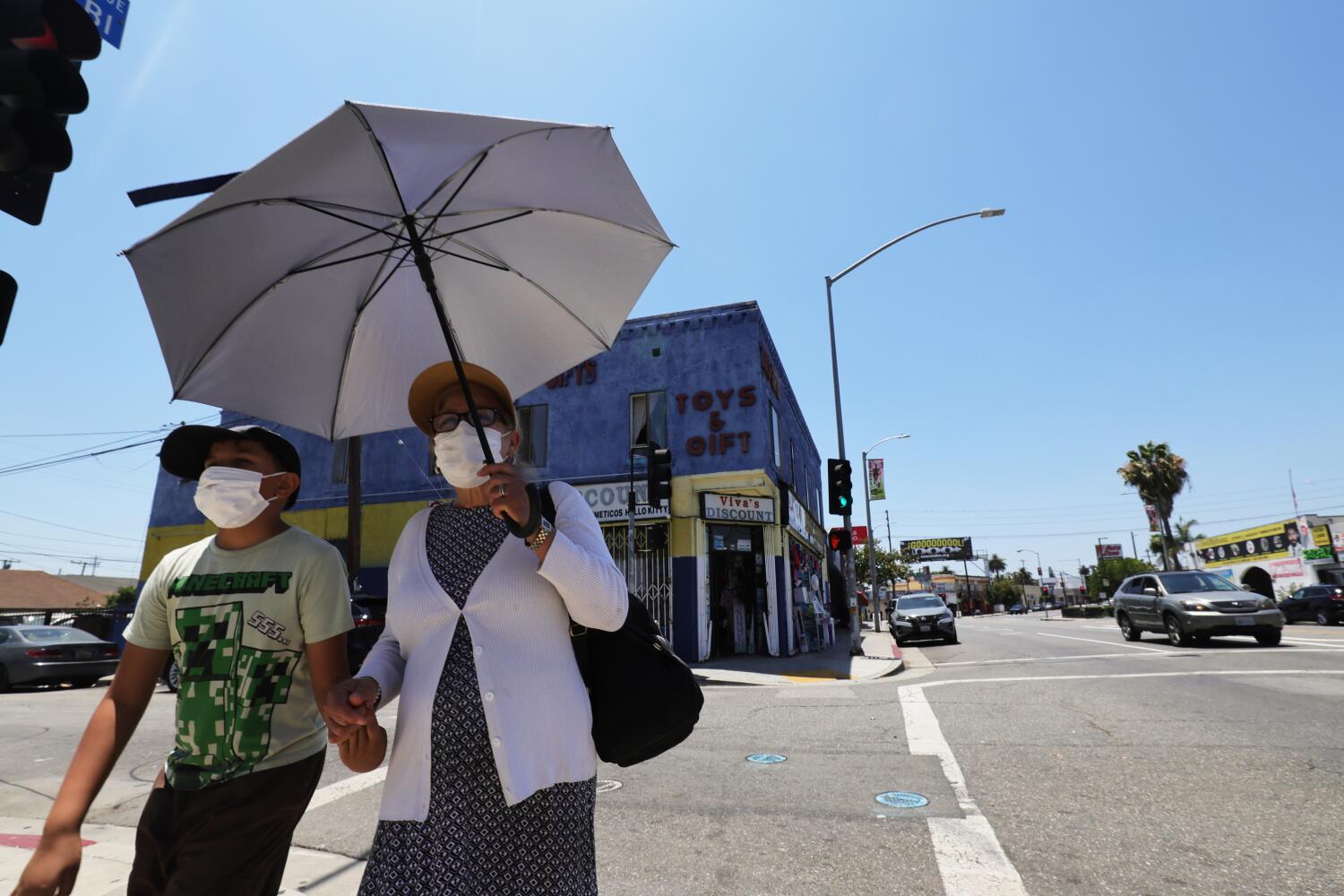
Southern California is about to bake, and it's not going to be your typical beachy summer week. The National Weather Service issued a sharp Heat Advisory for large swaths of Los Angeles County. If you live inland, you need to prepare right now.
The worst part isn't just the daytime peak. It's the stubborn overnight lows that won't drop enough to let your home cool down. Recently making headlines in this space: Why The Royal Navy Shrinking Fleet Matters Right Now.
While coastal spots like Santa Monica will pull in that classic, saving-grace marine layer to stay comfortable in the 70s, the inland valleys are a completely different story. The heat officially clamps down on Tuesday, July 7, and won't let go until at least Thursday evening, July 9.
The Peak Shock Window
Forget the old idea that summer heat behaves the same way across the basin. Micro-climates control Los Angeles weather, and this week they're splitting the region in half. Additional information on this are explored by The New York Times.
The heat peaks on Wednesday and Thursday afternoons. If you're in the West or East San Fernando Valley, the Santa Clarita Valley, or the San Gabriel Valley, you're looking at temperatures hammering between 90°F and 103°F. The Santa Susana Mountains and the highway 14 corridor through the western San Gabriel Mountains will feel like an absolute furnace.
Why does this happen? The Santa Monica Mountains act as a giant physical wall. They block the cool ocean breezes from sliding into the valleys. Woodland Hills and Canoga Park basically become trapped heat pockets. On the exact same afternoon a tourist is wearing a light sweater at the Santa Monica Pier, a resident in Burbank might be watching their car thermometer clear triple digits.
What the Weather Channel Leaves Out
Most news updates just read the high numbers and tell you to drink water. They miss the real threat: nighttime thermal retention.
When daytime temperatures hit 100°F and the overnight low barely dips to 70°F or 75°F, building materials like stucco, brick, and asphalt never actually stop radiating heat. Your house starts Tuesday hot, traps more energy Wednesday, and becomes an oven by Thursday. This multi-day compounding effect is exactly what triggers severe heat exhaustion. Muntu Davis, MD, MPH, the Los Angeles County Health Officer, recently pointed out that heat quietly kills more Americans every year than floods, lightning, and storms combined.
It also causes major infrastructure strain. When millions of compressors kick on simultaneously across the valleys, the local power grid gets pushed to its absolute limit. Keep your eyes open for potential Flex Alerts from the California Independent System Operator (CAISO). If they ask for conservation between 4 PM and 9 PM, it's a real effort to prevent rolling blackouts.
Survival Tactics Beyond Vague Advice
You already know you're supposed to stay hydrated. Let's talk about the practical adjustments that actually protect your health and your wallet when a heat advisory drops.
- Pre-cool your living space: Run your air conditioning harder in the early morning hours when the outside air is still relatively cool. Turn it up a few degrees around 4 PM to save energy and protect the grid.
- Ditch the oven entirely: Cooking a roast or using the stovetop for pasta throws massive amounts of ambient heat into your kitchen. Rely on microwaves, outdoor grills, or cold meals until Friday.
- Exploit the concrete heat lag: If you don't have functioning air conditioning, hanging out in front of a standard electric fan in a 95°F room won't save you. Fans just blow hot air once the room clears 90°F, accelerating dehydration. Pack a bag and head to a public library, an air-conditioned shopping mall, or a designated county cooling center. You can dial 211 anywhere in LA County to find the closest free cooling space.
- The cracked window myth: Never leave a pet or a child in a parked car, even for two minutes while you run into a store. Testing by safety organizations shows that when it's 95°F outside, the interior temperature of a car pushes past 115°F in less than ten minutes, regardless of whether the windows are cracked.
Spotting Heat Illness Before It Turns Fatal
You need to know how to read your own body and check on neighbors who live alone. Heat sickness escalates in stages, and the transition from discomfort to a medical emergency happens fast.
Heat Exhaustion
This is your warning shot. Symptoms include heavy sweating, a pale or clammy complexion, muscle cramps, dizziness, and a nagging headache. If you feel this happening, you need to get into the shade or an air-conditioned room immediately, loosen your clothing, and sip cool water.
Heat Stroke
This is a literal life-or-death emergency. The body's internal cooling mechanism completely breaks down. Look for a body temperature hitting 103°F or higher, confusion, a rapid and bounding pulse, vomiting, and hot, red skin that might be completely dry because the body has run out of sweat. If you spot someone showing these signs, call 911 immediately. Move them to the coolest spot available and use wet towels to lower their temperature while emergency crews roll out.
Your Immediate Next Steps
Don't wait until Tuesday afternoon to figure out your game plan.
Check the National Weather Service HeatRisk map for your specific zip code right now to see the exact threat level for your neighborhood. If you have older relatives or neighbors nearby, call them today to ensure their cooling systems are operational. Clean your AC filters this morning so the unit doesn't choke when the compressor works overtime. If you work outdoors or have to commute through the inland corridors, reschedule your most grueling tasks to the early morning hours before 10 AM. The heat is coming, and preparation is the only thing that mitigates the risk.