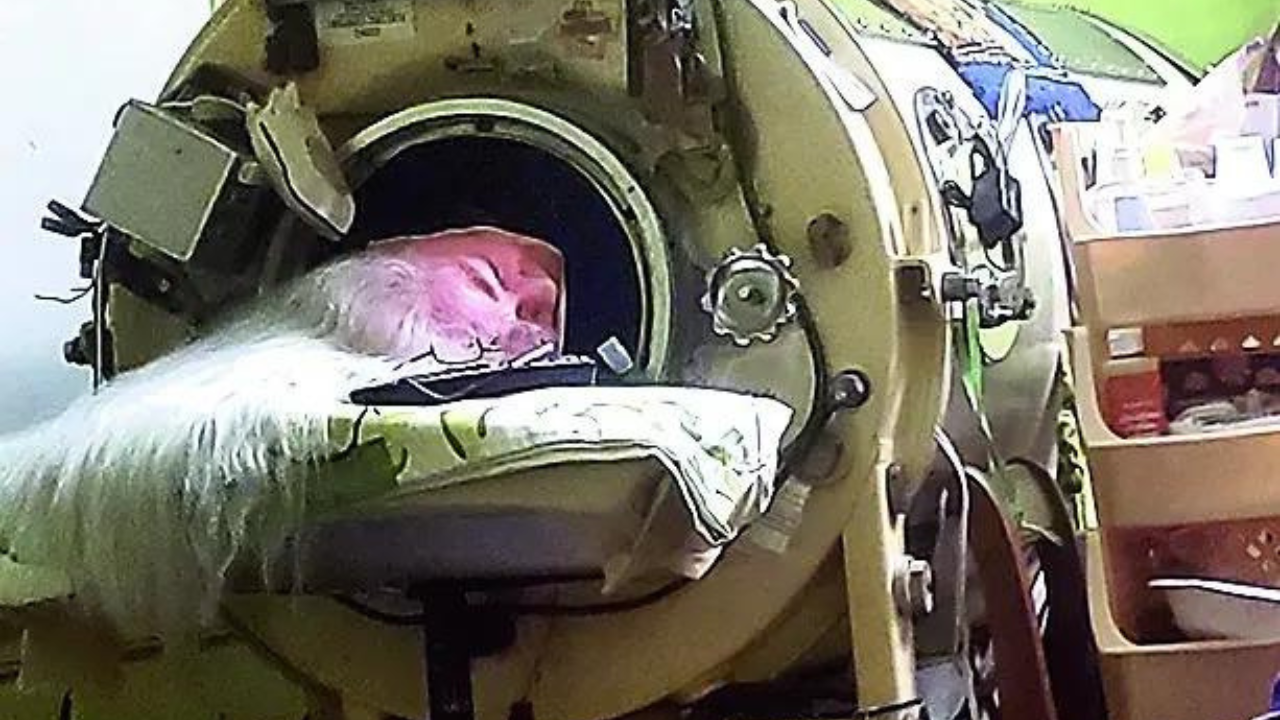
An era of medical history quietly ended in Shawnee, Oklahoma, on June 26, 2026. Martha Lillard, a 78-year-old polio survivor, passed away. She wasn't just another survivor. She was the last known American relying on an iron lung to breathe. Following the death of Paul Alexander in March 2024, Lillard stood as the final living link to a terrifying time before vaccines changed the world.
She contracted polio in 1953 when she was only five. The virus attacked her body, leaving her paralyzed from the neck down and stealing her ability to breathe independently. Doctors didn't expect her to survive. They told her family she wouldn't see her 20th birthday. She beat those odds by nearly six decades, living a full, independent life that included painting, writing poetry, volunteering at animal shelters, and even getting married earlier this year.
Her death marks the closing chapter of a specific medical epoch. It prompts a vital conversation about public health, technology, and what we lose when collective memory fades.
The Machine That Stole Her Body and Saved Her Life
Modern hospitals rely on positive pressure ventilators. These machines push air directly into a patient’s lungs through a tube in the airway. An iron lung works on the exact opposite principle: External Negative Pressure Ventilation.
The user lies inside a heavy, airtight metal cylinder with only their head exposed through a tight rubber collar. A motorized leather bellows at the base pumps air out of the cylinder. This creates a vacuum—negative pressure—which forces the patient’s chest to expand and draws air into their lungs. When the bellows releases and air pushes back into the tank, the chest compresses, forcing air out.
It was loud. It was mechanical. It was heavy. For Lillard, it was home.
She spent six months inside one during her initial hospitalization. Over the years, she regained partial use of her legs and enough movement in her left arm to move it side to side at her waist. She learned to cook her own meals and live independently during the day. But every single night, she crawled back into the yellow metal tube.
Many people wonder why she never switched to a modern ventilator. Lillard addressed this directly during an NPR Radio Diaries broadcast. She explained that modern positive pressure machines caused tissue damage and discomfort for her. The old iron lung was simply the most effective way for her compromised body to rest. When she climbed inside, she felt an overwhelming sense of relief. It allowed her to wake up and breathe the next day.
Living in a Metal Tank with Broken Parts
Surviving in an obsolete machine meant dealing with severe logistical nightmares. Medical companies stopped manufacturing or servicing iron lungs decades ago. When parts broke, Lillard and her younger sister, Cindy McVey, had to hunt for components or find local mechanics willing to custom-fabricate gears, gaskets, and replacement bellows.
Power outages were a constant threat to her survival. During an early 21st-century Oklahoma ice storm, the electricity failed. Her emergency generator refused to start. Trapped inside the heavy machine with zero heat, she couldn't move to escape and struggled frantically to call 911. She described the terrifying ordeal as feeling like she was being buried alive.
Another crisis hit in 2025. A tornado knocked out the power grid, and her backup generator failed again. She began to suffocate. Her husband, Baha Salh, saved her life by administering mouth-to-mouth resuscitation until emergency services arrived.
Despite these terrifying moments, she lived a vibrantly human life. She met Salh in an online chat room after the 9/11 attacks while trying to understand the event. They talked online for over twenty years. He finally secured a visa to travel from Egypt to Oklahoma, and they married in February 2026.
The Reality of Post-Polio Syndrome and Long COVID
Lillard’s final years became a steep uphill battle. Before the pandemic, her lung capacity sat at less than 25 percent. The arrival of COVID-19 proved devastating. She contracted the virus twice, which triggered a severe case of long-haul COVID-19.
Her death certificate lists the official causes as chronic pulmonary failure and post-polio syndrome. For the last five years of her life, she couldn't leave her house. During her final two years, her lung function had deteriorated so badly that she stayed inside the iron lung nearly 24 hours a day.
Her passing highlights a medical reality that many choose to ignore: the long-term, debilitating tail of viral infections. Post-polio syndrome can strike survivors decades after their initial recovery, causing new muscle weakness, crushing fatigue, and respiratory decline. When combined with the respiratory devastation of long COVID, her fragile system simply reached its limit.
Erasure of History and the Anti-Vaccine Trend
The disappearance of the iron lung from American homes isn't just a technological shift. It marks the loss of a stark visual warning.
In the early 1950s, polio was the most feared disease in America. Parents kept their children indoors during summer months. Public pools closed. Movie theaters sat empty. The image of entire hospital wards filled rows deep with children encased in metal cylinders terrified the public. When Jonas Salk’s vaccine became available in 1955, people rushed to get it. By 1979, the United States declared polio completely eliminated from routine transmission.
Because vaccines worked so well, they became victims of their own success. Modern generations have never seen a child paralyzed by polio. This absence of visible suffering has fueled an uptick in vaccine hesitancy and skepticism over the past decade.
Lillard’s life and death serve as a profound reality check. She lived through the physical reality of a world without widespread immunization. Her sister noted that Lillard used her internet connection to stay highly informed about public health and frequently expressed worry about the return of preventable diseases.
Where Public Health and History Go Next
Martha Lillard's death leaves the United States without a single living person using an iron lung. Her final machine, which her sister spent years frantically trying to keep operational, is no longer needed.
If you want to understand the true impact of this milestone, consider taking these direct actions to preserve history and protect public health:
- Support Medical History Preservation: Reach out to local historical societies or medical museums like the Smithsonian to advocate for the proper preservation of remaining iron lungs. They shouldn't end up in scrap yards; they belong in exhibits to remind future generations of what pre-vaccine life actually looked like.
- Review Your Immunization Records: Check your personal and family vaccination histories. Ensure your children are up to date on the Inactivated Polio Vaccine (IPV) and other routine immunizations, especially given recent wastewater detections of vaccine-derived poliovirus in global urban centers.
- Read Direct Testimonies: Listen to historical archives such as the NPR Radio Diaries segments featuring Martha Lillard or read the writings of Paul Alexander. Understanding their daily struggles provides invaluable context that standard history textbooks omit.