A historic night on the pitch shouldn't end in a morgue. Yet, that's exactly what happened when the final whistle blew at the Estadio Azteca on Tuesday night. Mexico finally broke its 40-year knockout curse by defeating Ecuador 2-0, securing a coveted spot in the World Cup Round of 16. It was supposed to be a night of pure euphoria. Instead, the massive Mexico City World Cup celebrations took a dark, tragic turn. Three people are dead, suffocated by the sheer pressure of a crowd that local authorities completely failed to manage.
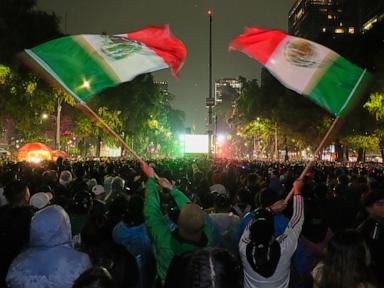
The tragedy didn't happen inside the stadium. It unfolded on the packed streets of the capital, right around the iconic Angel of Independence monument on Paseo de la Reforma. If you have ever been to a major football victory party in Latin America, you know how chaotic things get. But this went far beyond standard post-match rowdiness. This was a structural failure of crowd management. When a million ecstatic fans pack into a single boulevard, a party turns into a hazard.
We need to talk about what actually went wrong. Most news outlets are simply repeating the baseline statistics provided by the government. They tell you that three people died of asphyxiation and move on to the next headline. That's a disservice to the victims and a massive oversight for anyone trying to understand why large-scale public events keep turning lethal.
The Dark Side of Mexico City World Cup Celebrations
The official numbers from Mexico City's Health Secretariat paint a grim picture. Three people lost their lives due to suffocation during the madness. The victims were a 44-year-old man, a 19-year-old woman, and a 48-year-old woman. They weren't rioting. They weren't looking for trouble. They were caught in an unyielding human crush.
Emergency workers found the first two victims unconscious on the pavement near Paseo de la Reforma. Paramedics tried advanced resuscitation, but it was too late. The third victim, the 48-year-old woman, suffered severe asphyxiation on a nearby side street. Emergency teams rushed her to a local hospital, but her body couldn't recover from the lack of oxygen. She died shortly after arrival.
How does this happen in a city that hosts massive protests, concerts, and parades almost every single month? The answer lies in the unique psychological cocktail of a massive sports victory.
When Mexico won, people flooded the streets with zero planning. The city closed the main arteries to vehicular traffic, which was intended to help. Instead, it created an open invitation for a massive influx of people. Mayor Clara Brugada later estimated that around one million people descended upon the city center.
Think about that number for a second. One million people.
The crowd density quickly reached a critical flashpoint. Social media footage shows emergency vehicles trying to navigate through a wall of human bodies. You can see paramedics frantically treating people who collapsed on the asphalt while others inches away continued to chant and drink. The sheer noise of the celebration drowned out the cries for help.
When Football Euphoria Triggers a Crowd Crush
Crowd physics is a brutal science. When crowd density surpasses four people per square meter, individuals lose control over their own movement. You don't walk anymore. The crowd moves you. If someone falls, a dangerous domino effect begins. This is how compression asphyxiation happens. People aren't necessarily trampled by boots; they are squeezed so tightly by the surrounding mass of bodies that their lungs cannot expand. They suffocate while standing up or trapped in a pile.
Tuesday night had all the ingredients for a crowd disaster.
- Improvised street blocks: Carts carrying toritos (mechanical bulls rigged with fireworks) pushed into spaces already bursting at the seams.
- Alcohol saturation: Bottles were passed freely through the crowds, slowing down reflexes and blinding people to the danger developing right next to them.
- Choke points: Passageways leading toward the Angel of Independence became deadly bottlenecks as thousands tried to push closer to the monument while others tried to escape the heat.
Mayor Brugada did release a video message during the height of the chaos urging people to stop heading downtown. She suggested they go to a cumbia concert in the eastern part of the city instead. Honestly, it was a useless gesture. By the time that video hit social media, the gridlock was already absolute. You can't redirect half a million drunk, euphoric football fans with a video tweet.
The 40-Year Curse That Blinded a City
To truly grasp why the crowd got so out of hand, you have to understand the sheer weight of expectation riding on this match. Mexico hadn't won a World Cup knockout game since 1986. For four decades, El Tri has faced heartbreak, curse narratives, and early exits.
Winning this match wasn't just a regular sports victory. It was a national exorcism.
Playing as tournament co-hosts at the legendary Estadio Azteca, the pressure was suffocating. First-half goals from Julián Quiñones and Raúl Jiménez sealed a historic 2-0 victory over Ecuador. The stadium erupted. The entire country erupted. Ecuador's coach, Sebastián Beccacece, even resigned immediately after the match, ending his two-year tenure. The stakes were incredibly high, and the emotional release was completely unprecedented.
When a population waits 40 years for a specific moment, self-preservation goes out the window. People didn't think about safety protocols. They didn't think about crowd bottlenecks. They just wanted to touch the Angel of Independence and scream until they lost their voices. The city administration should have anticipated this exact level of mania. They didn't.
Survival Steps for Massive Public Celebrations
If you plan to join a massive street celebration during the rest of this tournament, you cannot rely entirely on local authorities to keep you safe. You need to manage your own survival. Here are the immediate steps you should take if you find yourself caught in an overwhelming crowd.
1. Watch the Ground and Maintain Your Footing
The moment you feel the crowd pressing from all sides, your absolute priority is staying on your feet. If you drop an item, leave it. Bending down to pick up a phone or a wallet is an easy way to get pinned under the crowd.
2. Adopt a Defensive Stance
Do not keep your arms at your sides. Fold your arms in front of your chest, similar to a boxer’s stance. This simple movement creates a crucial pocket of air for your lungs. It protects your ribcage from the immense lateral pressure of the surrounding bodies, preventing the exact kind of asphyxiation that caused the deaths on Tuesday.
3. Move Diagonally and Never Fight the Flow
Do not try to push straight through a crowd or fight your way directly backward. You will waste your energy and fall. Instead, move with the crowd while shifting diagonally toward the edges. Look for exit signs, side alleys, or spaces where the density naturally thins out.
4. Avoid Solid Barriers
It feels natural to push toward a wall or a fence to find stability. Don't do it. If the crowd surges, you will be crushed against a completely unforgiving hard surface. Stay in the open flow until you can find an active escape route.
The victory over Ecuador will go down in Mexican football history. It's a shame that for three families, it will only ever be remembered as the night the system failed their loved ones. If you're heading out to celebrate the next match, watch your surroundings, keep your space, and look out for those next to you.