If you think catching a total solar eclipse is as simple as stepping out into your backyard with a pair of cheap cardboard glasses, you're in for a massive disappointment on August 12, 2026.
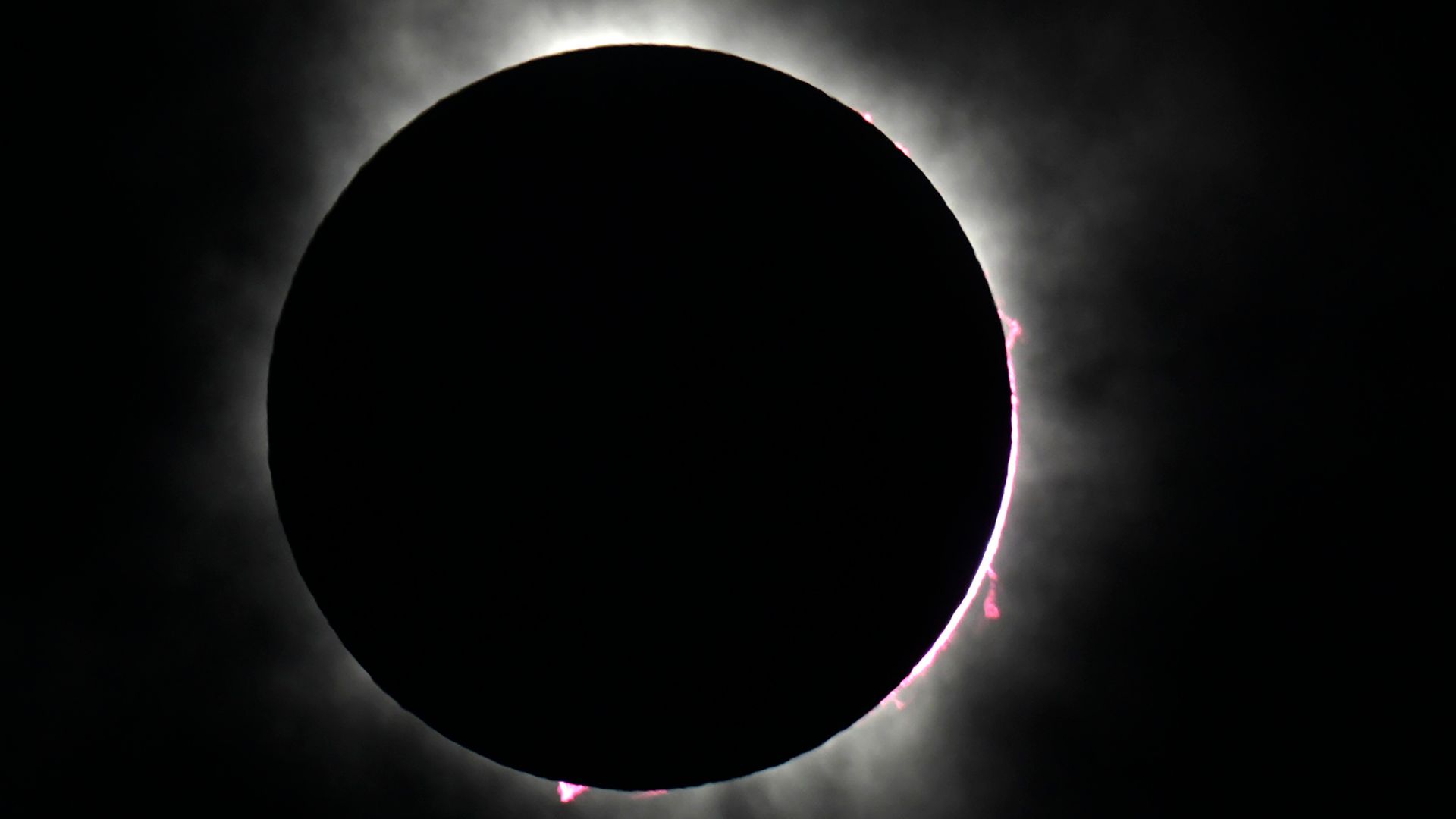
This isn't just another celestial event. It's Europe's first total solar eclipse in almost 30 years. The last time mainland Europe witnessed the moon completely blot out the sun was back in 1999. An entire generation has grown up without ever experiencing the midday chill, the sudden eerie silence, and the glowing solar corona piercing through total darkness.
Naturally, the hype is reaching a fever pitch. Millions of people are already booking flights, securing hotel rooms, and mapping out road trips.
But here's the cold, hard truth that most generic travel guides aren't telling you. This particular eclipse is going to be incredibly tricky to see. If you just show up blindly in a major European city expecting a show, you'll probably end up staring at a perfectly normal evening sky or, worse, a thick bank of Atlantic clouds.
To actually witness totality, you need to understand the geography, the harsh weather odds, and a unique orbital quirk that makes this eclipse completely different from the one that crossed North America in 2024.
The Brutal Reality of the Path of Totality
A solar eclipse happens somewhere on Earth roughly every 18 months. The catch is that the moon's shadow, known as the umbra, traces a very narrow path across the planet's surface. If you aren't standing inside that razor-thin strip, you don't get the total eclipse. You just get a partial eclipse.
A partial eclipse is neat. A total eclipse is life-altering. The difference is literally night and day.
On August 12, 2026, the path of totality takes a highly unusual route. Instead of racing from west to east like most celestial shadows, it arcs right over the North Pole. It starts at sunrise in a completely uninhabited pocket of Siberian Russia. Then it sweeps across the massive ice sheets of Greenland, clips the western coast of Iceland, plunges south across the Atlantic Ocean, and cuts a final path right through northern Spain before ending at sunset in the Mediterranean Sea.
Look at a map of Europe. Notice how tiny that path is compared to the rest of the continent. Major hubs like London, Paris, Berlin, and Rome are completely outside the zone of totality. If you stay in the UK, France, or Germany, you will only see the sun shaped like a crescent moon. It will get slightly dim, but the sky will stay blue, and you won't see the stunning solar corona.
If you want the real deal, you have to travel. You basically have two main choices for your base camp: Iceland or Spain. Both options come with massive trade-offs.
Spain versus Iceland The Ultimate Eclipse Showdown
Choosing where to watch this event is a high-stakes gamble. It comes down to a battle between comfortable geometry and clear skies.
The Iceland Strategy
Iceland gets the shadow first, during the late afternoon. Totality hits the stunning, glacier-carved Westfjords region after 5:00 PM local time. Because the sun doesn't set until nearly 10:00 PM in Iceland during mid-August, the sun will still be relatively high in the sky, about 24 degrees above the horizon.
This is ideal for viewing. You don't have to worry about a nearby hill or a building blocking your view.
The westernmost tip of Iceland offers some of the longest durations of totality for this entire event. If you manage to get out to the remote seabird cliffs and lighthouses of the western Westfjords, you'll get about 2 minutes and 13 seconds of pure darkness. Even the capital city of Reykjavík sits right inside the path, offering around one full minute of totality.
There is just one massive problem. Iceland's weather is notoriously volatile.
August in the North Atlantic means clouds, mist, and sudden storms are part of daily life. Statistically, the odds of encountering heavy cloud cover in Iceland on any given August afternoon are high. If you choose Iceland, you need to be prepared to rent a car, monitor satellite weather maps in real-time, and drive hours away from your hotel at a moment's notice to chase a gap in the clouds. It's a high-reward, high-risk play.
The Spain Strategy
If you hate gambling on weather, Spain is the obvious alternative. The path of totality cuts right through the northern half of the country, entering via Galicia and exiting through the Balearic Islands.
Inland Spain in August is famously hot, dry, and sunny. The statistical probability of clear skies is vastly superior to Iceland. Towns like Burgos, León, Valladolid, and Zaragoza are sitting directly in the path. Burgos, for example, will experience one minute and 48 seconds of total darkness.
Because Spain has a massive tourism infrastructure, it's much easier to find a place to stay, catch a train, or rent a vehicle. It sounds like a no-brainer, right?
Not so fast. Spain has a major geometric flaw.
The Low Sun Trap That Will Ruin Your Photos
The biggest mistake people will make in Spain is failing to check the timing. The eclipse hits Spain very late in the evening, just minutes before sunset.
In León, totality begins at 8:28 PM. In Valencia, it starts at 8:32 PM. By the time the moon completely covers the sun, the solar disc will be hovering just two to four degrees above the western horizon.
Two degrees is incredibly low. To put that in perspective, hold your thumb out at arm's length against the horizon. Your thumb covers about two degrees of sky.
This creates a brutal logistical challenge. If there is a single row of trees, a small hill, a two-story hotel, or even a slight haze on the distant horizon, your view of the total eclipse is completely gone. You won't see it. You will just see the sky get dark while staring at the back of a building.
If you're planning to view this from Spain, you absolutely must scout your location in advance. You need a completely unobstructed, wide-open view looking straight west-northwest. Coastal cliffs facing the ocean, elevated mountain plateaus, or deep valleys with a clear western exit are your only safe bets.
This low angle does offer one incredible silver lining for photographers. Because the eclipse is happening right at the horizon, you can frame the eerie black sun alongside earthly landmarks like ancient Spanish castles, windmills, or jagged mountain peaks. The surreal, twilight lighting across the landscape will be jaw-dropping, assuming you find an elevated spot.
Beyond Totality What the Rest of Europe Sees
If you absolutely cannot travel to the path of totality, you shouldn't ignore the event entirely. Western Europe will still experience a deeply dramatic partial eclipse during the late afternoon and early evening.
The closer you are to the path, the more dramatic the view. In Lisbon, Portugal, the sun will be 95% obscured. Point your eyes toward the sky from Geneva, Switzerland, and you'll see a 93% partial eclipse. Milan will see 92%, while Brussels and Berlin will experience roughly 89% and 85% obscuration, respectively.
Even the UK, which narrowly misses out on totality, will get a decent show. The southwest of England and parts of Ireland will see over 90% of the sun covered up right as it dips below the sea.
During a deep partial eclipse of 85% or more, the world takes on a bizarre, metallic quality. Shadows become incredibly sharp and sharp-edged. If you look at the shadow of a leafy tree on the ground, the tiny gaps between the leaves will act like pinhole cameras, projecting thousands of tiny crescent suns onto the pavement. It's a surreal experience well worth stepping outside for.
How to Secure the Right Gear Without Getting Scammed
Let's talk about safety because eyes don't heal from solar retinopathy. You cannot look directly at a partial eclipse with your naked eyes, regular sunglasses, polarized camera lenses, or binoculars. Doing so will permanently scar your retinas in seconds.
The only time it's safe to look directly at the eclipse without protection is during the brief window of 100% totality, when the bright face of the sun is entirely hidden by the moon. Since that lasts less than two minutes for this eclipse, you will need protective gear for the hours leading up to and following those precious minutes.
You need genuine solar eclipse glasses that meet the ISO 12312-2 international safety standard.
As the date approaches, online marketplaces will inevitably be flooded with counterfeit glasses claiming to be safe. Don't buy the cheapest pack of glasses you find on a random online store. Fake glasses often use simple dark plastic that blocks visible light but lets dangerous infrared and ultraviolet radiation straight through to your eyes.
Buy early from reputable astronomy suppliers or verified scientific organizations. Test your glasses before the big day. When you put them on, you shouldn't be able to see anything at all except the sun itself. If you can see normal lights, household bulbs, or trees through them, they are trash. Throw them away immediately.
If you plan to use binoculars or a camera lens, you must purchase a dedicated solar filter to put in front of the glass optics. Putting eclipse glasses over your eyes while looking through unfiltered binoculars will instantly melt the glasses and blind you, as the lenses concentrate the sun's energy like a magnifying glass hitting an ant.
Your Action Plan for August 12
Don't wait until the week before to figure this out. The influx of travelers into northern Spain and western Iceland will completely overwhelm local roads and infrastructure.
Start by picking your poison. Do you prefer the high cloud risks of Iceland's beautiful fjords, or the low-horizon obstruction risks of hot, dry Spain?
If you choose Spain, lock in accommodation along the central northern interior corridor right away. Think about rural areas around León, Palencia, Burgos, or Soria. Avoid crowded city centers where buildings will inevitably block your western horizon. Get onto a high plateau or find a west-facing coastline.
If you choose Iceland, rent a sturdy vehicle, grab a high-quality map, and prepare a flexible itinerary. Keep your eyes glued to local meteorological apps like Vedur.is in the days leading up to the event, and be ready to move where the clear skies are.
Buy your ISO-certified viewing glasses right now while they are still cheap and readily available. This is Europe's biggest astronomical event of the 21st century so far. Make sure you're positioned correctly when the shadow drops.