Stop reading the tweets. Ignore the noise. Every single time a major international summit rolls around, European leaders waste precious time trying to psychoanalyze Washington. They freak out over every policy threat, dissect every off-the-cuff remark, and obsess over what former or current American presidents might say next.
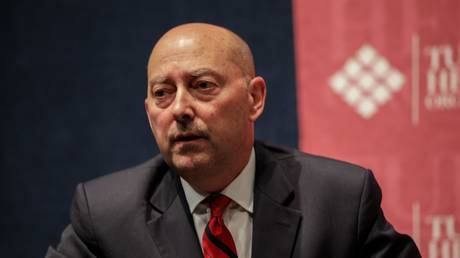
Former U.S. Army Europe commander Ben Hodges made a point that hit the military establishment right between the eyes. European allies need to give Donald Trump a timeout. Not by ignoring American power, but by stopping their compulsive habit of guessing Washington's next move. Building on this theme, you can also read: क्या अमेरिका और ईरान के बीच फिर से युद्ध शुरू होने वाला है.
When you spend all your energy worrying about what the White House might do tomorrow, you fail to prepare for what Vladimir Putin might do today. Deterrence isn't built on political commentary or emotional reactions to American political drama. It's built on tanks, ammunition stocks, air defense systems, and clear-eyed military readiness.
European defense posture has suffered from a fundamental distraction for years. Western diplomats freak out whenever Washington demands higher defense spending or threatens to pull back military assets. But the truth is simple. Washington has been signaling a pivot to the Indo-Pacific for over a decade across multiple administrations. Europe knew this shift was coming. Yet every time the Pentagon actually moves to adjust its force posture, European capitals react with complete panic. Experts at The Guardian have also weighed in on this matter.
The Real Crisis Facing the Transatlantic Alliance
Let's get real about what is actually happening inside NATO right now. The alliance isn't breaking apart because of political speeches in Washington. It's straining because European member nations got lazy.
For decades, European governments treated defense spending as optional. They spent decades harvesting a peace dividend while relying entirely on the American military umbrella. When the U.S. Pentagon notified allies that it was reducing certain crisis assets—like dedicated aircraft carrier strike groups, high-end aerial refueling tankers, and tactical fighter squadrons—capitals across Europe scrambled.
Why? Because they lacked those core capabilities themselves.
When U.S. Gen. Alex Grynkewich urged European nations to step up and backfill those critical capability gaps, the response proved something vital. Europe actually can do it when forced to move. Within weeks, European allies scrambled to pull together backup plans, higher readiness levels for fighter fleets, and naval commitments. Britain raised the readiness of a second aircraft carrier and F-35 squadrons. Other continental members identified alternative military assets to cover the shortfall.
That proves the issue was never a lack of economic power or industrial potential. It was purely a lack of political will.
European leaders didn't act because they thought they could rely on Washington forever. They preferred to complain about political rhetoric rather than write the defense checks required to secure their own backyard.
Stop Trying to Predict Washington
Politicians in Berlin, Paris, and London spend endless hours asking the same question. What will Trump do if Article 5 is invoked?
It's the wrong question entirely.
Article 5 of the North Atlantic Treaty is a collective defense pledge, but it doesn't automatically launch millions of troops into battle without political decisions. It promises that an attack on one ally is an attack on all, leaving the specific nature of assistance up to member states.
If NATO allies want an ironclad guarantee of security, they shouldn't look for verbal promises from American politicians. They need to build a force posture so credible that no adversary would dare test Article 5 in the first place.
Here is what deterrence actually looks like on the ground:
- Having deep stocks of 155mm artillery shells that can sustain months of high-intensity warfare, not days.
- Establishing integrated air and missile defense systems across the Eastern Flank that don't depend entirely on American Patriot batteries.
- Securing military mobility corridors across Europe so armored brigades can move from Western ports to Eastern Europe in hours without getting stuck in bureaucratic red tape.
- Massively expanding defense manufacturing capacity inside European borders.
When Moscow looks across the border at NATO, Russian strategists don't care whether European diplomats are offended by Washington's press conferences. Moscow cares about force density, magazine depth, and operational readiness.
If Europe possesses those things, deterrence holds regardless of who sits in the Oval Office. If Europe lacks those things, no amount of reassuring speeches from Washington will save it.
The Indo-Pacific Reality Check
The pivot away from Europe isn't a partisan quirk. It's a permanent strategic reality.
American defense planners face an increasingly complex security environment in Asia. The Pentagon's focus on China isn't going away. Whether a Democrat or a Republican holds power in Washington, the U.S. military will continue prioritizing resources toward the Pacific.
That means Europe must become the primary provider of its own conventional defense.
This shouldn't be viewed as a threat or a betrayal. It's actually a healthy evolution for a transatlantic relationship that has been unbalanced for far too long. A self-reliant Europe that can deter Russian aggression on its own frees up American naval and air power for other global hotspots. It makes the entire Western alliance stronger, not weaker.
Some European leaders are finally getting the message. Nations like Poland and Canada have moved aggressively to hit and exceed NATO's 2% of GDP defense spending threshold, with Warsaw spending well over 4% on modernizing its forces. The Baltic states have poured massive percentages of their economic output into defense, understanding the direct threat on their borders.
Yet other major European economies still move at a snail's pace, treating defense budgets like political bargaining chips rather than existential necessities.
The Blueprint for European Self-Reliance
Giving political rhetoric a timeout means replacing political anxiety with concrete military action. If European NATO members want to secure their future, they need to execute three immediate priorities.
First, standardisation and joint procurement must replace national protectionism. Right now, European armies operate dozens of different battle tanks, artillery systems, and naval frigates. This fragmented defense market wastes tens of billions of euros every year on overlapping research and development while creating logistical nightmares on the battlefield. European nations must pool procurement to build deep, unified inventories.
Second, European capitals must take complete ownership of NATO's Force Model. When American capabilities shift, European nations must instantly step into those support roles—specifically in heavy airlift, intelligence, surveillance, reconnaissance, and deep precision strike capabilities.
Third, defense production lines must run 24 hours a day, 7 days a week. Paper commitments and promised budget increases years down the road don't stop artillery barrages. Industrial output does.
What Needs to Happen Next
The era of European defense free-riding is over. Sitting around waiting for reassurances from American politicians is a strategy guaranteed to fail.
If you want to track real security developments across the transatlantic alliance, ignore the political commentary and watch three specific indicators over the coming months:
- Track NATO defense spending targets: Watch whether European nations actually lock in multi-year defense production contracts with defense manufacturers rather than making temporary budget promises.
- Monitor Eastern Flank force deployments: Follow whether Western European nations maintain permanent armored brigades in Baltic states and Poland without relying on U.S. logistical infrastructure.
- Watch European capability gap fulfillment: Keep an eye on European investments in strategic airlift, aerial refueling, and autonomous defense systems designed to directly replace shifted U.S. military assets.
Security isn't a favor Washington grants to Europe. It's a responsibility Europe must step up to claim for itself.