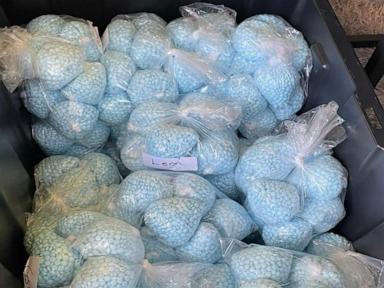
Federal agents are paid to keep deadly drugs off the streets. When they choose to do the exact opposite, the system breaks down completely. New Mexico Governor Michelle Lujan Grisham just took the unprecedented step of calling for a state criminal investigation into the Drug Enforcement Administration. It is a stunning, direct challenge to federal authority, and it highlights a dark compromise that law enforcement has hidden for decades.
This is not a debate over bureaucracy or budgets. It is about a calculated gamble that backfired terribly. An Associated Press investigation revealed that between 2023 and 2025, DEA agents repeatedly stood by and watched as massive shipments of fentanyl moved directly into local communities. They did not seize the pills. They did not arrest the drivers immediately. Instead, they let the poison hit the pavement so they could track it up the food chain.
The governor did not mince words when she blasted the agency. She made it clear that New Mexican lives are not the federal government's cost of doing business. By handing the case to the state attorney general, she is asking a terrifying question. Did federal drug cops cross the line into criminal complicity?
The Dangerous Game of Controlled Shipments
For years, federal agencies have relied on a strategy known as a controlled delivery or letting a shipment ride. The logic seems sound on paper. If you bust a low-level mule carrying 10,000 pills, you stop one delivery, but the cartel just hires another driver tomorrow. If you let that mule finish the delivery, you might find the regional distributor. If you follow the distributor, you might map out the entire cartel network.
With a substance as toxic as fentanyl, that math fails completely. It takes just two milligrams of fentanyl to end a human life. Letting hundreds of thousands of these pills flood a state is not tactical patience. It is an extreme threat to public safety.
Federal agents essentially took on the role of passive observers in a deadly pipeline. Current and former DEA insiders have voiced serious panic over this choice. They point out that the White House officially designated fentanyl as a weapon of mass destruction. You do not let a weapon of mass destruction stroll into a neighborhood just to see who signs for the package.
What Happened at the Albuquerque Mobile Home Park
The operational reality of this strategy is devastating when you look at the raw case files. Take the 2023 delivery that blew this whole scandal wide open. According to internal government records and whistleblower testimony, DEA agents watched a courier bring 74,000 fentanyl pills into a mobile home park in Albuquerque.
Agents had eyes on the shipment. They knew exactly what was in the vehicle. They had the legal authority and the physical means to intercept the drugs right there. Instead, the order came down to observe and document.
The vehicle drove away. The pills vanished into the local market. Think about what happens to 74,000 pills in a city already drowning in addiction. They get split up into smaller packages. They get sold on street corners, in high school parking lots, and through social media apps. Within days, that single shipment was likely tied to multiple local overdoses.
Former U.S. Attorney Alex Uballez defended the broad strategy by pointing to limited resources. He claimed that targeting large organizations yields a bigger long-term impact than stopping every single transaction. While that approach makes sense when tracking stolen electronics or counterfeit sneakers, it is a lethal mistake when dealing with synthetic opioids.
The Local Devastation by the Numbers
While federal prosecutors talk about long-term impact, local communities are burying their children. The data from 2025 reveals a terrifying split between national trends and the reality on the ground in New Mexico.
Across the United States, overdose deaths actually dropped by 14 percent last year. That was rare good news in a long war. In New Mexico, the numbers went the exact opposite direction. The state suffered a brutal 21 percent spike in overdose fatalities.
It is impossible to ignore the connection between that spike and the DEA strategy. When federal agents actively permit hundreds of thousands of pills to hit the streets over a two-year window, local death rates will rise. The state was fighting a flood while federal authorities were deliberately keeping the floodgates open.
This operational failure completely contradicts the public messaging of the Department of Justice. The DEA spends millions of dollars on its One Pill Can Kill campaign. That program warns parents and teenagers that a single counterfeit pill can cause a fatal overdose. Yet behind the scenes, the very same agency allowed bulk quantities of those exact pills to enter the stream of commerce.
Whistleblowers and the Pushback from Inside the Ranks
The truth did not come out through a voluntary policy review. It emerged because individuals within the system refused to stay silent. DEA whistleblower David Howell filed a formal complaint that exposed the unseized fentanyl operations.
Howell took a massive professional risk by exposing the internal reports. His actions gave a voice to a growing faction of street-level agents who are disgusted by the push for high-level numbers at the expense of immediate public safety. A whistleblower advocacy group called Empower Oversight is now pushing the Senate Judiciary Committee and the Justice Department's Office of Inspector General to launch deep investigations.
The internal guidelines of the Justice Department are very clear on this point. Agents are supposed to seize illegal opioids whenever practical to protect human life. The files suggest these guidelines were systematically ignored in New Mexico to protect ongoing wiretaps and long-term surveillance operations.
Can a State Actually Prosecute Federal Agents
Governor Lujan Grisham's directive to the state attorney general sets up an incredible constitutional battle. Under the Supremacy Clause of the U.S. Constitution, federal law generally overrides state law, and federal employees often enjoy immunity from state prosecution for actions performed as part of their official duties.
That immunity is not absolute. If a federal agent acts completely outside federal policy or shows a reckless disregard for human life that violates basic state statutes, that protective shield can crack. New Mexico prosecutors will likely look at state laws regarding public endangerment, involuntary manslaughter, or conspiracy to distribute controlled substances.
Even if the state attorney general faces an uphill battle to secure indictments against individual federal handlers, the mere act of launching a criminal probe strips away the secrecy the DEA relies on. Subpoenas can force the disclosure of operational logs, emails, and texts. It forces federal officials to justify under oath why they thought a long-term cartel case was worth more than the lives of New Mexican citizens.
Moving Beyond Vague Policy Reforms
The standard response to a federal law enforcement scandal is predictable. Officials promise a comprehensive review, issue a vague statement about updated guidelines, and wait for the news cycle to move on. That cannot happen here.
The DEA statement on this matter was predictably defensive. Agency spokesperson Amanda Wozniak claimed that descriptions suggesting the agency knowingly permitted fentanyl to reach communities are false and mischaracterize the facts. She argued the decisions were lawful and reasonable under the circumstances.
That defense does not hold up against their own internal reports. Watching a car deliver 74,000 pills, choosing not to seize them, and letting them walk away is the literal definition of knowingly permitting drugs to reach a community.
To stop this from happening again, state leaders and federal lawmakers need to change the rules of engagement for synthetic drugs entirely. We need absolute statutory limits on federal investigative techniques involving lethal substances.
Immediate Next Steps for Accountability
Fixing this broken strategy requires immediate action at both the state and federal levels. We cannot wait for a multi-year federal investigation to conclude while more shipments hit the streets.
- State Level Subpoenas: The New Mexico Attorney General must immediately issue subpoenas for all operational logs and communications related to DEA surveillance operations in the state from 2023 to the present.
- Congressional Freeze on Funding: The Senate Judiciary Committee should place an immediate hold on specific DEA operational budgets until the agency hands over its internal guidelines regarding controlled deliveries of synthetic opioids.
- Mandatory Notification Laws: State legislatures should pass laws requiring federal agencies to notify local police chiefs or county sheriffs within 24 hours if they intentionally allow a known drug shipment to pass through their jurisdiction unseized.
- Victim Rights Audits: Local advocacy groups should coordinate with independent legal counsel to review every New Mexico fentanyl overdose file from the last two years to check for geographic links to known DEA surveillance locations.
The old way of fighting the drug war is dead. You cannot use the investigative playbook from the cocaine era of the 1980s to fight a synthetic crisis today. When a drug kills within minutes, the only acceptable strategy is immediate interception. Letting the poison ride is no longer an option.