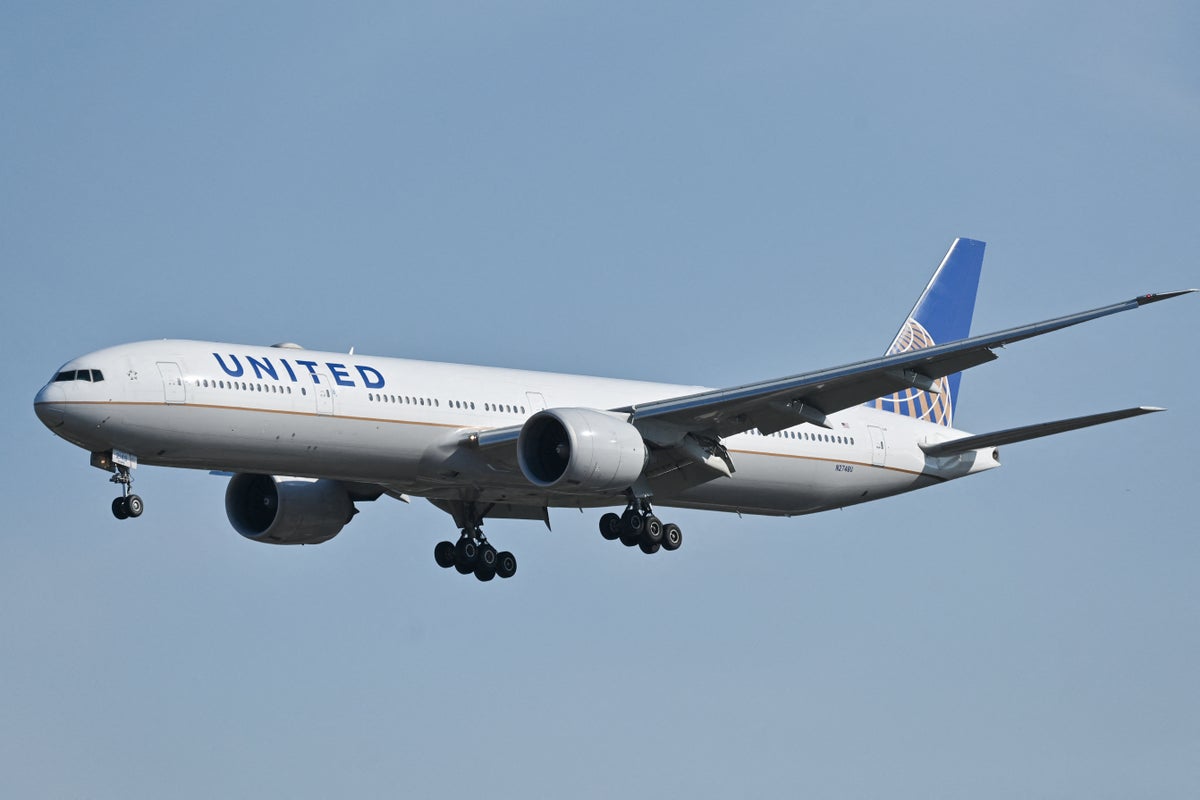
A three-foot-wide piece of plastic and metal came within one hundred feet of causing an unimaginable disaster over New Jersey. On Friday, June 26, 2026, United Airlines flight 1513 was making its final descent into Newark Liberty International Airport. The Boeing 737 MAX 9 was hauling 106 passengers and five crew members from Key West, Florida. Everything seemed routine until the cockpit crew caught sight of an object that had absolutely no business being in controlled commercial airspace.
Air traffic control audio captured the chilling moment the pilot radioed the tower. The captain reported that they almost hit a drone passing directly beneath the jet. The crew described the object as a circular device, roughly three feet wide, floating just 100 feet under their aircraft.
Think about that distance for a second. At landing speeds, a commercial jet travels roughly 200 feet per second. That means the aircraft and that rogue drone were a fraction of a heartbeat away from a catastrophic midair impact. Moments later, a second pilot flying a United Express flight operated by GoJet Airlines spotted another drone at roughly 2,000 feet in the exact same approach path.
This is not an isolated glitch in the system. It is a terrifying glimpse into a growing crisis that the aviation industry is completely failing to control.
The Chilling Reality of the Newark Drone Near Miss
The flight path into Newark is one of the most crowded slices of sky on the planet. When United flight 1513 entered its final approach at around 5:20 PM local time, the pilots were managing a massive machine during its most vulnerable phase of flight. Air traffic controllers verify that the aircraft luckily avoided hitting the object and touched down safely at 5:22 PM.
While the airline issued a sterile statement confirming that customers deplaned normally at the gate, the reality inside the aviation community is pure anxiety. This incident proves that despite years of warnings, registration mandates, and public awareness campaigns, clueless hobbyists or malicious operators can still park a massive drone directly in front of an incoming passenger jet.
Federal Aviation Administration data shows that pilots report around 100 drone sightings every single month near major U.S. airports. That is over three reports a day. This year alone, pilots have filed hundreds of official complaints with the federal authorities. Most of these involve drones drifting near small local airfields or high above residential areas. The Newark event is fundamentally different because of the size of the drone and its exact location. A three-foot drone is not a tiny toy you buy for fifty bucks at a local shop. It is a heavy, multi-pound commercial or high-end custom craft capable of devastating an aircraft hull.
The Terrifying Physics of a Drone Hitting a Jet Engine
Many casual observers assume that a multi-ton commercial airliner would simply slice through a small plastic drone like a knife through paper. That assumption is completely wrong and wildly dangerous.
When a drone hits a jet engine, it does not just get shredded. The modern airliner engine contains fan blades spinning at thousands of revolutions per minute under immense structural stress. These blades are meticulously engineered to handle air, rain, and the occasional soft-bodied bird. They are completely unequipped to digest the dense materials found inside high-end consumer or industrial drones.
The biggest threat lies in the drone batteries. Almost all modern unmanned aerial vehicles rely on lithium-ion or lithium-polymer battery packs to stay airborne. These batteries are packed with volatile chemical energy. If a titanium fan blade punctures a lithium battery pack at 140 miles per hour, it triggers an instantaneous thermal runaway event. The battery explodes inside the core of the engine, twisting fan blades out of alignment, shattering internal components, and triggering an uncontrollable engine fire.
Debris from shattered blades can pierce the engine casing. Aviation engineers call this an uncontained engine failure. Shrapnel can pierce the aircraft fuel tanks in the wings or slice through the hydraulic lines that allow the pilots to steer the plane. If you lose your primary hydraulics while a few hundred feet off the ground during landing, your chances of a safe recovery drop to near zero.
Even if the drone misses the engines, hitting the windshield or the nose cone can cause extreme chaos. A drone striking the cockpit glass at high speeds can blind or severely injure the flight crew. If it hits the delicate sensors on the nose, known as pitot tubes, it can completely corrupt the instrument data sent to the cockpit computer. The pilots suddenly lose their true airspeed and altitude readings at the exact moment they need them most to touch down safely.
Why Current Drone Defense Tech Failed to Stop the Threat
A lot of tech companies claim they have solved the rogue drone issue with smart geofencing systems. Geofencing relies on software built into consumer drones that uses GPS coordinates to create invisible digital walls around restricted areas. If you buy a standard commercial drone from a major manufacturer and try to take off inside the boundaries of Newark or JFK, the software should theoretically refuse to spin the propellers.
The glaring loophole is that geofencing is incredibly easy to bypass. Anyone with an internet connection and a basic understanding of computer code can download custom firmware to completely wipe out the manufacturer restrictions. Even worse, the hobbyist market is flooded with open-source flight controllers. You can build a three-foot-wide heavy-lift drone from scratch using parts ordered online. These custom-built machines do not contain any factory safety restrictions or geofencing blocks. They fly wherever the operator tells them to fly, completely blind to the laws of federal airspace.
Detecting these objects in real-time is another technical nightmare for major hubs. Standard airport radar systems are calibrated to look for large metal structures like commercial airliners or private regional jets. They intentionally filter out small objects like birds to avoid cluttering the air traffic control screens with thousands of false alarms. Unfortunately, a three-foot drone looks identical to a large goose on traditional radar equipment.
Specialized counter-drone radar and optical tracking systems exist, but they are expensive, complicated, and rarely deployed across entire airport perimeters. Even when an airport manages to spot a rogue drone, their options to neutralize it are legally and logistically restricted. Radio-frequency jamming can drop a drone out of the sky, but deploying powerful jamming signals near an active airport risks interfering with the sensitive navigation and communication frequencies used by the actual passenger planes.
The Massive Law Enforcement Tracking Blindspot
The Federal Aviation Administration requires all drones weighing over 0.55 pounds to carry a digital license plate called Remote ID. This system acts like a mini radio beacon that continuously broadcasts the drone ID, its location, and the GPS coordinates of the pilot control station. The idea is that law enforcement officers can simply pull out a smartphone app, scan the sky, and instantly locate exactly who is operating an illegal flight.
The Newark close call exposes the massive gap in this plan. If an operator is intentionally flying a drone dangerously close to an active runway, they are highly unlikely to activate a tracking beacon that leads the police straight to their location. Modifying a drone to disable Remote ID transmitters takes less than ten minutes of work.
When a pilot reports a near miss at 2,000 feet, the person holding the controller could be standing miles away in a crowded urban park, on top of a parking garage, or hidden inside a residential neighborhood. By the time air traffic control processes the report, notifies the airport police, and dispatches local officers to search the area, the operator has already packed their gear into a backpack and vanished into traffic.
The legal penalties for this behavior are incredibly severe on paper. Operating a drone in a way that interferes with a commercial airliner is a federal felony that carries heavy prison time and tens of thousands of dollars in individual fines. The problem is that a law is only effective if you can actually catch the person breaking it. Right now, the track record for arresting illegal airport drone operators is abysmal.
What Needs to Change Immediately to Protect Our Skies
We cannot keep relying on sheer luck to prevent a catastrophic midair collision between a hobbyist toy and a commercial passenger jet. The close call over Newark should be treated as a final, urgent warning to overhaul how we manage airspace safety.
First, federal agencies must mandate the installation of active, dedicated drone detection networks at every major commercial airport across the nation. We need to stop relying on visual sightings from stressed pilots who are already busy trying to land an aircraft. Airports need integrated systems that combine thermal cameras, acoustic sensors, and specialized radio frequency scanners to pinpoint rogue aircraft the second they enter restricted airspace.
Second, the government must tighten regulations on the sale of unregulated flight controllers and building components. If you want to buy high-powered motors and long-range radio transmitters capable of carrying a heavy three-foot chassis into an airport approach path, you should be required to verify your identity and register those parts to a centralized federal database.
Finally, we need realistic, safe intervention tools for law enforcement. If a drone is detected inside a critical approach corridor, authorities need targeted mitigation tools like high-powered directional net guns or interceptor drones to physically remove the threat from the air without disrupting the vital navigation signals that keep commercial flights on track.
The passengers on United flight 1513 got lucky. The pilots noticed the object, the distance was just wide enough, and the aircraft landed without a scratch. But luck is not a sustainable aviation safety strategy. If we don't fix the enforcement and tracking gaps immediately, the next close call won't end with a normal deplaning at the gate. It will end in a disaster that changes the travel world forever.
For a deeper look into the actual sounds and events from that afternoon, check out the United flight has close call with drone near Newark Airport audio archive. This archive includes the actual air traffic control transmissions where you can hear the pilot describe the exact size and shape of the drone that passed right under the passenger plane.