You probably have a few art books gathering dust on your shelves. Most people think they are just heavy, glossy decorations meant to look smart on a coffee table. They are wrong. If you aren’t checking inside the pages before you donate or sell them, you are potentially giving away a small fortune.
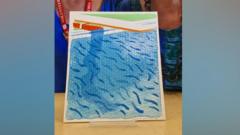
A volunteer at a Salvation Army charity shop in Norwich just proved exactly why. Jemma Banks, a local artist who gives her time to the Goat Lane shop, noticed a donated copy of David Hockney’s 1980 book Paper Pools. It looked like a normal publication from the outside. Inside, tucked away safely for 46 years, was an original, signed lithograph print by Hockney himself. Don't miss our recent coverage on this related article.
The book and its hidden masterpiece just sold on the charity's eBay store for £41,160. Bidding moved fast. It is an incredible win for the charity, but it is also a massive wakeup call for anyone who buys, sells, or owns vintage art monographs.
The Secret World of Deluxe Art Editions
The £41K sale is not a random fluke. Publishers and artists have a long history of hiding real art inside books. What looked like a standard retrospective was actually a deluxe edition. If you want more about the history here, BBC News provides an in-depth summary.
During the late 20th century, major artists frequently collaborated with publishers to create limited-run books that included loose or bound-in original graphics. Hockney did this repeatedly. His Paper Pools book focused on his iconic swimming pool series. The standard edition is worth a few bucks. The edition with the signed lithograph print is a museum-grade collector's piece.
The problem is that over decades, these books change hands. People pass away, families clean out houses, and the executors of the estate have no idea what they are looking at. They see a heavy book about swimming pools, stick a £5 price tag on it, or drop it in a donation bin.
Why People Misidentify Valuable Prints
Art authentication is tricky, but identifying a book-bound print often comes down to pure laziness. Most people don't look past the title page. Here is what you need to look for if you want to find your own hidden treasure.
- The Colophon Page: This is the fine print page, usually at the very front or very back of the book. It tells you exactly how many copies were printed. If you see text like "This edition is limited to 100 copies containing an original print," you need to start searching.
- Paper Texture: Original lithographs and etchings feel different from the standard paper pages of a book. They are usually heavier, thicker, and have distinct edges.
- The Signature: Hockney signed his print in ink. Printed signatures look flat under a magnifying glass. Real ink sits on top of the paper fibers.
In the Norwich case, the print stayed immaculate because it was shielded from sunlight and dust for nearly five decades. It looked as fresh as the day it came off the press.
What This Means for the Art Market
The timing of this find mattered. David Hockney passed away recently at the age of 88. Market interest in an artist always spikes after their death. The anonymous buyer who snagged the book got an iconic piece of British art history while directly funding community charity work.
But don't expect to just walk into your local thrift store and find another Hockney tomorrow. It takes a trained eye. Banks's background as an artist is the only reason this print did not end up in a landfill or sold to someone for pocket change.
Your Next Steps
Stop treating your art books like scrap paper. If you own or stumble upon vintage art books from the 1960s through the 1980s featuring major artists like Hockney, Picasso, Chagall, or Miro, follow these exact steps before you do anything else.
- Flip every single page. Do not just skim. Look for loose inserts, original graphics, or signed plates that don't match the rest of the book's paper stock.
- Check the publisher. Reputable art publishers like Abrams, Thames & Hudson, or Taschen frequently handled these high-end limited editions.
- Look for numbering. If you see a fraction written in pencil anywhere (like 45/100), you are looking at a limited print run number, not a random scribble.
Go look at your bookshelf right now. You might be sitting on a down payment for a house and have absolutely no idea.


