Pakistan tried to use an informal UN Security Council platform to score quick political points against India. It didn't go as planned.
When Islamabad and Beijing co-hosted an Arria-formula meeting at the United Nations, Pakistani diplomats expected to steer the narrative back to Jammu and Kashmir. Instead, Indian Ambassador Parvathaneni Harish shut the discussion down instantly. He told the room in plain terms that Jammu and Kashmir is, always has been, and will remain an internal matter of India.
That exchange wasn't an isolated diplomatic spat. It exposed a fundamental flaw in how Pakistan approaches international forums today. While Islamabad attempts to keep decades-old resolutions alive on paper, ground realities in Pakistan-occupied Kashmir tell a very different story. Street protests over soaring living costs, heavy-handed crackdowns, and systemic political exclusion in PoK have exposed the stark contrast between Pakistan's public grandstanding and its domestic governance.
If you've been following South Asian diplomacy lately, you've probably noticed a pattern. Pakistan raises Kashmir at every global venue available. India delivers a sharp rebuttal. The session moves on.
Why does this diplomatic theatrical performance keep repeating itself? What actually happens behind closed doors at the UN?
To understand why these shouting matches happen, you have to look past the political speeches and inspect the actual legal machinery at work.
What Happened at the Security Council Session
The latest diplomatic collision took place during an Arria-formula meeting focused on bridging the implementation gap in UN Security Council resolutions.
Arria-formula sessions aren't formal Council debates. Named after Diego Arria, a former Venezuelan diplomat who introduced the format back in 1992, these informal gatherings give members flexibility. They let diplomats invite outside experts, hold frank discussions, and address sensitive topics without the rigid protocol of an official UNSC meeting.
Pakistan, serving its two-year term as a non-permanent member of the Security Council for 2025 and 2026, attempted to use this open format to reintroduce the Kashmir issue. Ambassador Asim Iftikhar Ahmad used his intervention to bring up Jammu and Kashmir, hoping to frame it as an unresolved global dispute.
India's response was swift and uncompromising.
Taking the floor, Ambassador Parvathaneni Harish pointed out the obvious hypocrisy. A meeting co-chair is supposed to act with neutrality and balance. Instead, Pakistan chose to politicize the forum to push a single-minded bilateral agenda. Harish kept his response brief, direct, and explicit: Jammu and Kashmir is strictly an internal issue for India.
It was a textbook example of diplomatic shut-down. India refused to indulge in a lengthy debate, denying Islamabad the internationalized spectacle it wanted.
The Misunderstood Legal Reality of UN Charter Chapters
When diplomats talk about UN resolutions, they often obscure the details in dense legal jargon. Pakistan repeatedly cites old Security Council resolutions to argue that international intervention is legally mandated. India counters by pointing out that Pakistan fundamentally misinterprets the UN Charter itself.
During the debate, Harish highlighted the critical distinction between Chapter VI and Chapter VII of the UN Charter. This distinction isn't just dry legal theory—it changes everything about how international law operates.
Chapter VII deals with active threats to peace, breaches of peace, and acts of aggression. Measures taken under Chapter VII are binding. They can include sanctions, blockades, or collective military action. When the Security Council acts under Chapter VII, it acts as an enforcement body.
Chapter VI is entirely different. It covers the pacific settlement of disputes. The mechanisms outlined under Chapter VI—such as negotiation, mediation, enquiry, conciliation, and arbitration—are advisory. They rely on the mutual consent of the involved parties.
The early UN resolutions concerning Jammu and Kashmir fell under Chapter VI, not Chapter VII. They required specific sequential steps, starting with the complete withdrawal of Pakistani forces from the region—a step Pakistan never fulfilled.
Over the decades, subsequent bilateral agreements, most notably the 1972 Simla Agreement, superseded those early non-binding frameworks. Both nations agreed to resolve all issues bilaterally without third-party intervention.
When Pakistan tries to frame non-binding, unfulfilled Chapter VI recommendations as mandatory international mandates, it ignores seven decades of legal evolution.
The Mounting Crisis Inside Pakistan Occupied Kashmir
While Pakistani diplomats preach human rights at UN headquarters in New York, the situation on the ground inside Pakistan-occupied Kashmir has reached a boiling point.
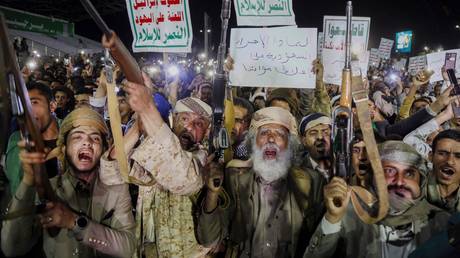
You don't need to take diplomatic statements at face value to see this. Look at the ongoing civil unrest in Muzaffarabad and across PoK over the last year. Mass protests led by civil society groups, including the Jammu Kashmir Joint Awami Action Committee, have brought the region to a standstill multiple times.
What are people in PoK actually protesting about? Basic survival.
- High electricity tariffs generated by local hydroelectric dams while residents face massive power cuts
- Soaring prices of essential flour and food staples
- Systemic lack of political rights and local self-governance
- Heavy-handed police crackdowns on peaceful assemblies
When local residents took to the streets to demand subsidies and fair pricing, the response from local administration and security forces was brutal. Internet blackouts, violent dispersion of crowds, and widespread arrests became standard procedure.
This creates an inescapable credibility gap for Islamabad. It's tough to convince the international community that you care about Kashmiris when residents in the territory you control are being arrested for protesting the cost of bread and power.
During the UN Human Rights Council sessions, Indian representatives, including First Secretary Anupama Singh, called out this exact double standard. India pointed out that the real unresolved issue in Kashmir isn't New Delhi's governance, but Pakistan's illegal occupation of territory and its suppression of basic civil liberties in PoK.
The Nexus Between Cross Border Terrorism and Diplomatic Stagnation
No discussion about India and Pakistan at the UN can ignore the shadow of cross-border terrorism.
For years, Pakistan has tried to separate its diplomatic claims on Kashmir from its documented history of sponsoring proxy militant groups. India has made sure the two remain inextricably linked.
At recent UN sessions—including debates over the Indus Waters Treaty and regional security—India made its boundary line clear. You cannot demand peaceful dialogue and treaty compliance on one hand while harboring and funding state-sanctioned terror networks on the other.
The Indus Waters Treaty, signed in 1960, survived multiple wars between the two neighbors. Yet, India's recent diplomatic stance reflects a fundamental shift. Bilateral trust cannot exist in a vacuum. When state actors allow terror infrastructure to operate freely, long-standing economic and water-sharing agreements inevitably come under severe strain.
By consistently raising Pakistan's state support for terrorism in response to Kashmir rhetoric, India has effectively flipped the narrative. Instead of India defending its sovereignty, Pakistan finds itself constantly on the defensive regarding global terror financing and compliance with international oversight bodies.
Why Pakistan's Strategy Fails on the Global Stage
If Pakistan's diplomatic maneuvers at the UN consistently fail to gain traction, why does Islamabad keep doing it?
The answer lies in internal Pakistani politics.
Whenever domestic instability strikes Pakistan—whether it's record inflation, political showdowns, or clashes between political parties and the military establishment—the Kashmir card gets pulled out. It serves as a political distraction. It unites domestic political factions, if only for a brief moment.
However, this tactic has diminishing returns on the world stage.
Major global powers are simply tired of the repetition. Countries in the West, as well as developing nations, are dealing with active conflicts in Eastern Europe and the Middle East, supply chain shifts, and global economic volatility. They have zero appetite to get dragged into an age-old bilateral dispute that two nuclear-armed neighbors agreed to resolve bilaterally fifty years ago.
Even China, Pakistan's closest diplomatic partner, often keeps its support limited to procedural assistance—like co-hosting informal Arria-formula sessions—rather than pushing for binding formal Council actions. Beijing knows that pushing too hard on this topic damages its own complex trade and diplomatic equations with New Delhi.
When Pakistan raises Kashmir today, most UN members treat it as routine political noise. They listen, take notes, and move on to pressing agenda items.
How India Changed Its Diplomatic Playbook
India's approach to Pakistan at international forums has evolved dramatically over the last decade.
In the past, Indian diplomats spent significant energy drafting detailed, lengthy responses to every allegation made by Pakistani representatives. This often had the unintended side-effect of keeping the debate alive and giving Pakistan the platform it wanted.
That old strategy is gone. India's current strategy rests on three clear pillars.
First, India uses its Right of Reply briefly, sharply, and definitively. Instead of engaging in protracted back-and-forth arguments, Indian representatives state the legal facts once and move on.
Second, India aggressively shifts the focus back to PoK and cross-border terrorism. By highlighting human rights abuses in PoK and pointing out harbored terror networks, India places the burden of proof back on Islamabad.
Third, India ignores the political noise and focuses its diplomatic energy on broader global initiatives. Whether leading discussions on Global South development, digital public infrastructure, or UN Security Council structural reforms, India projects itself as a major economic power focused on global solutions, while Pakistan remains fixated on a single, aging grievance.
This playbook has proved remarkably effective. It neutralizes Pakistan's attempts to internationalize the issue while reinforcing India's strategic autonomy.
What Real Progress Actually Requires
If Pakistan wants genuine stability in South Asia, shouting at informal UN meetings isn't going to achieve it. The international community isn't going to step in, reverse history, or draft a magical solution from New York.
Real progress requires a realistic assessment of the present, not a obsession with the past.
Pakistan needs to address the immediate grievances of the people living under its control in PoK. Providing basic economic relief, respecting human rights, and allowing genuine democratic expression in Muzaffarabad would do far more for regional stability than a hundred speeches in multilateral halls.
Furthermore, Islamabad must accept that meaningful bilateral dialogue with India cannot happen alongside state-sponsored terror. Until the infrastructure of cross-border terrorism is dismantled, New Delhi has no reason to alter its firm stance.
For foreign policy watchers and observers, the takeaway from the latest UN Security Council exchange is clear. Formal speeches at the UN don't change boundaries, and informal Arria-formula sessions won't alter geopolitical realities. The path to regional stability doesn't run through the UN chamber in New York—it runs through domestic policy reform and an end to state-sponsored proxy warfare.