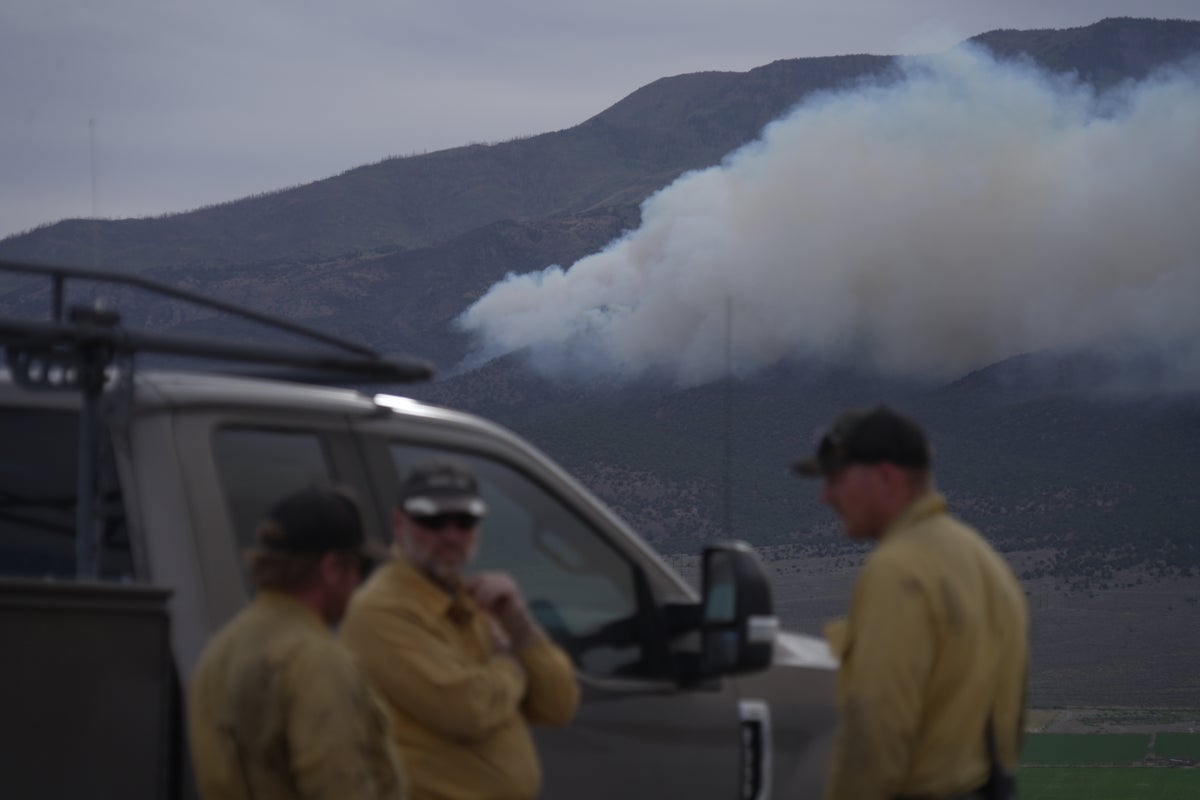
The largest active wildfire in the United States didn't happen by accident. It exploded through a lethal mix of legal roadblocks, unprecedented mountain winds, and a bone-dry winter that left the high country completely vulnerable.
Right now, the Cottonwood Fire in southern Utah has swallowed more than 112 square miles of land. It stands at zero percent containment. The smoke plume is so massive that people can see it from Colorado. It has already ripped through parts of the Eagle Point Ski Resort in Beaver County, turning high-end summer properties into ash. In nearby Marysvale, the smoke literally blocked out the afternoon sun on Friday as gray flakes rained down on residents.
If you think this is just another typical summer fire season in the West, you're missing the real story. The ground reality has shifted dramatically. State officials are openly admitting that current fire behavior completely defies historical expectations.
The Regulatory Bottleneck That Fed the Cottonwood Fire
Most people assume that when a massive environmental crisis hits, state leaders can instantly step in and ban hazardous activities. In Utah, they couldn't. Until Governor Spencer Cox declared a statewide emergency, state fire executives had their hands completely tied by local deregulation laws.
A piece of state legislation stripped the Division of Forestry, Fire and State Lands of its power to dictate safety measures within municipal boundaries. The law left decisions about fireworks and fire restrictions entirely up to individual city councils and neighborhood fire chiefs. The concept was all about local control. Rural towns and suburban enclaves argued that they understood their immediate geography better than state officials sitting in Salt Lake City.
But fires don't respect city limit signs. As internal metrics showed the state was turning into a literal tinderbox, State Forester Jamie Barnes lacked the legal authority to issue a blanket ban on personal fireworks ahead of the July Fourth holiday.
The emergency declaration changed that by temporarily suspending the restrictive law. For the first time this season, the state forester has the authority to block pyrotechnics statewide through July 5. Governor Cox explicitly noted that while the cause of the Cottonwood Fire remains under investigation, humans have caused three-quarters of the state's blazes this year. Waiting for a disaster to happen before seizing the legal right to stop it is a dangerous way to manage a changing climate.
Why a Tornado Warning is Being Used for Fire
The weather conditions are so extreme that the National Weather Service in Salt Lake City did something unprecedented. For the first time in its office history, it issued a Particularly Dangerous Situation red flag warning covering five Utah counties.
Historically, meteorologists reserve that specific alert for catastrophic Midwestern tornadoes. They don't use it lightly. Applying it to western timber and grasslands means the risk of rapid, unstoppable fire growth is at maximum capacity.
The local atmosphere has turned completely hostile to firefighting efforts. Check out the numbers driving this emergency
- Sustained winds are howling at 35 miles per hour.
- Wind gusts are regularly clocking in at 45 miles per hour.
- Relative humidity levels have plummeted into the single digits.
These forces created a situation where air tankers and massive water-dropping helicopters were completely grounded on Friday. It was simply too windy to fly safely. When you lose the air support, ground crews are left with almost no options to slow down the flames. The fire isn't just creeping along the forest floor anymore. It's executing aggressive crown runs, which means the fire is racing across the treetops at terrifying speeds and spotting miles ahead of the main front.
The Myth of the Healthy Winter Snowpack
There is a common misconception that a heavy winter snowpack protects the mountains from summer fires. It doesn't, especially when spring weather behaves erratically.
Alyssa Mason, a spokesperson assigned to the Cottonwood Fire, pointed out that Utah's snowpack and stream flows peaked incredibly early in March. Instead of a slow, steady melt that keeps the soil and timber hydrated into June, the water rushed off the mountains months ahead of schedule. That early runoff resulted in extreme dryness by the time the summer heat arrived.
When you follow an early melt with unprecedented wind storms, the vegetation dries out to a crisp. The Tushar Mountains are packed with heavy, dead timber and snags from previous insect infestations and old burns. Fighting a fire in these dense, downed fuels is incredibly dangerous. Direct attacks by ground crews are practically impossible, and chemical retardants lose their effectiveness when they can't penetrate the thick layer of fallen logs.
The crisis isn't isolated to Beaver County either. Southwest of Salt Lake City, the Iron Fire has scorched more than 40,000 acres, forcing the temporary evacuation of the entire town of Eureka. Across the state, nine active wildfires have devoured over 143,000 acres in a matter of days. To put that in perspective, the total acreage burned increased tenfold in just one week.
Real Actions to Take Right Now
If you live anywhere in the Intermountain West or plan to travel through the region during the upcoming holiday week, you cannot rely on old assumptions about safety. The situation is moving too fast.
Step 1 Track Local Intelligence Over National Maps
Do not rely on static public maps or general news roundups to determine if you are safe. Satellite heat data can be incredibly misleading. Actual fire perimeters change hours before public maps reflect the danger. Download apps like Watch Duty or follow local sheriff office pages directly for real-time evacuation alerts.
Step 2 Secure Your Property Boundary Immediately
If you own property near forested areas or grasslands in Utah, Arizona, or Colorado, clear your defensible space today. Remove dead leaves, clear out gutters, and move stacked firewood at least thirty feet away from your home. The current spotting behavior means embers are traveling miles through the air and igniting homes long before the main fire front arrives.
Step 3 Comply with the Power Grid Shutdowns
Rocky Mountain Power has initiated public safety power shutoff warnings for central, southern, and eastern Utah. Prepare for sudden, unannounced blackouts. Keep your devices charged, have backup batteries ready, and ensure you can manually open your garage door if the power drops. These shutoffs are designed to prevent high winds from knocking live lines into dry brush, which would trigger even more unmanageable blazes.
Step 4 Respect the Fireworks Ban Absolutely
The governor's temporary restriction runs through July 5. Do not ignite personal fireworks anywhere near campgrounds, grasslands, or municipal borders. With the current single-digit humidity, a single stray spark can trigger a multi-thousand-acre disaster before local volunteer fire departments even have time to hook up their hoses.
The weather won't be kind for the next few days. A incoming cold front on Sunday is predicted to bring shifting winds that will push the Cottonwood Fire in entirely new directions, threatening communities that currently think they are out of harm's way. This season is entirely different from what we've seen in the last five years, and surviving it requires total compliance with the new restrictions.