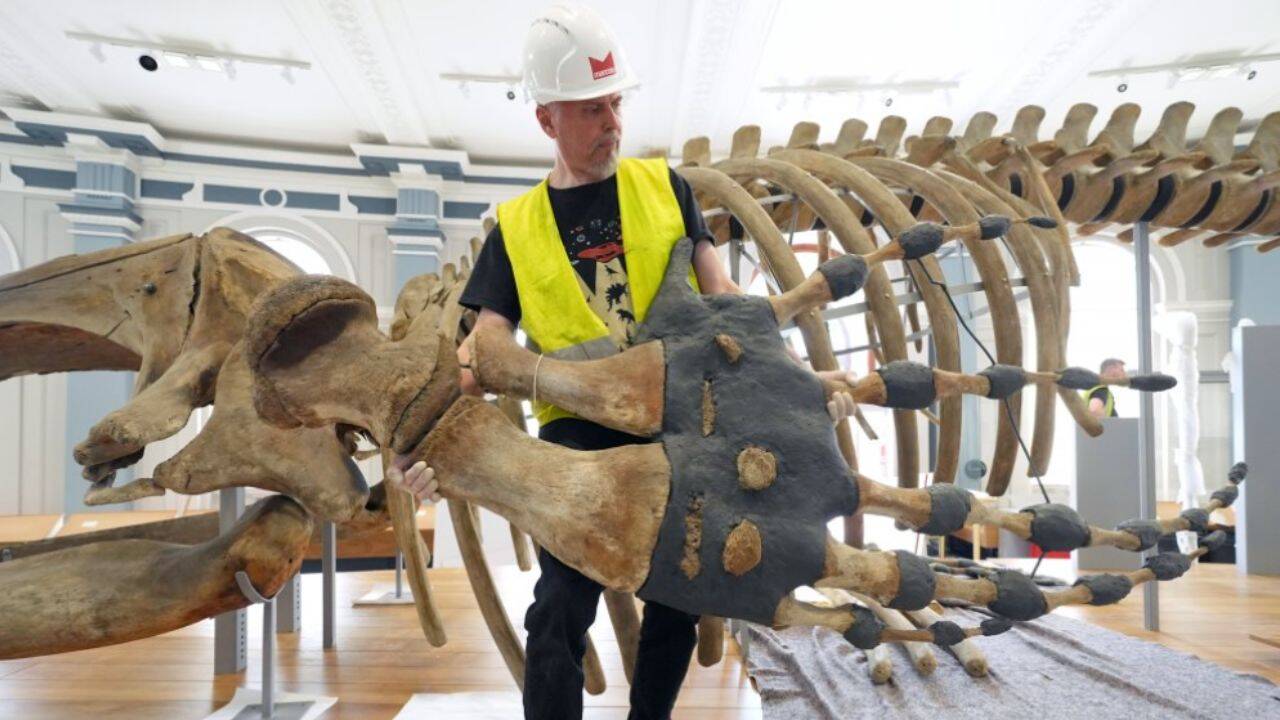
After six years away, a 40-foot giant has quietly slipped back into Hull.
It didn’t make a splash. Instead, it arrived in pieces—168 fragile, grease-stained bones packed carefully into a van. This is the skeleton of a juvenile North Atlantic right whale, a 119-year-old relic that has just returned to its home at the Hull Maritime Museum.
For most people, a museum renovation is just about fresh paint and shiny glass cases. But when the revamped Hull Maritime Museum opens its doors on August 8, 2026, this skeleton will be the undisputed centerpiece of the new Age of Sail gallery. The way we interact with it is changing entirely.
This isn't just a dusty pile of bones. It’s a tragic piece of maritime history and a stark warning about what we are doing to our oceans.
From Long Island to Hull: A Century of Trade
The whale’s journey began with a tragedy. In 1907, a retired whaling captain targeted a mother and her young calf off the coast of Long Island, New York. They caught both.
While the mother’s fate faded into history, the juvenile’s bones became a hot commodity. The American Museum of Natural History in New York initially claimed the skeleton. Then, the bone trading began.
In 1908, Cambridge’s University Museum of Zoology desperately wanted the whale. They traded a composite skeleton of a dodo to New York to get it. Decades later, in 1935, Cambridge traded the whale skeleton to the Hull Municipal Museum. In return, Hull sent Cambridge a massive blue whale skeleton that had washed up on the River Humber back in 1835.
Museums used to trade bones like kids trade baseball cards. That's how a New York whale ended up as the pride of Yorkshire.
The Brutal Reality of Restoring 168 Bones
When the museum shut down for its £20 million face-lift in 2020, natural history conservator Nigel Larkin faced a logistical nightmare.
How do you move 40 feet of century-old whale bone without shattering it?
You do it slowly. Larkin and his team spent days building custom wooden scaffolding just to safely dismantle the structure without crushing the surrounding gallery. Once apart, the 168 bones were carted off to his specialized workshop in Shropshire.
The real work was nasty. Whale bones are notorious. They are incredibly porous and constantly leak dark, rancid oil, even a century after the animal died. Larkin had to meticulously extract the degrading oils, clean away decades of museum dust, and stabilize the fragile structure.
But he didn't just clean them. He redesigned how the whale stands—or rather, how it swims.
Previously, the skeleton lay flat and lifeless on the gallery floor. It looked dead. Larkin, utilizing his skills in blacksmithing and structural engineering, fabricated a completely new metal armature. He bent and welded a custom steel frame that suspends the whale in a dynamic, lifelike curve. The tail now arches upward, giving the illusion that the juvenile is actively gliding through the ocean.
It took Larkin five intense days of on-site assembly to put the puzzle back together in Hull.
Crawling Inside a Ghost
The way you experience this skeleton is completely different now.
Instead of walking past a rope and staring from a distance, the new Age of Sail gallery lets you step inside the exhibit. Designers built a unique crawl tunnel that runs directly through the dome of the whale’s massive rib cage.
You will literally stand where the whale’s heart and lungs used to be.
This isn't a cheap gimmick. When you crawl inside that space, surrounded by the towering arch of 119-year-old ribs, the sheer scale of the ocean hits you. You hear the low, rumbling acoustic soundscapes of deep ocean communication playing through the gallery speakers. You see underwater footage projected onto the walls.
It’s beautiful. But it’s also deeply haunting.
Why this Whale is a Warning we Can’t Ignore
We need to talk about the grim reality of the North Atlantic right whale.
When this juvenile was killed in 1907, the species was already severely depleted by centuries of commercial whaling. Today, they are on the absolute brink of total extinction.
Scientists estimate that fewer than 400 North Atlantic right whales are left on Earth.
They aren't being actively hunted anymore. Instead, we are killing them by accident. Their migration routes run directly through some of the busiest shipping lanes on the planet. They get struck by massive container ships. They get tangled in heavy commercial fishing gear, dragging heavy ropes until they drown or starve from exhaustion.
Looking at Hull’s skeleton isn't just an exercise in historical appreciation. It’s a physical encounter with an obituary in bone form.
Plan Your Visit
If you want to experience the restored skeleton firsthand, here is what you need to know:
- Reopening Date: The Hull Maritime Museum officially reopens on Saturday, August 8, 2026.
- Location: Queen Victoria Square, Hull, UK.
- What’s New: The museum is showcasing 50% more artifacts than before, including several other fully conserved marine skeletons suspended from the ceilings.
- The Big Draw: Head straight to the newly designed Age of Sail gallery to experience the right whale crawl tunnel.