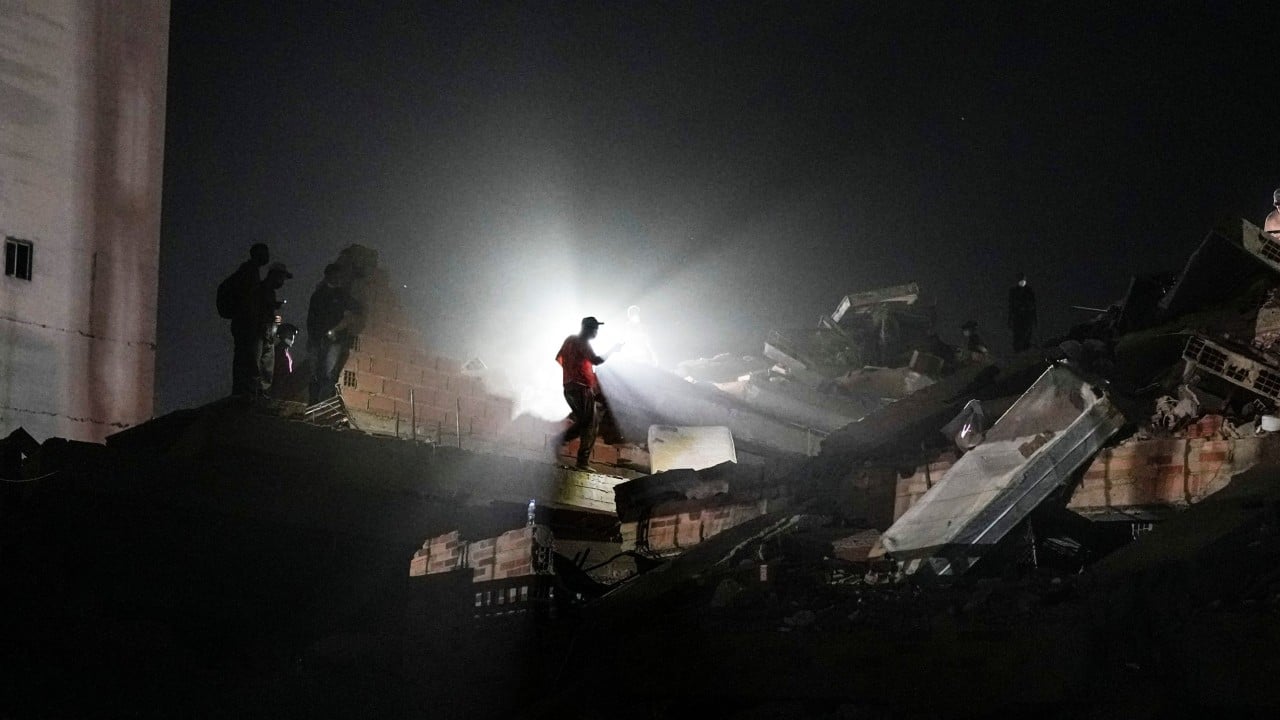
The golden hours are officially over in northern Venezuela, and hope is fading fast. When two massive earthquakes struck back-to-back on June 24, 2026, the country didn't just suffer physical damage. It woke up to an absolute nightmare. A 7.2 magnitude foreshock rattled the coast, followed a staggering 39 seconds later by a catastrophic 7.5 magnitude mainshock.
The official death toll has jumped past 920, with more than 4,500 injured. But those numbers don't tell the real story. The most terrifying statistic isn't the number of confirmed dead. It's the fact that over 50,000 people are still missing.
If you're wondering how an entire town's worth of people can simply vanish from the grid in less than a minute, you aren't alone. International emergency experts know that the first 72 hours are everything. Once that window shuts, the odds of pulling someone out alive drop off a cliff.
The Doublet Effect That Crushed the Coast
Seismologists call what happened a doublet event. Most large earthquakes feature a massive main shock followed by smaller aftershocks. This time, Venezuela's north-central coast got hit with a devastating one-two punch along the San Sebastián fault system. The rupture initiated near Morón and tore toward the capital city of Caracas at over three kilometers per second.
The timing made everything worse. June 24 was a major national holiday commemorating the Battle of Carabobo. Instead of sitting in seismically reinforced office buildings or open workspaces, families were gathered at home. Multi-story apartment complexes in La Guaira and older, unreinforced concrete structures in downtown Caracas were packed to maximum capacity.
When the first 7.2 tremor hit, people ran into the streets or ducked under furniture. The structure of those buildings was already heavily compromised when the second, far more powerful 7.5 earthquake hit 39 seconds later. Pancake collapses—where upper floors drop directly onto lower ones—occurred across the region. Concrete, steel, and brick compressed into dense, heavy tombs.
Why the Missing Count Stays So High
Let's look at the logistics honestly. The UN's aid chief, Tom Fletcher, along with local missing-person trackers, placed the number of unaccounted-for individuals at roughly 51,000. Why is that number so massive days after the event?
- Severe Structural Density: In places like Catia La Mar and the coastal state of La Guaira, high-rise residential buildings completely folded. Digging through ten stories of compressed concrete takes weeks, not days.
- The Communication Blackout: The earthquakes sheared fiber-optic cables and knocked out cellular towers. Families inside the country can't call out, and millions of Venezuelans living abroad are left staring at blank messaging apps, completely unable to verify if their loved ones are in a shelter or buried.
- Holiday Dislocation: Because of the holiday, thousands of people had traveled from the interior to the coastal beaches. Local municipalities don't have accurate registries of exactly who was staying in which coastal apartment or hotel when the fault line ruptured.
"I want to know where my child is, if he's trapped or in a shelter," shared Dayana Delgado, a mother of three from La Guaira, whose eight-year-old son disappeared when their building tilted and collapsed. Like many, she has been digging through the dust with her bare hands because heavy lifting machinery hasn't arrived.
📖 Related: weather forecast st louis
A Crisis Built on Broken Infrastructure
This isn't just a natural disaster. It's an infrastructure failure. Years of economic strain meant that Venezuela's domestic emergency response units lacked basic gear even before the ground shook. Heavy cranes, acoustic listening devices, and search dogs are in incredibly short supply.
Acting President Delcy Rodríguez declared La Guaira a disaster zone, shifting rescue teams from the interior to the coast. But the country's main airports suffered runway damage and structural cracks, creating a massive logistical bottleneck for incoming international aid.
While US search and rescue teams, alongside emergency units from China and neighboring Brazil, are arriving with medical supplies and specialized tools, the clock is the enemy. Dehydration, crush syndrome, and lack of oxygen are claiming the lives of those trapped beneath the slabs.
If you are looking to support the relief efforts or keep track of the evolving situation, your best move is to rely on verified international humanitarian channels rather than unverified social media feeds.
- Direct your donations to boots-on-the-ground organizations like World Vision or the International Federation of Red Cross and Red Cross Crescent Societies (IFRC), which are actively distributing clean water, trauma kits, and emergency shelter material.
- For those trying to locate missing relatives, use the official digital family links portals established by the International Committee of the Red Cross (ICRC) to log names and last-known locations rather than flooding local emergency bands.