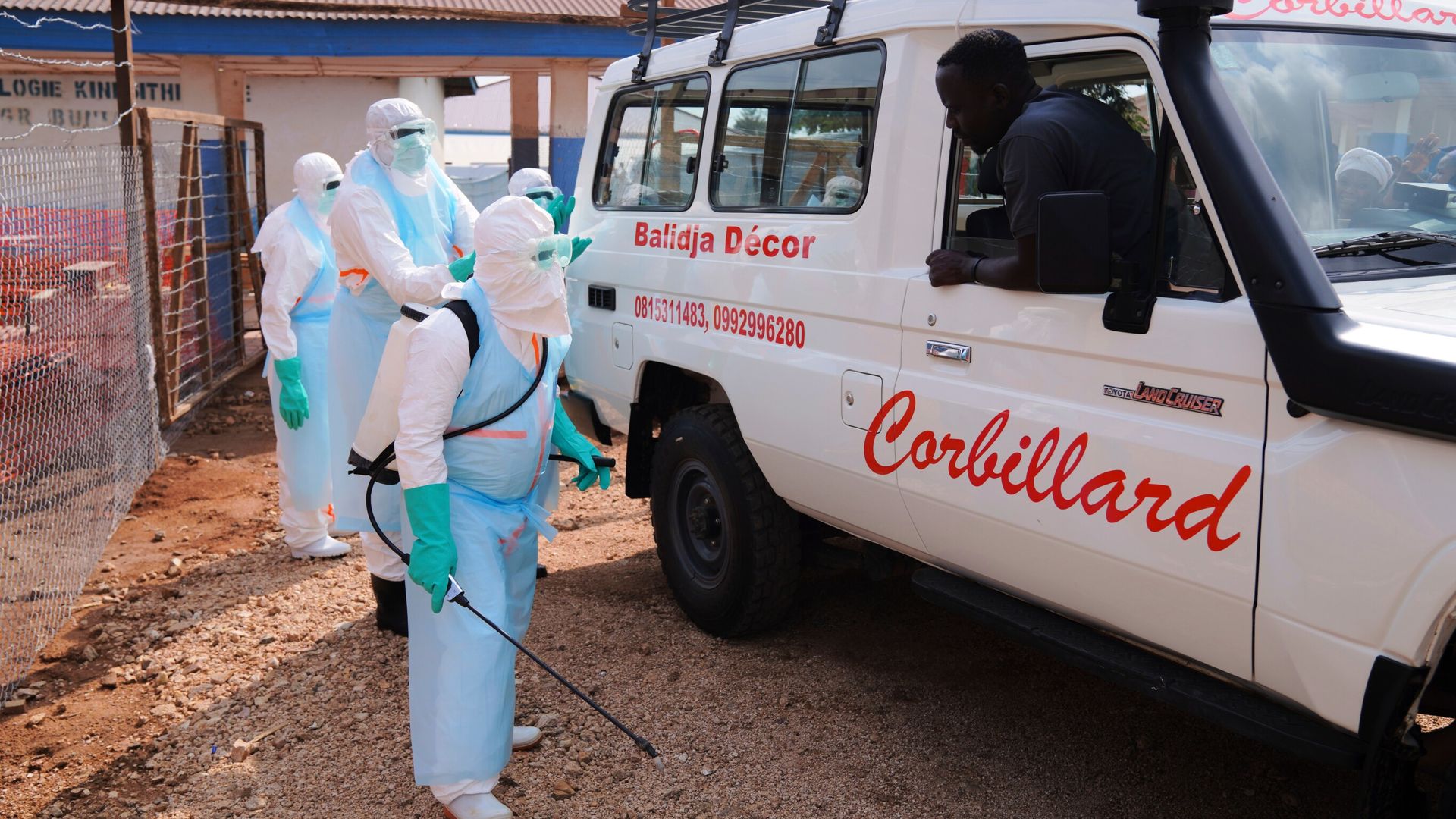
More than 1,000 people have died in the latest Ebola outbreak in the Democratic Republic of Congo. That is a terrifying number, but the actual speed of the surge is what should terrify public health officials even more.
It took roughly eight months for the devastating 2013-2016 West Africa epidemic to reach 1,000 deaths. This current wave crossed that grim threshold far quicker. Health agencies are struggling to keep up, and the situation on the ground in eastern Congo is deteriorating by the day.
If you are following world events, you might wonder why this particular crisis is spiraling out of control while previous outbreaks were contained. The answer isn't simple, but it comes down to three massive hurdles: a virus strain with no approved vaccine, active armed conflict in the epicenter, and growing community distrust.
Official Reported Cases:    ~2,473
Confirmed Deaths:          >1,000
Primary Epicenter:         Ituri Province
Strain Identified:         Bundibugyo virus
Here is what is really happening behind the numbers, why standard responses aren't working, and what needs to change before this turns into a global catastrophe.
A Different Strain With Zero Approved Vaccines
When people hear "Ebola," they usually think of the Zaire strain. That's the strain responsible for the largest historical outbreaks, and it's also the one for which we have working, WHO-approved vaccines like Ervebo.
This time around, medical staff are fighting the Bundibugyo virus.
It's a distinct species of the ebolavirus genus. The brutal reality is that existing vaccines designed for the Zaire strain offer zero cross-protection against Bundibugyo. Doctors on the frontlines don't have a proven shot to administer to healthcare workers or exposed family members. They don't have licensed antiviral treatments tailored specifically to this strain either.
Dr. Jean Kaseya, Director-General of the Africa Centres for Disease Control and Prevention, put it bluntly at a health summit in Ghana:
"These are people dying. They are dying because we don't have vaccines, we don't have medicine, we don't have funding."
Without a functional vaccine to establish ring vaccination—the practice of inoculating everyone around a confirmed case—health teams lose their most effective firewall. They are forced to rely entirely on basic isolation, contact tracing, and supportive care.
When 80% of new cases are appearing outside known transmission chains, contact tracing is practically blind. The virus is moving faster than the paperwork.
Active War Zones Make Contact Tracing Nearly Impossible
Medical emergencies are hard enough to handle in peaceful regions. In eastern Congo, specifically Ituri province, the outbreak is unfolding inside an active combat zone.
Rebel groups, including militia linked to the Allied Democratic Forces (ADF), frequently raid villages and block key transit routes. Epidemiologists can't simply drive into a village to check on someone who came into contact with a patient. They often need armed escorts just to travel a few miles outside main towns like Bunia.
In some health zones, health workers have had to abandon treatment centers due to active gunfire. When medical teams flee, patients either return to their families or disappear into surrounding areas, unintentionally taking the pathogen with them.
The local military administrator in Ituri's Irumu territory recently told residents that Ebola had become a bigger threat to their lives than the local insurgency. Think about that for a second. In an area plagued by decades of civil strife, a viral hemorrhagic fever is currently out-killing armed combatants.
Why Local Communities Are Resisting Response Teams
It is easy for outsiders to look at community resistance and judge. That is a mistake. Understanding why residents push back is the only way to fix the problem.
When response teams arrive in full protective gear, looking like astronauts in hazmat suits, it creates immediate panic. In many traditional communities, proper burial rituals are sacred. Traditional practices often involve washing, touching, and grieving over the deceased relative's body.
Ebola virus loads are at their absolute peak in body fluids right after death. Touching a deceased patient is one of the fastest ways to contract the infection.
When safe burial teams step in, take the body away, and bury it in sealed bags without family involvement, families feel robbed of their final goodbyes.
Robert Ndjalonga, head of civil protection in Ituri province, noted that community members frequently refuse entry to burial units. In several instances, local youths have thrown stones at response vehicles. One worker in Bunia was injured after an ambulance was targeted following a burial.
Add in unpaid local health staff—who have gone on strike because promised wages haven't materialized—and you get a system on the verge of total collapse.
The Real Numbers Are Likely Much Worse
Official figures state that around 2,473 cases and just over 1,000 deaths have been recorded. But every expert in field epidemiology knows those numbers are a conservative floor, not the ceiling.
The World Health Organization explicitly stated that the actual scale of this outbreak is likely two to four times larger than official tallies indicate.
Why the massive discrepancy?
- Unreported Community Deaths: Many individuals die at home in remote villages without ever visiting a hospital or testing facility.
- Hidden Patients: Families often hide sick relatives out of fear that they will be taken to isolation wards where they might die alone.
- Inaccessible Zones: Large swathes of Ituri remain completely off-limits to international observers and ministry health workers due to active fighting.
If the WHO estimates hold true, thousands of uncounted cases are currently circulating without medical supervision. That makes containment through traditional measures nearly impossible unless radical shifts occur on the ground.
How Ebola Spreads and What Symptoms Look Like
Ebola is not an airborne virus like influenza or COVID-19. It doesn't float through a crowded room just because someone sneezed.
Transmission requires direct contact with infected body fluids. We are talking about blood, saliva, vomit, urine, feces, or sweat. Broken skin or mucous membranes (like eyes, nose, or mouth) exposed to contaminated surfaces can also lead to infection.
Early Symptoms (Days 1-7):
- Sudden onset of high fever
- Severe fatigue and weakness
- Muscle pain and severe headaches
- Sore throat

Advanced Symptoms (Days 7+):
- Persistent vomiting and diarrhea
- Impaired kidney and liver function
- Unexplained internal and external bleeding
- Severe dehydration and shock
Because early symptoms resemble malaria or typhoid, patients frequently seek treatment at standard local clinics first. Unprotected clinic staff then contract the disease, turning basic health centers into super-spreader locations.
What Needs to Happen Right Now to Stop the Surge
Talking about the problem won't end it. Immediate, pragmatic shifts are required if containment is going to happen.
Fast Track Emergency Vaccine Trials
Since no licensed vaccine works for Bundibugyo, regulatory bodies must fast-track candidate trials. Experimental doses currently in development need immediate field safety testing under emergency use protocols.
Pay Frontline Health Workers Immediately
Expecting local nurses, doctors, and burial teams to risk their lives without pay is both unethical and self-defeating. Striking workers leave entire health districts completely exposed. Global donors must funnel funds directly to payroll first, before funding overhead administrative costs.
Involve Local Elders Instead of Military Escorts
Sending armed soldiers with burial teams reinforces fear and distrust. Response coordinators must collaborate directly with local village elders, religious leaders, and trusted community members. Safe burials have to be adapted to include modified, respectful traditional practices so families don't feel forced to hide their dead.
Secure Safe Transit Corridors
Neutral humanitarian corridors must be negotiated with local factions to ensure health workers can reach remote zones safely. Disease control cannot function when healthcare is treated as a combat target.
The Bottom Line
This outbreak isn't just a regional tragedy. It is a stark warning about how quickly a pathogen can exploit conflict zones and resource gaps. Ignoring it now only guarantees a larger, far costlier global emergency later.