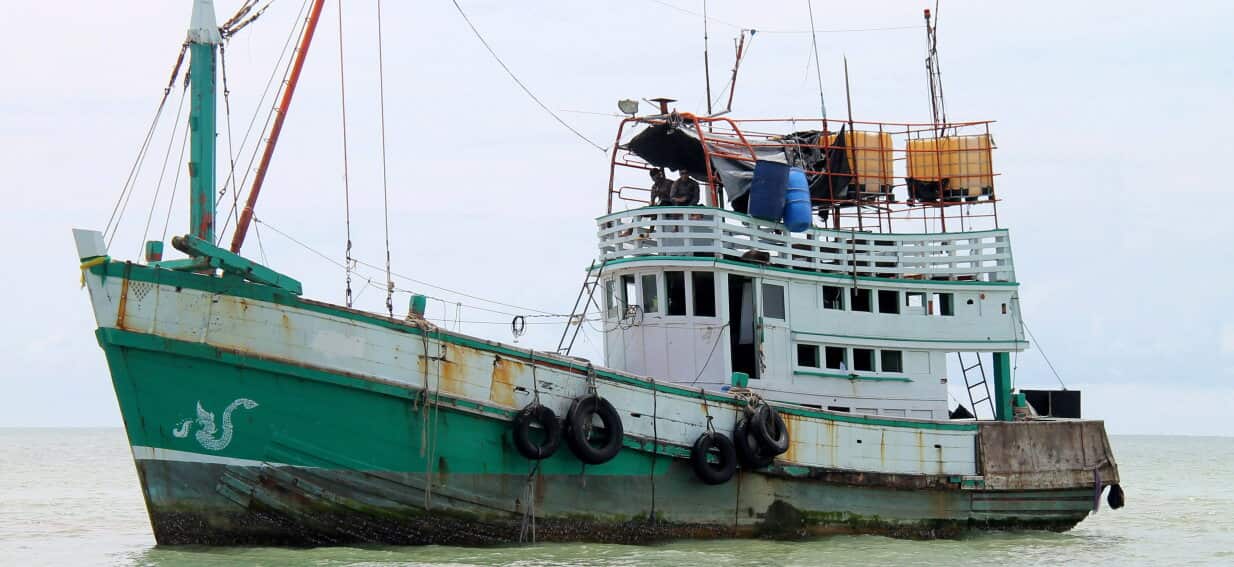
More than 500 people are feared dead after two boats packed with Rohingya refugees sank off the coast of Myanmar. It is a staggering number. Yet, the international community barely blinked. If a cruise ship carrying 500 Western tourists vanished into the ocean, it would dominate global news cycles for weeks. But when it comes to the stateless Rohingya, the world has developed a dangerous, numbing indifference.
The UN’s migration and refugee agencies dropped a joint bombshell warning. They reported that two massive shipwrecks occurred between late June and early July 2026. The scale of this loss is hard to wrap your head around. It matches some of the worst Mediterranean migration disasters we have seen in the last decade.
I want to break down exactly what happened out there in the Bay of Bengal. This is not just a tragic accident caused by bad weather. It is the direct result of systematic political failure, brutal conflict, and a highly organized trafficking system that feasts on human desperation.
The Raw Reality of the Rakhine Coast Shipwrecks
Let's look at the facts we have right now. Information trickling out of Myanmar’s Rakhine State is notoriously hard to verify due to the ongoing civil war and heavy communications blackouts. But the details compiled by the United Nations High Commissioner for Refugees and the International Organization for Migration paint an incredibly grim picture.
The first vessel left the coast of Rakhine State in late June. It carried roughly 250 people. Almost immediately after setting sail, the boat lost all radio and satellite communication. It simply vanished. In the open sea, losing contact during a storm almost always means a catastrophic capsizing. There were no life vests, no distress beacons, and absolutely no rescue teams looking for them.
The second disaster was even bigger. On July 8, a second boat packed with an estimated 280 refugees went down off the Ayeyarwady coast of Myanmar. Think about that for a second. That is 530 human beings who are likely sitting at the bottom of the ocean right now.
The timing of these departures is what strikes me as pure madness. It happened right in the middle of monsoon season. The UN noted that these journeys took place way outside the regular sailing window. The region has been battered by relentless, torrential rain and massive regional flooding. The ocean waves during these months are massive. Sending wooden fishing boats into that environment is essentially a death sentence. So, you have to ask yourself a very basic question. Why would anyone ever get on those boats?
What Drives Thousands to Board Rickety Boats in Monsoon Season
People do not climb into an unsafe, overcrowded boat during a monsoon because they want to. They do it because staying where they are feels even more dangerous.
The Rohingya are a Muslim minority group from Myanmar who have faced decades of institutionalized persecution. They are denied citizenship, denied freedom of movement, and denied basic human rights. In 2017, a brutal military campaign forced over 700,000 of them to flee across the border into Bangladesh.
Fast forward to 2026, and the situation inside Myanmar has gone from terrible to unlivable. The civil war between the military junta and various rebel groups, including the Arakan Army in Rakhine State, has intensified dramatically. The Rohingya are caught right in the crossfire. They are being forced into military conscription by the very junta that tried to wipe them out a few years ago. If they refuse, they face execution. If they cooperate, they become targets for the rebel armies.
Escalating violence has completely cut off local supply chains. Food is scarce. Medical supplies are non-existent. Starvation is a real threat. When a mother looks at her children and realizes they might die of hunger or be blown apart by an artillery shell tomorrow, a dangerous ocean journey starts to look like a logical gamble. It is a choice between a certain death on land or a conditional chance of survival at sea.
Inside the Squalor of Cox's Bazar and the Rakhine Conflict
A large portion of the refugees who boarded those ill-fated ships did not even come directly from Myanmar homes. They came from the sprawling refugee camps in Cox's Bazar, Bangladesh.
I have tracked the conditions in those camps for years, and frankly, they have become open-air prisons. Over a million people are crammed into bamboo and plastic tarpaulin shacks built on muddy hillsides. Bangladesh deserves credit for hosting this massive population for so long. But the reality on the ground has deteriorated rapidly.
International funding has dried up significantly over the last two years. Rations have been slashed repeatedly. People are literally starving inside the camps because they are legally forbidden from working outside them.
Worse still is the complete collapse of security. Gangs and armed militant groups have effectively taken control of the camps at night. Extortion, kidnappings for ransom, and targeted assassinations are daily occurrences. Young women are trafficked out, and young men are forced into criminal networks. The camps are no longer a sanctuary. They are a pressure cooker of trauma and hopelessness.
When you strip away a person's right to work, educate their children, or sleep safely at night, you destroy their dignity. That is exactly when the human smugglers step in.
The Human Trafficking Networks Capitalizing on Despair
Human trafficking networks in the Bay of Bengal are ruthless, sophisticated, and incredibly lucrative. They treat human beings like disposable cargo.
Smugglers run a highly organized business model. They send recruiters into the camps of Cox's Bazar and the villages of Rakhine State. They promise safe passage to Malaysia or Indonesia, where a thriving underground economy allows Rohingya refugees to find manual labor jobs. They promise solid boats, experienced captains, and a new life.
It is all a lie.
The smugglers charge thousands of dollars per seat. Families sell their last remaining pieces of gold, or borrow money from dangerous loan sharks inside the camps just to fund the trip. Once the money changes hands, the power dynamic shifts completely.
Refugees are marched under the cover of night to secluded beaches, where they are loaded onto small dinghies and transferred to larger, decaying wooden trawlers anchored off the coast. These boats are built to hold maybe fifty people. The smugglers routinely pack 250 to 300 people into the hold.
Once the ship sets sail, the conditions turn horrific. Food and water are heavily rationed. Passengers who complain are beaten or thrown overboard. In many cases, if the boat runs into trouble or is spotted by a navy vessel, the crew will simply disable the engine, hop onto a speedboat, and abandon the passengers to drown. That is likely what happened to the 530 people who vanished this month.
Before this double shipwreck, nearly 300 people had already died or gone missing in the Andaman Sea and Bay of Bengal this year alone. Last year, the death toll topped 900. The sea route in Southeast Asia is now statistically one of the deadliest migration paths on the planet.
How the International Community Fails the Rohingya Year After Year
The reaction from global leaders to this latest horror has been a collective shrug. The UN issues its standard statements of grave concern, calls for enhanced search and rescue operations, and begs for funding. Then the news cycle moves on.
The Association of Southeast Asian Nations has been completely toothless on this issue. Their core policy of non-interference means they refuse to take decisive action against the Myanmar junta. Regional neighbors like Malaysia, Thailand, and Indonesia have increasingly adopted a push-back policy. When Rohingya boats manage to survive the ocean crossing and approach their shores, navies often tow them back out into international waters, leaving them to starve or sink.
This policy does not stop the boats. It just ensures that more people die out of sight.
Western nations are equally complicit. They have cut humanitarian aid budgets for the Bangladesh camps, focusing their resources on conflicts closer to home. By ignoring the slow-motion collapse of the Rohingya aid response, they are effectively funding the smugglers' recruitment pipeline.
Concrete Actions Required to Stop the Maritime Death Toll
We need to stop treating these shipwrecks as isolated humanitarian tragedies and start treating them as a regional security and human rights emergency. Passing statements of condolences does nothing.
First, regional governments must establish a coordinated, state-led search and rescue framework in the Bay of Bengal and the Andaman Sea. When a boat is reported missing, regional navies need to look for it, rescue the passengers, and let them disembark safely. Leaving people to drown as a deterrent strategy is morally abhorrent.
Second, the financial networks of the traffickers must be targeted. These smuggling syndicates operate across borders, moving millions of dollars through regional banking systems and informal money transfer networks. Southeast Asian intelligence agencies know who these kingpins are. They need to arrest them and shut down their operations.
Third, the international community must step up and restore full funding to the refugee camps in Bangladesh. If people have food, basic security, and hope for the future inside the camps, they will not risk their lives on a suicide mission at sea.
The math is simple. If we do not address the root causes of this desperation, the ocean will continue to swallow hundreds of Rohingya every single year. The 500 souls lost this month should be a breaking point. We cannot keep looking away.
To help prevent further loss of life, consider supporting organizations on the ground that provide direct aid and legal protection to Rohingya refugees. You can donate to the UNHCR or the International Organization for Migration to fund emergency food, clean water, and shelter programs. You can also write to your local representatives and demand that your government restore full funding to the humanitarian response in Cox's Bazar. Action is the only thing that will change this narrative. This crisis will not fix itself.
:max_bytes(150000):strip_icc()/xochimilco_getty-56a3ea613df78cf7727fdcc0.jpg)