Russia is running dry where it hurts most. A relentless, deep-strike campaign has knocked out 42.74% of the country’s total oil refining capacity. Think about that number for a second. Nearly half of the refining power in a global energy superpower is simply gone, idled by fire, smoke, and shattered distillation towers.
If you think this is just a temporary headache for Moscow, you're missing the bigger picture. This isn't just about military logistics or a spike in global crude prices. It's an existential crisis happening inside Russian borders right now. Prominent economist Igor Lipsits openly warns that this catastrophic fuel shortage could trigger the actual disintegration of the Russian Federation. When the glue of shared economic survival dries up, large empires tend to fracture.
How Ukraine Crippled Russia’s Energy Backbone
The math behind this crisis is staggering. According to data from the Ukrainian General Staff and independent monitors like Rochan Consulting, Kyiv’s long-range strikes hit a massive milestone by early July 2026. Over the past month alone, eight major Russian oil refineries were hammered.
This wasn't a series of random, lucky shots. It's a highly coordinated strategy. Ukraine launched its converted long-range drones and adapted land-attack Neptune cruise missiles to strike deep. Some targets sat more than 1,100 kilometers from the Ukrainian border. In May 2026, a record-breaking 16 successful attacks lit up Russian facilities. By June, eleven refineries felt the impact, along with critical transshipment terminals like Tamanneftegaz and deep-hinterland facilities like the Tyumen refinery in Western Siberia.
The destruction list reads like a manual on how to dismantle an industrial economy:
- Over 60 major storage reservoirs destroyed or critically damaged.
- 58% of those destroyed tanks held finished petroleum products like gasoline and diesel.
- 42% contained crude oil ready for processing.
- Total industry financial losses have ballooned to $13.5 billion since August 2025.
Western intelligence sources hint that the pinpoint accuracy comes from a mix of home-grown guidance tech and tactical flight-routing support to slip past Russian air defense networks. The results are undeniable. Massive primary processing units—like the advanced AVT-6 distillation setups—cannot easily be patched up with duct tape and hope.
The Hidden Fracture Lines Inside Russia
When gasoline vanishes, politics gets local very quickly. The loss of refining capacity has sparked a severe domestic fuel crisis across more than 50 Russian regions. If you look closely at what's happening on the ground, the internal friction has already started.
[Image of oil refinery distillation tower]
Because Russia can't produce enough fuel to meet baseline domestic demand—Reuters estimates production plummeted 25% year-on-year in June—regional governors are panicking. They're doing exactly what desperate politicians do: hoarding resources.
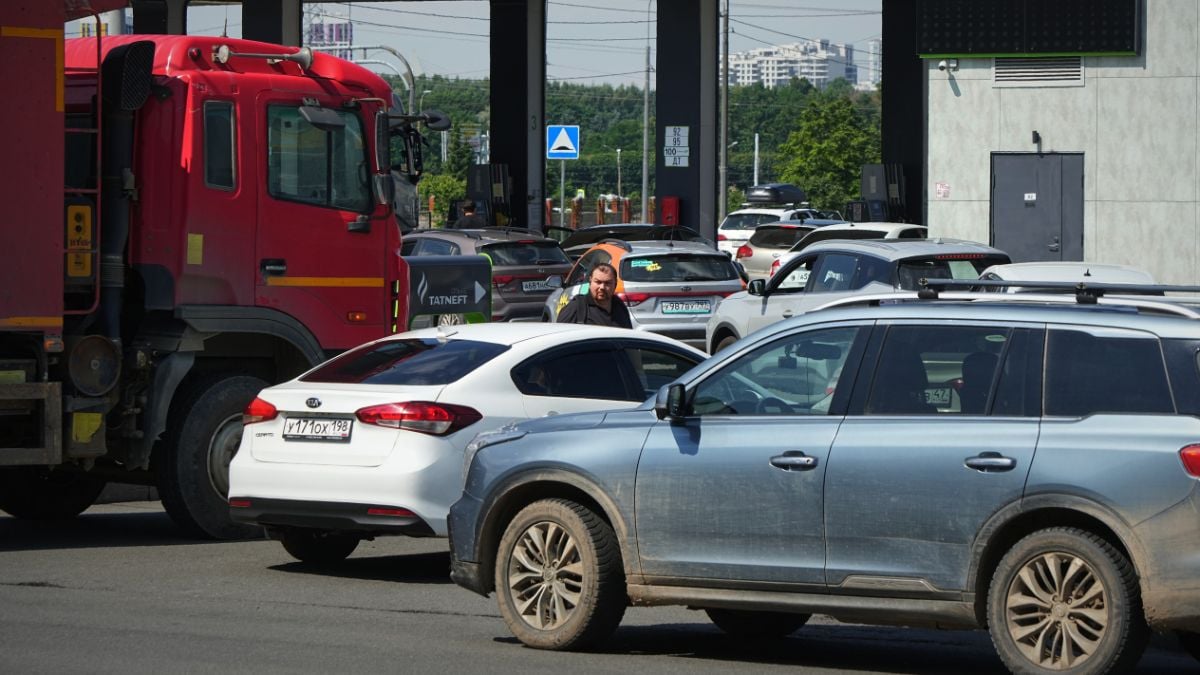
Igor Lipsits points out that draft decisions are cropping up at the regional administration level to restrict transport transit. In plain terms, Region A is trying to block trucks from carrying fuel out of its territory to Region B. Local fuel stations in places like Saratov have set up tiered access, forcing everyday citizens to wait in lines while prioritizing vehicles from district administrations, state emergency services, and the state postal service.
This isn't a unified country working toward a common goal. It’s a scramble for survival. When local leaders realize that Moscow can no longer keep the lights on or the tractors moving, the central authority starts to look less like a protector and more like a burden. Internal mobility is grinding down. Tourism is collapsing. Supply chains are choking.
The Sanctions Trap That Makes Repair Impossible
Vladimir Putin tried to downplay the crisis, admitting to "a certain shortage" but claiming it's "not critical" and that facilities are being restored quickly. Don't buy the spin.
The reality is that modern oil refining relies on highly complex, custom-engineered western components. A distillation unit isn't something you can buy off the shelf from a domestic supplier. Because of strict international sanctions, Russia cannot import the precise turbine parts, automated control systems, and catalyst chemicals needed to rebuild these multi-billion-dollar complexes.
Look at the Slavneft-YANOS refinery in Yaroslavl or the Moscow Oil Refinery. When an explosion tears through an integrated Euro+ refining unit, you can't just source a replacement from a factory in the Urals. Repair schedules are getting pushed back indefinitely. The Omsk refinery in Siberia is essentially the last giant standing at full capacity, but it can't carry the weight of an entire subcontinent on its back.
What Happens Next
The immediate economic shockwaves will hit the agricultural sector first. Russia is currently in its peak summer harvesting season. If tractors can't get diesel, crops rot in the ground. Food inflation will spike, compounding the pain of a wartime economy.
If you want to track how fast this crisis is accelerating, keep your eyes on these specific metrics:
- Regional Transit Bans: Watch for official announcements from regional governments formalizing fuel export bans across internal oblast borders. This is the first clear sign of administrative decoupling from Moscow.
- Black Market Premium: Track the divergence between official government-mandated fuel prices and the actual price citizens pay on the black market. A widening gap proves central supply control has failed.
- Refinery Outage Duration: Monitor how long struck facilities like the TANECO or Moscow refineries stay offline. If idled periods stretch past three months, it confirms that sanctions have successfully blocked critical spare parts.
This isn't a problem that can be solved by printing more rubles. You can't fill a fuel tank with paper currency. If Ukraine maintains this pressure throughout the remaining months of 2026, the Kremlin will face an impossible choice: starve the frontline military machine of fuel, or watch its domestic regional alliance completely fall apart.