The Kremlin thought they had a deal. They called it the Spirit of Anchorage. For months, Moscow operated under the assumption that a backroom understanding hammered out between Vladimir Putin and Donald Trump in the freezing terrain of Alaska last August would dictate the end of the war in Ukraine.
That illusion just shattered completely. Discover more on a similar issue: this related article.
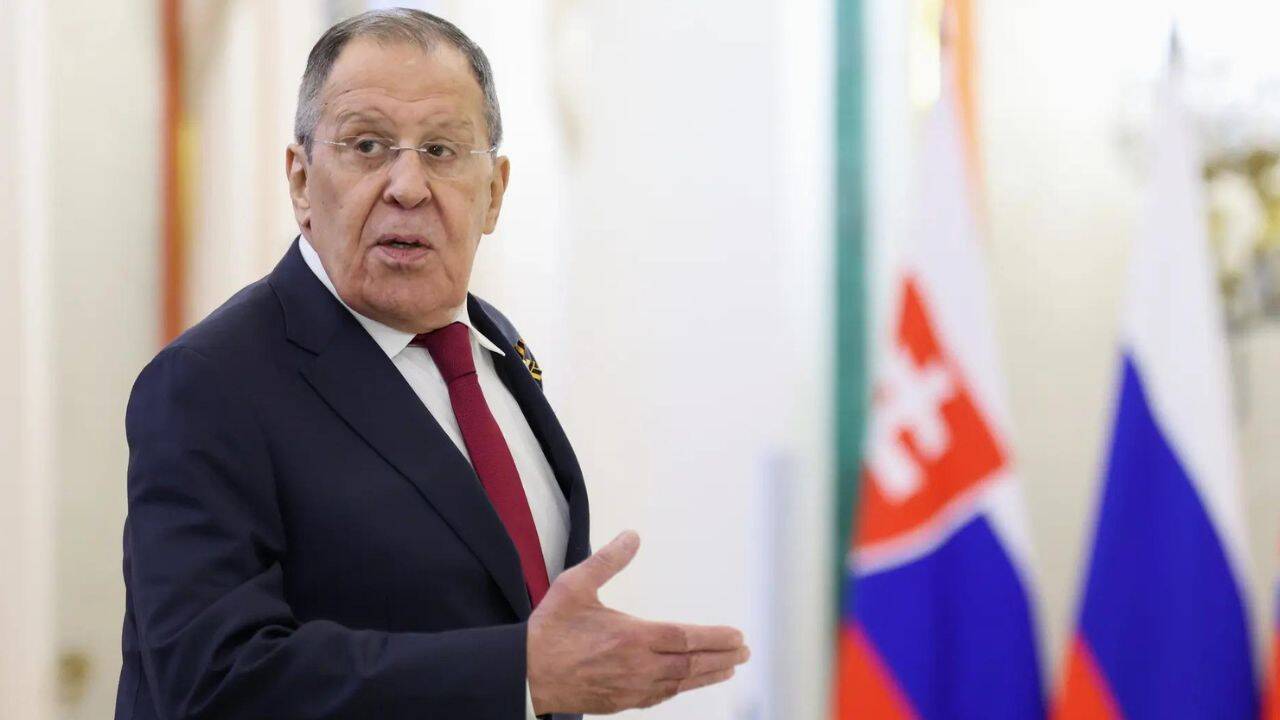
Russian Foreign Minister Sergei Lavrov made it clear that Moscow is done making concessions. He openly complained that Putin already compromised enough during those face-to-face talks with Trump. Now that Washington is backing away from those quiet understandings, Russia is slamming the brakes on diplomacy. They're telling the world they won't bend again.
If you want to understand why the war in Ukraine is entering a newly volatile phase, you have to look at the spectacular collapse of this highly secretive diplomacy. The messaging out of Moscow isn't just standard diplomatic posturing. It's a mix of profound frustration, panic over shifting American policy, and the realization that their grand plan to freeze the war on their own terms has officially gone off the rails. Further reporting by TIME delves into similar views on this issue.
The Secret Deal That Never Was
To understand why Lavrov is so furious right now, you have to go back to August 2025. That was when Putin and Trump held a highly contentious summit in Alaska. The public didn't get many details at the time, but the Kremlin walked away believing they had secured a massive strategic victory.
In Moscow's mind, the Alaska understanding was straightforward. They believed Trump was sympathetic to their core demands. The basic framework involved Ukrainian forces withdrawing from the remaining parts of the Donbas region that Russia didn't fully control. In exchange, Moscow would agree to freeze the battle lines elsewhere across the country. It was a formula that would allow Putin to claim a victory at home, lock in his territorial gains, and stop the bleeding of his military.
Lavrov spilled the beans on how Putin viewed those talks. According to the veteran foreign minister, Putin actively signed up for a proposal that came directly from the American side. Putin reportedly told Trump that while there were certain nuances to iron out, he would take responsibility for them and accept the core proposals.
The Kremlin viewed that acceptance as a massive compromise. They thought they were meeting Washington halfway. But there was a glaring problem with this entire setup. The United States government never publicly confirmed that any such arrangement existed. While Trump freewheeled through negotiations alongside figures like Jared Kushner and Steve Witkoff, the broader Western alliance remained deeply skeptical that the Alaska summit produced anything meaningful at all.
Now, that entire diplomatic house of cards has fallen apart. Lavrov is complaining bitterly that the international community is coming back to Russia and telling them that the previous arrangement isn't working out, demanding even more concessions. From Moscow's point of view, the goalposts aren't just moving. They've been kicked across the field.
How the G7 Summit Blew Up Moscow's Plans
The real turning point happened in the French town of Evian-les-Bains. That was where the recent G7 summit took place, and it's where French President Emmanuel Macron led a concerted effort to flip Trump's perspective on the entire conflict.
Before the summit, the Kremlin felt they could manage Trump. Putin even called Trump on his birthday right before the leaders gathered in France, attempting to run interference and keep the American president aligned with the Alaska framework. It didn't work. Macron and other European leaders used the summit to convince Trump that a Russian victory was far from inevitable.
They had powerful evidence to back up their claims. Right around the time of the summit, Ukraine launched a series of incredibly destructive, long-range drone strikes deep inside Russian territory. These weren't minor border skirmishes. Ukrainian drones successfully struck a massive oil refinery right in Moscow. These images of smoke rising over the Russian capital completely changed the narrative.
Trump was reportedly hugely impressed and enthusiastic about Ukraine's ability to hit targets so deep inside Russia. During a lengthy dinner in France, Ukrainian President Volodymyr Zelenskyy pressed his advantage. He showed Trump that Kyiv was gaining real momentum on the battlefield.
The strategy worked brilliantly. Trump emerged from the G7 summit completely shifting his tone. Instead of pushing for an immediate ceasefire that would favor Russia, Trump publicly called on Moscow to make a deal. He noted that Russia was losing tremendous numbers of people, estimating that combined casualties were hitting roughly 25,000 soldiers every single month.
Even worse for the Kremlin, Trump responded positively to licensing Patriot interceptor missile production directly in Europe and Ukraine. He agreed to ramp up sanctions on Russian energy exports. This was the exact opposite of what Putin thought he bought during the Alaska talks.
The Kremlin's Three-Day Public Meltdown
The sudden realization that Trump has shifted his stance triggered an unprecedented, coordinated public meltdown from the highest levels of the Russian government. Within a three-day window, three of Putin's most senior officials took turns lashing out at Washington.
First came Kremlin aide Yuri Ushakov, who complained that only one side had remained genuinely committed to the understandings reached in Alaska. He openly stated that the other side was completely unable to do its part.
Then Lavrov took the stage at a foreign policy conference in Moscow, escalating the rhetoric to a dangerous new level. He suggested that the entire Alaska summit might have been nothing more than a cynical Western ploy designed to buy time so the United States could rearm the Kyiv regime. It's a massive accusation. It shows that Russia's trust in American mediation has dropped to absolute zero.
Lavrov's deputy, Sergei Ryabkov, followed suit by accusing Washington of departing from fundamental understandings. Ryabkov pointed out that Washington is moving closer to what he called the most rabid anti-Russian policies pursued by the UK and France. While Ryabkov noted that technical dialogue between the two nations would continue, the political trust is entirely gone.
The core of the issue is that Russia wants the United States to act as a direct, heavy-handed mediator that can force Ukraine to give up territory. But Washington has stopped engaging in that specific type of structured diplomatic process. There's no deal on the table, there's no active mediation from Trump's team right now, and the Russians are left staring at a blank space where they thought a favorable peace treaty would be.
The Grim Reality Driving Russia's Anger
You have to look past the angry diplomatic speeches to see what's actually driving this panic in the Kremlin. The reality is that Russia is facing an incredibly critical situation regarding both its economy and its military stability.
The war is now in its fifth year. The special military operation that was supposed to wrap up in a matter of days has turned into a grueling war of attrition. While US intelligence officials believed earlier this year that Russia held the upper hand, the battlefield dynamics are refusing to stabilize in Putin's favor.
Consider the economic toll. Massive military spending is keeping the Russian GDP numbers looking active on paper, but beneath the surface, intense inflation and labor shortages are eating away at the country's economic fabric. The constant threat of Ukrainian drone strikes on critical infrastructure like oil refineries means Russia is losing its primary source of revenue generation faster than they can repair the facilities.
Putin needs a diplomatic exit ramp that looks like a victory. He needs to show his domestic audience that his strategy worked. The Alaska framework gave him that narrative. Losing it means he has to tell the Russian public that they must keep fighting, keep dying, and keep enduring economic pain with no clear end in sight.
Furthermore, Russia's options for alternative mediators are nonexistent. They refuse to deal with European governments like France or the UK, viewing them as completely hostile actors who want to see a total Russian military defeat. They're obsessed with dealing exclusively with Washington because they believe only the US has the power to dictate terms to Kyiv. With Trump walking away from the Spirit of Anchorage, Moscow feels completely cornered.
What Happens Next on the Battlefield
The collapse of these talks means the remaining diplomatic channels are mostly empty theater. Lavrov mentioned that Moscow is still waiting to see what Trump's envoys say during their next scheduled visit to Moscow, but nobody is expecting a breakthrough. The positions are simply too far apart.
Since a diplomatic solution is completely dead for the foreseeable future, you should expect a major military escalation. Putin cannot afford to look weak at home after being publicly rebuffed by Trump and the G7 leaders. He has to demonstrate to his own population and to the West that he still has cards to play.
You can expect to see several concrete developments unfold over the coming weeks.
Russia will likely intensify its missile and drone attacks against Ukrainian cities and energy grids, attempting to break Kyiv's domestic resolve before the new Western air-defense manufacturing pipelines can go live. They'll also throw more manpower at the Donbas front lines, desperately trying to capture the remaining territory by brute force since they couldn't secure it through backroom diplomacy.
On the other side, Ukraine will continue to leverage its expanding deep-strike capabilities. Armed with tacit approval from Western allies who are energized by Trump's renewed firmness, Kyiv will likely target more Russian economic nodes, military logistics hubs, and command centers deep behind the border.
The Spirit of Anchorage is officially dead and buried in the mud of the European battlefield. The illusion of an easy, Trump-brokered peace deal has vanished, leaving both sides with no choice but to settle the conflict exactly where it started: through brutal, high-intensity warfare.