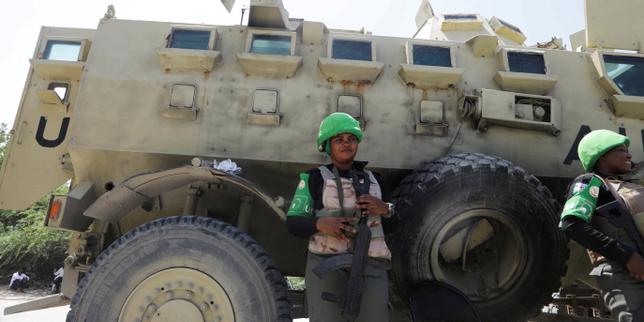
Mogadishu is staring into the abyss again. It's not a slow-moving threat this time. It's a sudden, structural hard stop. When the United States diplomatic mission to the African Union quietly dropped a bombshell note on July 1, 2026, it effectively signed a death warrant for the current security apparatus holding Somalia together. Washington is pulling the plug on the United Nations Support Office in Somalia, known as UNSOS, by the end of this year.
Without that logistical backbone, the newly minted African Union Support and Stabilisation Mission in Somalia, or AUSSOM, will collapse. This isn't dramatic hyperbole. It's the consensus among diplomats in Addis Ababa and military commanders on the ground. The threat of Al-Shabaab retaking the capital is no longer a worst-case scenario discussed in academic papers. It's a highly probable outcome.
If you're wondering why a bureaucratic funding decision in Washington matters, look at the geography of the Horn of Africa. The fragile federal government in Mogadishu relies entirely on a 12,000-strong African Union force to keep Al-Shabaab militants from overrunning state institutions. The US just decided to stop bankrolling the machinery that feeds, fuels, and transports those troops. The financial life support is ending, and the timing couldn't be worse.
The Brutal Reality of the US Exit Strategy
Washington has spent nearly $2 billion on UNSOS and its predecessors since 2007. On top of that, bilateral assistance to troop-contributing countries hit $1.6 billion. But the current American administration has run out of patience. The official stance from the State Department is cold and transactional. They argue that despite two decades of international cash and blood, Somalia hasn't taken ownership of its own security functions.
The political infighting in Mogadishu is the main culprit behind American frustration. Internal rivalries among Somali elites keep sabotaging the fight against Al-Shabaab and ISIS. Washington's logic is clear. Why keep funding a mission that hasn't met its core objectives while political divisions inside the host country undo every hard-won military gain?
It's an application of a strict foreign policy approach that demands immediate returns on security investments. The US isn't blocking the renewal of AUSSOM’s political mandate at the UN Security Council this December. They just won't support any mandate that includes UN logistical or operational funding. They're willing to let the mission exist on paper, but they won't pay for the trucks, the fuel, or the medical evacuations that make it function.
What UNSOS Actually Does on the Ground
To understand why this decision is fatal, you have to look at what UNSOS does. People hear "logistical support" and think of spreadsheets and office supplies. In Somalia, logistics means survival.
UNSOS keeps the 12,000 African Union troops alive. It manages the supply chains that deliver daily food and clean water to remote forward operating bases in lower Shabelle and central regions. It supplies the fuel for armored personnel carriers and runs the critical medical evacuation helicopters that fly wounded soldiers out of active combat zones.
If a Ugandan or Kenyan unit gets ambushed by Al-Shabaab, UNSOS-funded assets fly them to safety. If you take that away, those forward operating bases become isolated islands. No troop-contributing country is going to leave their soldiers exposed in the Somali hinterland without air support or guaranteed medical extraction. They will pack up and go home.
The Debt Nightmare Inherited by AUSSOM
The financial foundation of this peacekeeping effort was already rotten before the US announcement. AUSSOM took over from the African Union Transition Mission in Somalia, or ATMIS, but it also inherited a mountain of debt.
The mission owes $93.9 million in outstanding arrears to troop-contributing countries for operations conducted between 2022 and 2024. For the June 2025 to July 2026 budget period, planners pitched a conservative $166.5 million budget. They only raised a tiny fraction of it.
Worse, the broader UNSOS budget had already been slashed by $130 million from its previous $520 million allocation. The African Union tried to patch the holes by pulling $20 million from its Peace Fund investment and drawing from its Crisis Reserve Facility. The United Kingdom chipped in $30 million. The European Union provided a short-term lifeline of €75 million earlier this year, but that money only lasted until June. The mission has been surviving hand-to-mouth for years. This American decision is simply the last straw.
Al-Shabaab is Positioned for a Massive Insurgency Comeback
The biggest beneficiary of this diplomatic crisis is Al-Shabaab. The Al-Qaeda-linked group has survived everything the international community has thrown at it for twenty years. They've faced drone strikes, elite special forces raids, and massive conventional offenses. Yet, they still control vast swaths of southern and central Somalia.
They run a shadow state. They collect taxes more efficiently than the federal government, enforce their own system of courts, and maintain a constant tactical presence just outside Mogadishu's doorstep. Their recent offensives brought fighters perilously close to the capital's perimeters.
When the African Union mission begins to fracture due to supply shortages, Al-Shabaab will exploit the vacuum immediately. They don't even need to defeat the Somali National Army in massive conventional battles. They just have to wait for the regional forces to withdraw from key towns and then walk in.
Why the Somali National Army Cannot Hold the Line Alone
The official transition plan always hinged on the Somali National Army stepping up to take full control. But the rebuilding of the national security forces has been a slow, uneven process plagued by institutional weaknesses.
- Structural Fragmentation: Clan loyalties within the military often override the national command structure. When political crises erupt in Mogadishu, military units sometimes split along clan lines instead of focusing on the insurgency.
- Logistical Dependence: The national army relies heavily on the African Union for heavy artillery, air support, and secure communications during major offensives. They don't have the independent logistical capacity to sustain multi-front operations.
- Deficit of Specialised Units: While elite, US-trained units like the Danab Brigade are highly effective at targeted counter-terrorism operations, they lack the numbers to hold vast territories once conventional forces clear them.
Honestly, the idea that the national army can defend the entire country without a heavy international stabilization force is a fantasy. If the African Union forces collapse, the national army will likely withdraw to defend a few fortified zones in the capital, leaving the rest of the country to the militants.
The Looming Constitutional and Electoral Crisis
This security vacuum arrives at the worst possible time for Somalia's domestic politics. The country is currently mired in deep electoral and constitutional crises.
Uncertainty surrounds the planned 2026 elections. Disputes over the division of power between the federal government in Mogadishu and the federal member states, like Puntland and Jubaland, have frozen legislative progress. Puntland has already taken steps to operate independently from the federal center, furious over proposed constitutional changes.
When state leaders are busy fighting each other for political survival, they aren't coordinating military operations against a common enemy. Al-Shabaab thrives on these exact political divisions. The US diplomatic note explicitly highlighted that benefits from international support will remain limited until Somalia's leaders unite to address governance challenges.
The Failure of Resolution 2719 and the Financing Deadlock
The current disaster highlights the total breakdown of international peacekeeping finance models. African diplomats thought they had a solution when the UN Security Council passed Resolution 2719. That framework was designed to allow African Union-led peace operations to access UN-assessed contributions for up to 75 percent of their budgets.
The African Union and Somalia viewed this as the perfect long-term fix for AUSSOM. The remaining 25 percent would come from the African Union and various bilateral partners. It sounded great on paper.
But the United States vehemently objected to applying Resolution 2719 to the Somali mission. Washington pointed out that once you factor in the existing UNSOS logistical support, the total amount of UN-assessed contributions would blow right past the 75 percent ceiling. The financing model became a geopolitical battleground. While diplomats spent 2024 and 2025 arguing over percentages in New York and Addis Ababa, the cash ran out on the ground.
The Geopolitical Ripple Effects in the Horn of Africa
The collapse of the peace mission won't just affect Somalia. It'll trigger a massive realignment across the entire region. Neighboring countries have thousands of troops deployed in Somalia, and they all have distinct national security interests.
Ethiopia, Kenya, and Uganda have spent two decades trying to keep the instability from spilling over their borders. Kenya has suffered devastating retail attacks like Westgate and Garissa University. Ethiopia views a stable southern Somalia as a buffer zone against ethnic insurgencies.
If AUSSOM dissolves, these countries won't just abandon their borders. They'll likely pivot to unilateral military interventions. Kenya could focus exclusively on securing the semi-autonomous region of Jubaland as a buffer zone. Ethiopia might send troops directly across its border to protect its immediate territory, disregarding the federal government's sovereignty entirely. This fragmented approach would trigger a complex proxy environment, destroying any semblance of a unified Somali state.
The Total Failure of Multilateral Peacekeeping
What's happening in Somalia is part of a broader global trend. The Stockholm International Peace Research Institute recently warned that multilateral peacekeeping is facing an unprecedented systemic crisis.
Geopolitical rivalries, donor fatigue, and political deadlocks are shutting down operations worldwide. We've seen UN missions forced out of Mali and the Democratic Republic of Congo. Now, the African Union's flagship peace operation is unraveling because its primary Western backer decided the return on investment wasn't there anymore.
International partners are no longer willing to write blank checks for open-ended stabilization missions. The era of the decades-long peacekeeping operation is officially over. Somalia is just the first major casualty of this new, transactional reality.
The Immediate Practical Steps to Manage the Fallout
We can't change Washington's mind. The policy shift is locked in. The challenge now is preventing the absolute collapse of Mogadishu when the calendar turns to 2027. International planners and Somali leaders have a very narrow window to execute a damage-control strategy.
1. Shift From Military Primacy to Direct Political Mediation
For 19 years, the international community treated the Somali crisis as a military problem with a political side-project. That formula failed. The military approach took primacy, allowing Somali politicians to perpetually delay necessary governance reforms because African Union troops were shielding them from the consequences.
The threat of an immediate security vacuum must be used to force a political settlement. The federal government and the federal member states need to finalize the constitutional review process immediately. If they don't resolve the power-sharing and revenue-sharing deadlocks within the next three months, they won't have a state left to govern. Political unity is no longer a luxury. It's a basic requirement for survival.
2. Design a Short-Term Transitional Security Arrangement
Since AUSSOM is effectively dead in its current form beyond December 2026, the African Union, the UN, and the host country must quickly build an emergency transitional security framework.
This plan shouldn't look like a massive, 12,000-man conventional army. It needs to be a lean, highly specialized mission focused entirely on protecting critical infrastructure. The goal must shift from holding vast rural territories to securing the port, the international airport, and the core government ministries in Mogadishu.
3. Rapidly Diversify Bilateral Security Alliances
Mogadishu cannot rely on traditional Western multilateral funding structures anymore. The Somali government needs to aggressively expand its bilateral security partnerships.
Turkey already trains elite Somali police units and provides significant maritime security support. Gulf states, particularly the United Arab Emirates, have deep strategic interests in the Horn of Africa and have previously funded security sectors. Somalia must secure direct, bilateral defense agreements with these regional powers to replace the logistical capabilities that the US is stripping away. These agreements must focus on immediate hardware transfers, drone reconnaissance support, and direct financial subsidies for troop operations.
The time for diplomatic hand-wringing in Addis Ababa is over. The US has made its move, and the clock is ticking down to December. If the international community and Somalia's leadership don't adapt to this brutal financial reality within the next few months, the black flags of Al-Shabaab will be flying over Mogadishu again.