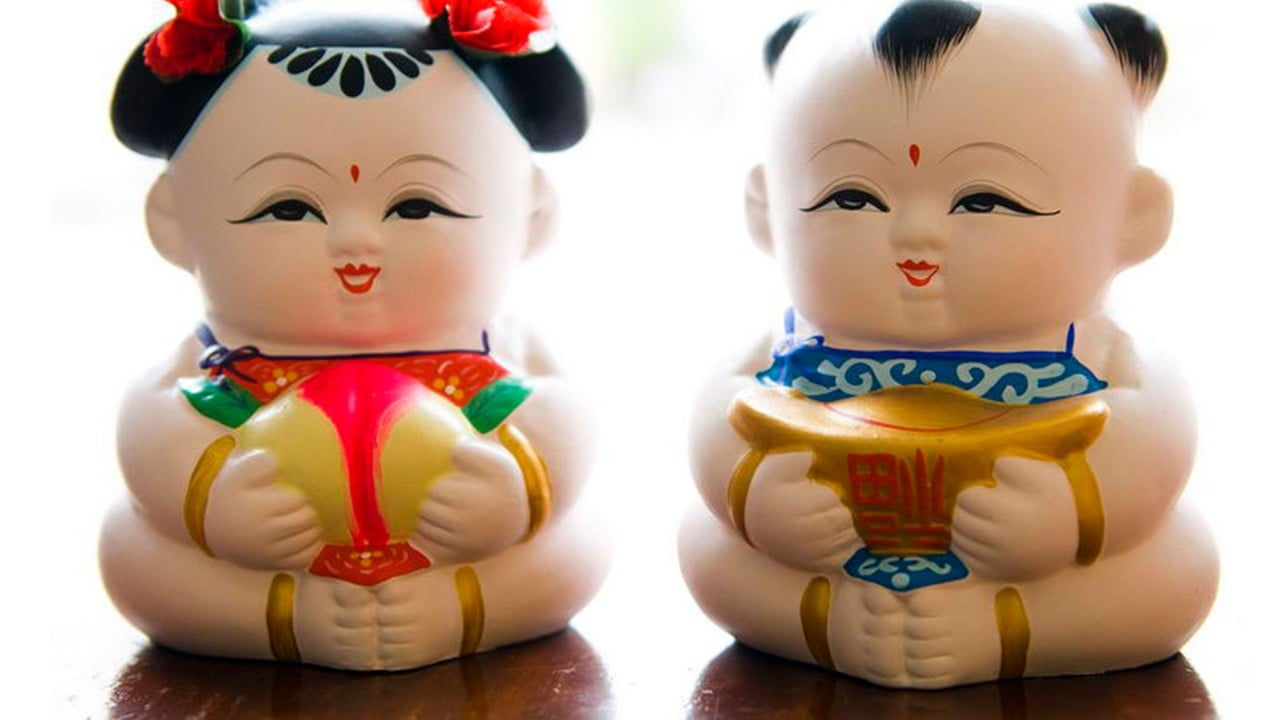
You’ve probably seen them in souvenir shops or traditional markets if you've ever traveled through Jiangsu province. Two impossibly plump, rosy-cheeked children molded from clay, sitting cross-legged with wide, blissful grins. They’re called Da A Fu figurines. For generations, people have treated these Huishan clay creations as simple, charming folk art. They’re tokens given to children at temple fairs, meant to bring a little extra wealth, fertility, and generic good luck into a household.
But if you look closely at their structure, you're not just looking at a representation of a well-fed ancient baby. You're actually looking at heavily coded religious imagery.
A fascinating study published in the journal Nature by researchers based in Wuxi shed light on this exact connection. It turns out that these cheerful folk toys carry structural and stylistic DNA directly lifted from Buddhist icons. The line between sacred temple altar statues and the cheap clay dolls sold outside the temple gates is practically nonexistent.
The Subconscious Copying of the Divine
To understand why these figurines look the way they do, you have to look at how they were made. During the Ming and Qing dynasties, local farmers around Wuxi's Huishan region crafted these dolls during the agricultural off-season to make some extra cash. They weren't high-class artists with academic training. They were ordinary people who spent their spiritual lives visiting local monasteries, staring up at massive, expertly carved statues of Buddha, Maitreya, and various Bodhisattvas.
When these farmers sat down with their local white clay, they used a "semi-sculpted, semi-painted" method. They pressed the clay into standardized wooden or stone molds to stamp out the faces, then painted the details by hand.
Because they lacked formal artistic training, they naturally copied the facial proportions of the most peaceful, powerful images they knew: the deities in the temples. The Nature study actually used quantitative facial similarity technology to compare historical Da A Fu dolls with classical Buddhist sculptures. The data confirmed it. The facial geometry, the spacing of the eyes, and the specific curvature of the smile match up with religious art, particularly figures like the Maitreya (the laughing Buddha) and infant representations of spiritual protectors.
Decoding the Icons
The connection isn't just a coincidence of facial geometry. The entire anatomy of a Da A Fu figurine is a masterclass in religious borrowing, blended seamlessly with local folklore.
The Seated Lotus Posture
Look at how a classic Da A Fu sits. They aren't lounging or crawling like a typical infant. They sit flat, legs tucked inward, mimicking the classic padmasana or lotus position used in Buddhist meditation. In religious art, this posture anchors the deity to the earth while symbolizing absolute spiritual tranquility. In the folk doll, it stabilizes the clay heavy-bottomed design while injecting an unmistakable air of serene dignity into a children's toy.
The Elongated Earlobes
In traditional Chinese culture, big ears mean wealth. But in Buddhism, heavily elongated earlobes are one of the 32 physical marks of a Buddha (lakshanas). They signify spiritual awakening and the capacity to hear the suffering of the world. Da A Fu dolls consistently feature thick, exaggerated, drooping earlobes that frame their chubby cheeks, directly lifting this sacred marker of enlightenment and repurposing it as a folk symbol for a long, prosperous life.
The Symbolic Beast
Most Da A Fu dolls feature the child holding a creature, usually a green lion or a massive fish. While folk tales suggest the child is taming a mythical monster to protect local kids, the visual cue is straight out of the sutras. The lion is the traditional mount of Manjushri, the Bodhisattva of Wisdom, symbolizing the subduing of wild, untamed passions through spiritual clarity.
Why Modern Dolls Look More Religious Than Ever
Here is a detail most casual collectors miss: the historical timeline of these dolls actually reverses what you would expect. Usually, as a folk craft becomes commercialized over centuries, it loses its religious roots and becomes entirely secular. With Da A Fu, the opposite happened.
The researchers discovered that figurines from the Qing dynasty actually showed lower structural similarity to formal temple statues. They looked more like unique, rough folk creations. However, modern iterations produced over the last few decades display an intensified, much closer stylistic match to religious icons.
Why? Because as the craft faced extinction and was revived as a protected piece of China’s National Intangible Cultural Heritage, artisans began referencing classical art books and temple restorations to standardize production. In trying to make the dolls look more "authentic," modern makers accidentally leaned heavily back into the classical Buddhist mold.
What to Look For Next Time You See One
If you want to appreciate these figurines for what they truly are—functional portraiture that bridges the gap between everyday life and ancient spirituality—stop looking at them as cheap knick-knacks.
Next time you spot a pair, pay attention to these three details:
- The Half-Closed Eyes: Notice if the eyelids droop slightly downward in a gaze of inner reflection rather than wide-eyed childhood wonder. That's a classic meditative gaze.
- The Balance of the Face: Check the distance between the nose and the chin. A perfect, symmetrical triad layout is a hallmark of sacred Ming dynasty molding techniques.
- The Mudra-like Grip: Look closely at how their hands clasp the symbolic animal or coin. It often mimics the tight, purposeful finger positioning of traditional mudras (sacred hand gestures) meant to seal energy.
Understanding the history transforms these chubby clay dolls from mere decorations into an enduring survival mechanism of ancient art, where sacred temple traditions hid in plain sight right on a child's toy shelf.